





Environmental Forensics
基本信息
期刊简写:
ENVIRON FORENSICS
影响因子:
1.5
ISSN:
1527-5922
研究领域:
ENVIRONMENTAL SCIENCE AND ECOLOGY
h-index:
34
自引率:
6.7%
年发文量:
31
SCI收录来源:
Science Citation Index Expanded
期刊官网:
https://www.tandfonline.com/journals/uenf20
期刊介绍:
Environmental Forensics provides a forum for scientific investigations that address environment contamination, its sources, and the historical reconstruction of its release into the environment. The context for investigations that form the published papers in the journal are often subjects to regulatory or legal proceedings, public scrutiny, and debate. In all contexts, rigorous scientific underpinnings guide the subject investigations. Specifically, the journal is an international, quarterly, peer-reviewed publication offering scientific studies that explore or are relevant to the source, age, fate, transport, as well as human health and ecological effects of environmental contamination. Journal subject matter encompasses all aspects of contamination mentioned above within the environmental media of air, water, soil, sediments and biota. Data evaluation and analysis approaches are highlighted as well including multivariate statistical methods. Journal focus is on scientific and technical information, data, and critical analysis in the following areas: Contaminant Fingerprinting for source identification and/or age-dating, including (but not limited to) chemical, isotopic, chiral, mineralogical/microscopy techniques, DNA and tree-ring fingerprinting Specific Evaluative Techniques for source identification and/or age-dating including (but not limited to) historical document and aerial photography review, signature chemicals, atmospheric tracers and markets forensics, background concentration evaluations. Statistical Evaluation, Contaminant Modeling and Data Visualization Vapor Intrusion including delineating the source and background values of indoor air contamination Integrated Case Studies, employing environmental fate techniques Legal Considerations, including strategic considerations for environmental fate in litigation and arbitration, and regulatory statutes and actions This journal addresses a large audience, including: environmental consultants and other environmental professionals, attorneys, owners/operators and environmental managers at industrial sites, regulators, laboratory professionals, environmental scientists, and academia personnel (e.g., involved in environmental studies). Peer Review Policy: All submitted manuscripts are subject to initial appraisal by the Editor, and, if found suitable for further consideration, to peer review by at leasttwo independent, anonymous expert referees. Peer review is typically double anonymized (unless authors include their names/affiliation in the text submitted for reviewers want to disclose their names) and submission is online via Submission Portal.
CiteScore
CiteScore
4.9
SJR
0.45
SNIP
0.708
| 学科 | 排名 | 百分位 |
|---|---|---|
Environmental ScienceManagement, Monitoring, Policy and Law |
132 / 399 | 67% |
期刊统计
Quarterly
期/年
61 days avg. from submission to first decision
104 days avg. from submission to first post-review decision
9 days avg. from acceptance to online publication
审稿周期
论文处理费
投稿信息
投稿网址:
相关文献
Palladium-catalysed direct synthesis of benzo[b]thiophenes from thioenols
Kiyofumi Inamoto, Yukari Arai, Kou Hiroya, Takayuki Doi
2008-09-24
Communication
DOI: 10.1039/B811362A
Glycosylated asterisks are among the most potent low valency inducers of Concanavalin A aggregation
Mazen Sleiman, Annabelle Varrot, Jean-Manuel Raimundo, Marc Gingras, Peter G. Goekjian
2008-11-07
Communication
DOI: 10.1039/B814816C
2-Phenylpyrimidine skeleton-based electron-transport materials for extremely efficient green organic light-emitting devices
Hisahiro Sasabe, Takayuki Chiba, Shi-Jian Su, Yong-Jin Pu, Ken-ichi Nakayama, Junji Kido
2008-10-03
Communication
DOI: 10.1039/B812270A
Photochemistry and photophysics of the tetrahedral silver(i) complex with diphosphine ligands: [Ag(dppb)2]PF6 (dppb = 1, 2-bis[diphenylphosphino]benzene)
Masahisa Osawa, Mikio Hoshino
2008-10-30
Communication
DOI: 10.1039/B813844C
Ordered mesoporous carbons as highly active catalysts for hydrogen production by CH4decomposition
Patricia Pizarro, Rut Guil-López, Gema Gómez
2008-11-12
Communication
DOI: 10.1039/B811800K
The asymmetric total synthesis of (−)-securinine
Bhartesh Dhudshia, Benjamin F. T. Cooper, Charles L. B. Macdonald, Avinash N. Thadani
2008-12-09
Communication
DOI: 10.1039/B816576A
Solvothermal synthesis of N-doped TiO2nanotubes for visible-light-responsive photocatalysis
Fan Yang, Nianjun Luo, Bryan T. T. Chu, Deyin Sun, Huahong Shi, Tiancun Xiao, Peter P. Edwards
2008-11-04
Communication
DOI: 10.1039/B815430A
Direct coupling of alcohols with alkenylsilanes catalyzed by indium trichloride or bismuth tribromide
Yoshihiro Nishimoto, Masayuki Kajioka, Takahiro Saito, Makoto Yasuda, Akio Baba
2008-11-04
Communication
DOI: 10.1039/B816072D
The crystal structure of β-RDX—an elusive form of an explosive revealed
David I. A. Millar, Iain D. H. Oswald, Duncan J. Francis, William G. Marshall, Colin R. Pulham, Adam S. Cumming
2008-12-05
Communication
DOI: 10.1039/B817966B
Modular synthesis of multivalent glycoarchitectures and their unique selectin binding behavior
Ilona Papp, Jens Dernedde, Sven Enders, Rainer Haag
2008-10-03
Communication
DOI: 10.1039/B813414F
您可能还喜欢
化合物问答
4-[4-三氟甲基苯基]恶唑(CAS号:1126636-40-5)通常如何合成?
4-[4-三氟甲基苯基]恶唑通常通过将4-三氟甲基苯酚与异硫氰酸苯酯在有机溶剂中进行酯化反应合成。该反应可在无水条件下,使用适当的催化剂,如四丁基氢氧化铵,以提...
1126636-40-54-(4-(Trifluoromethy...
59729-32-71-[3-(Dimethylamino)...
化合物问答
RockPhos Pd G3(CAS号:2009020-38-4)通常如何合成?
RockPhos Pd G3 通常通过钯催化偶联反应合成,使用配体 (2'-Amino-2-biphenylyl)(methanesulfonato-kappa...
2009020-38-4(2'-Amino-2-biphenyl...
化合物问答
1-哌啶甲酰胺(CAS号:2158-03-4)的市场或研究趋势如何?
1-哌啶甲酰胺作为有机合成中的重要中间体,其市场需求主要受医药、农药、染料等行业推动。近年来,随着新药开发和绿色化学的发展,该化合物的研究趋势集中在开发更高效、...
2158-03-41-Piperidinecarboxam...
化合物问答
2-(二苯基膦基)乙胺(CAS号:4848-43-5)适用哪些法规指南?
2-(二苯基膦基)乙胺适用于多种法规指南,包括但不限于《全球化学品统一分类和标签制度》(GHS),欧盟《化学品注册、评估、授权和限制》法规(REACH),以及美...
4848-43-52-(Diphenylphosphino...
化合物问答
如何储存间苯二甲酸二烯丙酯(CAS号:1087-21-4)?
间苯二甲酸二烯丙酯应储存在阴凉、干燥、通风良好的地方,远离火源和热源。储存容器应密封,避免光照和高温。储存温度应控制在25℃以下,相对湿度应低于80%。避免与其...
1087-21-4Diallyl isophthalate
化合物问答
什么是间甲苯异硫代异氰酸酯(CAS号:621-30-7)?
间甲苯异硫代异氰酸酯是一种有机化合物,分子式为C7H7NO2S,具有刺激性气味。它是一种重要的有机合成中间体,在合成其他化合物时广泛应用。
621-30-71-Isothiocyanato-3-m...
化合物问答
在合成中是否有N-Boc-D-苯丙氨醇(CAS号:106454-69-7)的替代品?
在合成中,可以考虑使用N-Cbz-D-苯丙氨醇或N-Fmoc-D-苯丙氨醇作为替代品。这些化合物同样具有保护氨基的功能,且在合成过程中表现出良好的反应性能。
106454-69-72-Methyl-2-propanyl ...
化合物问答
3-羟甲基-2-氧异丙基吡啶(CAS号:954240-50-7)的主要用途是什么?
3-羟甲基-2-氧异丙基吡啶主要用于有机合成领域,可以作为合成其他药物、农药或精细化学品的中间体。此外,它还可能在实验室研究中作为特定反应的前体或溶剂。
954240-50-7(2-Isopropoxy-3-pyri...
化合物问答
6-氨基-9-甲基嘌呤(CAS号:700-00-5)应用于哪些行业?
6-氨基-9-甲基嘌呤目前主要应用于医药行业,作为某些药物的中间体。此外,它还可能用于聚合物、传感器和半导体的某些领域,作为功能性单体或掺杂剂。
700-00-59-Methyl-9H-purin-6-...
推荐化合物
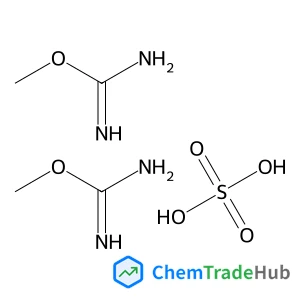
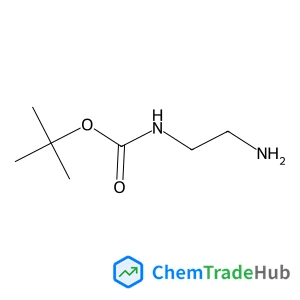
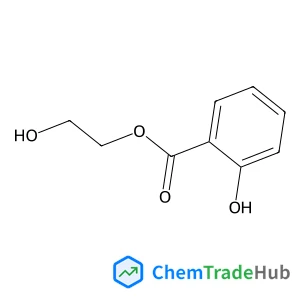
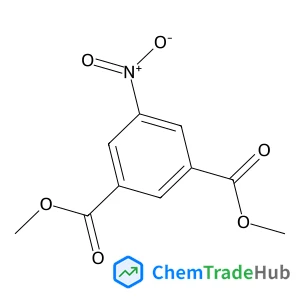
![3-[(4-Nitrobenzyl)oxy]-3-oxopropanoic Acid structure](https://cnstatic.chemtradehub.com/structs/773/77359-11-6-0d04.webp "3-[(4-Nitrobenzyl)oxy]-3-oxopropanoic Acid structure")
推荐供应商



免责声明
本页面提供的学术期刊信息仅供参考和研究使用。我们与任何期刊出版商均无关联,也不处理投稿事宜。如有投稿相关咨询,请直接联系相关期刊出版商。
如发现页面信息有误,请发送邮件至 support@chemtradehub.com 联系我们。我们将及时核实并处理您的问题。