











![Ethyl (3aS,6aS)-1-benzylhexahydropyrrolo[3,4-b]pyrrole-5(1H)-carboxylate structure](https://cnstatic.chemtradehub.com/structs/894/894853-99-7-e175.webp "Ethyl (3aS,6aS)-1-benzylhexahydropyrrolo[3,4-b]pyrrole-5(1H)-carboxylate structure")
Ethyl (3aS,6aS)-1-benzylhexahydropyrrolo[3,4-b]pyrrole-5(1H)-carboxylate
CAS号:
894853-99-7
分子式:
C16H22N2O2
Ferroelectrics Letters is a separately published section of the international journal Ferroelectrics. Both sections publish theoretical, experimental and applied papers on ferroelectrics and related materials, including ferroelastics, ferroelectric ferromagnetics, electrooptics, piezoelectrics, pyroelectrics, nonlinear dielectrics, polymers and liquid crystals. Ferroelectrics Letters permits the rapid publication of important, quality, short original papers on the theory, synthesis, properties and applications of ferroelectrics and related materials. Peer Review All Submitted manuscripts are subject to initial appraisal by the Editor, and if found suitable for further consideration, will be peer-reviewed by independent and anonymous expert referees. CrossRef Similarity Check Please note that Ferroelectrics uses CrossRef Similarity Check™ (Powered by iThenticate) to screen papers for unoriginal material. By submitting your paper to the journal you are agreeing to originality checks during the peer-review and production processes. The Institute of Scientific Information Journal Citations Report for 2003 ranks Ferroelectrics Letters 44th out of 57 journals in Physics, Condensed Matter (Science), with an impact factor of 0.556.
| 学科 | 排名 | 百分位 |
|---|---|---|
Materials ScienceElectronic, Optical and Magnetic Materials |
239 / 284 | 16% |
K. Wolski, A. Gruszkiewicz, M. Wytrwal-Sarna, S. Zapotoczny
DOI: 10.1039/C7PY01418J
Ji Liu, Dominique Hoogland, Emma-Rose Janeček, Eric A. Appel, Oren A. Scherman
DOI: 10.1039/C7PY00574A
Yanning Zeng, Erlin Yue, Tongling Liang
DOI: 10.1039/C7PY01606A
Rahul S. Bagul, Maryam Hosseini, Tze Chieh Shiao, Nadim K. Saadeh, René Roy
DOI: 10.1039/C7PY01044C
Gábor Vasvári, István Szilágyi, Ákos Bencsura, Sándor Dóbé, Tibor Bérces, Eric Henon, Sebastien Canneaux, Frédéric Bohr
DOI: 10.1039/B009601F
C. Cannas, G. Concas, D. Gatteschi, A. Falqui, A. Musinu, G. Piccaluga, C. Sangregorio, G. Spano
DOI: 10.1039/B008645M
O. R. Monaghan, S. J. Holder
DOI: 10.1039/C7PY01170A
Bryony T. McAllister, Tyler B. Schon, Paul M. DiCarmine, Dwight S. Seferos
DOI: 10.1039/C7PY00512A
Min He, Qian Wang, Weifeng Zhao, Jianshu Li, Changsheng Zhao
DOI: 10.1039/C7PY00967D
4-[4-三氟甲基苯基]恶唑通常通过将4-三氟甲基苯酚与异硫氰酸苯酯在有机溶剂中进行酯化反应合成。该反应可在无水条件下,使用适当的催化剂,如四丁基氢氧化铵,以提...
RockPhos Pd G3 通常通过钯催化偶联反应合成,使用配体 (2'-Amino-2-biphenylyl)(methanesulfonato-kappa...
1-哌啶甲酰胺作为有机合成中的重要中间体,其市场需求主要受医药、农药、染料等行业推动。近年来,随着新药开发和绿色化学的发展,该化合物的研究趋势集中在开发更高效、...
2-(二苯基膦基)乙胺适用于多种法规指南,包括但不限于《全球化学品统一分类和标签制度》(GHS),欧盟《化学品注册、评估、授权和限制》法规(REACH),以及美...
间苯二甲酸二烯丙酯应储存在阴凉、干燥、通风良好的地方,远离火源和热源。储存容器应密封,避免光照和高温。储存温度应控制在25℃以下,相对湿度应低于80%。避免与其...
间甲苯异硫代异氰酸酯是一种有机化合物,分子式为C7H7NO2S,具有刺激性气味。它是一种重要的有机合成中间体,在合成其他化合物时广泛应用。
在合成中,可以考虑使用N-Cbz-D-苯丙氨醇或N-Fmoc-D-苯丙氨醇作为替代品。这些化合物同样具有保护氨基的功能,且在合成过程中表现出良好的反应性能。
3-羟甲基-2-氧异丙基吡啶主要用于有机合成领域,可以作为合成其他药物、农药或精细化学品的中间体。此外,它还可能在实验室研究中作为特定反应的前体或溶剂。
6-氨基-9-甲基嘌呤目前主要应用于医药行业,作为某些药物的中间体。此外,它还可能用于聚合物、传感器和半导体的某些领域,作为功能性单体或掺杂剂。
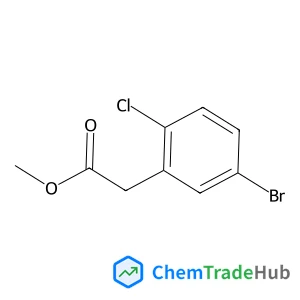
![(S,S)-2-{1-Carboxy-2-[3-(3,5-dichloro-benzyl)-3H-imidazol-4-YL]-ethylamino}-4-methyl-pentanoic acid structure](https://cnstatic.chemtradehub.com/structs/305/305335-31-3-1724.webp "(S,S)-2-{1-Carboxy-2-[3-(3,5-dichloro-benzyl)-3H-imidazol-4-YL]-ethylamino}-4-methyl-pentanoic acid structure")
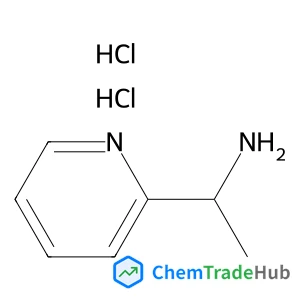

![4-Chloro-1-[(4-methylphenyl)sulfonyl]-1H-pyrrolo[2,3-b]pyridine structure](https://cnstatic.chemtradehub.com/structs/348/348640-05-1-7db8.webp "4-Chloro-1-[(4-methylphenyl)sulfonyl]-1H-pyrrolo[2,3-b]pyridine structure")




