


A self-defensive bilayer hydrogel coating with bacteria triggered switching from cell adhesion to antibacterial adhesion
文献信息
发布日期
2017-07-31
DOI
10.1039/C7PY00967D
影响因子
5.582
作者
Min He, Qian Wang, Weifeng Zhao, Jianshu Li, Changsheng Zhao
查看原文
摘要
We report on a self-defensive bilayer hydrogel coating which can switch from a cell adhesion surface to an antibacterial adhesion surface. To covalently attach the coating, an antifouling hydrogel thin film was firstly prepared on a thiol modified substrate as the bottom layer via the thiol–ene click reaction of the ene-functionalized copolymer of poly(sulfobetaine methacrylate-acrylate acid-2-hydroxyethyl methacrylate) (P(SBMA-AA-HEMA)). Thereafter, heparin-mimicking polymer chains were grafted onto the hydrogel film surface as the upper layer via surface initiated atom transfer radical polymerization. The ester group of HEMA was designed as the sensitive part which could be cleaved in a bacterial infectious environment, while the hydroxyl group was designed as the anchoring point of the upper layer. The surface morphology and chemical composition after each modification step were characterized by scanning electron microscopy, atomic force microscopy, and X-ray photoelectron spectroscopy. The bilayer coating could promote cell adhesion and proliferation, as well as bacterial adhesion. After being immersed into a cholesterol esterase solution (simulative bacterial infectious environment), the upper layer could be detached rapidly, and the exposed bottom layer then showed strong resistance to bacteria. Our approach towards bacteria-responsive “intelligent” coating gives new insights into the antibacterial protection of biomedical devices.
期刊推荐
Chinese Journal of Chemistry

NDT & E International
Electroanalysis
Critical Reviews in Solid State and Materials Sciences
Heteroatom Chemistry

Atomization and Sprays

Bioorganic & Medicinal Chemistry Letters
Medicinal Chemistry Research

Biocatalysis and Biotransformation
Acta Metallurgica Sinica-English Letters
相关文献
Organic synthesis via Kolbe and related non-Kolbe electrolysis: an enabling electro-strategy
Samina Aslam
2021-05-18
Minireview
DOI: 10.1039/D1RE00047K
Surface reaction kinetics of the methanol synthesis and the water gas shift reaction on Cu/ZnO/Al2O3
Bruno Lacerda de Oliveira Campos, Karla Herrera Delgado, Stefan Wild, Stephan Pitter, Jörg Sauer
2021-03-19
Paper
DOI: 10.1039/D1RE00040C
Fast microflow kinetics and acid catalyst deactivation in glucose conversion to 5-hydroxymethylfurfural
Tai-Ying Chen, Ziwei Cheng, Pierre Desir, Basudeb Saha
2020-11-02
Paper
DOI: 10.1039/D0RE00391C
CO2 capture enhancement in MOFs via the confinement of molecules
Vanesa del C. Cotlame-Salinas, Alfredo López-Olvera, Alejandro Islas-Jácome, Eduardo González-Zamora, Ilich A. Ibarra
2021-01-04
Minireview
DOI: 10.1039/D0RE00410C
Efficient Ni-based catalysts for the hydrotreatment of lignin dimer model compounds to cycloalkanes/cycloalkanols
Minghao Zhou
2021-01-04
Paper
DOI: 10.1039/D0RE00379D
Investigation of CO2 single-pass conversion in a flow electrolyzer
Emily Jeng, Feng Jiao
2020-07-17
Paper
DOI: 10.1039/D0RE00261E
Revisiting the long-chain branch formation mechanism in metallocene catalyzed polyethylenes
Vahid Karimkhani, Faramarz Afshar-Taromi, Florian J. Stadler
2013-04-22
Paper
DOI: 10.1039/C3PY00319A
Reversible photo-controlled mass transfer in a photo-responsive conjugated main-chain polymer film for high contrast surface patterning
Ruiyang Zhao, Xuepeng Zhan, Jia Yao, Guannan Sun, Qidai Chen, Zengqi Xie, Yuguang Ma
2013-07-05
Communication
DOI: 10.1039/C3PY00770G
您可能还喜欢
化合物问答
4-[4-三氟甲基苯基]恶唑(CAS号:1126636-40-5)通常如何合成?
4-[4-三氟甲基苯基]恶唑通常通过将4-三氟甲基苯酚与异硫氰酸苯酯在有机溶剂中进行酯化反应合成。该反应可在无水条件下,使用适当的催化剂,如四丁基氢氧化铵,以提...
1126636-40-54-(4-(Trifluoromethy...
59729-32-71-[3-(Dimethylamino)...
化合物问答
RockPhos Pd G3(CAS号:2009020-38-4)通常如何合成?
RockPhos Pd G3 通常通过钯催化偶联反应合成,使用配体 (2'-Amino-2-biphenylyl)(methanesulfonato-kappa...
2009020-38-4(2'-Amino-2-biphenyl...
化合物问答
1-哌啶甲酰胺(CAS号:2158-03-4)的市场或研究趋势如何?
1-哌啶甲酰胺作为有机合成中的重要中间体,其市场需求主要受医药、农药、染料等行业推动。近年来,随着新药开发和绿色化学的发展,该化合物的研究趋势集中在开发更高效、...
2158-03-41-Piperidinecarboxam...
化合物问答
2-(二苯基膦基)乙胺(CAS号:4848-43-5)适用哪些法规指南?
2-(二苯基膦基)乙胺适用于多种法规指南,包括但不限于《全球化学品统一分类和标签制度》(GHS),欧盟《化学品注册、评估、授权和限制》法规(REACH),以及美...
4848-43-52-(Diphenylphosphino...
化合物问答
如何储存间苯二甲酸二烯丙酯(CAS号:1087-21-4)?
间苯二甲酸二烯丙酯应储存在阴凉、干燥、通风良好的地方,远离火源和热源。储存容器应密封,避免光照和高温。储存温度应控制在25℃以下,相对湿度应低于80%。避免与其...
1087-21-4Diallyl isophthalate
化合物问答
什么是间甲苯异硫代异氰酸酯(CAS号:621-30-7)?
间甲苯异硫代异氰酸酯是一种有机化合物,分子式为C7H7NO2S,具有刺激性气味。它是一种重要的有机合成中间体,在合成其他化合物时广泛应用。
621-30-71-Isothiocyanato-3-m...
化合物问答
在合成中是否有N-Boc-D-苯丙氨醇(CAS号:106454-69-7)的替代品?
在合成中,可以考虑使用N-Cbz-D-苯丙氨醇或N-Fmoc-D-苯丙氨醇作为替代品。这些化合物同样具有保护氨基的功能,且在合成过程中表现出良好的反应性能。
106454-69-72-Methyl-2-propanyl ...
化合物问答
3-羟甲基-2-氧异丙基吡啶(CAS号:954240-50-7)的主要用途是什么?
3-羟甲基-2-氧异丙基吡啶主要用于有机合成领域,可以作为合成其他药物、农药或精细化学品的中间体。此外,它还可能在实验室研究中作为特定反应的前体或溶剂。
954240-50-7(2-Isopropoxy-3-pyri...
化合物问答
6-氨基-9-甲基嘌呤(CAS号:700-00-5)应用于哪些行业?
6-氨基-9-甲基嘌呤目前主要应用于医药行业,作为某些药物的中间体。此外,它还可能用于聚合物、传感器和半导体的某些领域,作为功能性单体或掺杂剂。
700-00-59-Methyl-9H-purin-6-...
来源期刊
Polymer Chemistry

CiteScore:
8.6
自引率:
7.3%
年发文量:
457
Polymer Chemistry welcomes submissions in all areas of polymer science that have a strong focus on macromolecular chemistry. Manuscripts may cover a broad range of fields, yet no direct application focus is required.
推荐化合物
![(4-{[(2-Methyl-2-propanyl)oxy]methyl}phenyl)boronic acid structure](https://cnstatic.chemtradehub.com/structs/102/1024017-53-5-41c0.webp "(4-{[(2-Methyl-2-propanyl)oxy]methyl}phenyl)boronic acid structure")
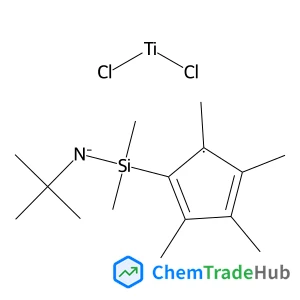
2,3,4,5-TETRAMETHYLCYCLOPENTADIENEDIMETHYLSILYL-TERT-BUTYLAMIDO TITANIUM DICHLORIDE
CAS号:
135072-61-6
分子式:
C15H27Cl2NSiTi-
推荐供应商




免责声明
本页面提供的学术期刊信息仅供参考和研究使用。我们与任何期刊出版商均无关联,也不处理投稿事宜。如有投稿相关咨询,请直接联系相关期刊出版商。
如发现页面信息有误,请发送邮件至 support@chemtradehub.com 联系我们。我们将及时核实并处理您的问题。