









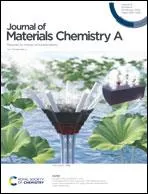
Journal of Materials Chemistry A
基本信息
期刊简写:
J MATER CHEM A
影响因子:
10.7
ISSN:
2050-7488
研究领域:
ENGINEERING TECHNOLOGY
h-index:
152
自引率:
4.7%
年发文量:
2211
SCI收录来源:
Science Citation Index Expanded
期刊官网:
https://pubs.rsc.org/en/journals/journalissues/ta
期刊介绍:
Journal of Materials Chemistry A, B & C cover high quality studies across all fields of materials chemistry. The journals focus on those theoretical or experimental studies that report new understanding, applications, properties and synthesis of materials. The journals have a strong history of publishing quality reports of interest to interdisciplinary communities and providing an efficient and rigorous service through peer review and publication. The journals are led by an international team of Editors-in-Chief and Associate Editors who are all active researchers in their fields. Journal of Materials Chemistry A, B & C are separated by the intended application of the material studied. Broadly, applications in energy and sustainability are of interest to Journal of Materials Chemistry A, applications in biology and medicine are of interest to Journal of Materials Chemistry B, and applications in optical, magnetic and electronic devices are of interest to Journal of Materials Chemistry C. More than one Journal of Materials Chemistry journal may be suitable for certain fields and researchers are encouraged to submit their paper to the journal that they feel best fits for their particular article. Example topic areas within the scope of Journal of Materials Chemistry A are listed below. This list is neither exhaustive nor exclusive. Artificial photosynthesis Batteries Carbon dioxide conversion Catalysis Fuel cells Gas capture/separation/storage Green/sustainable materials Hydrogen generation Hydrogen storage Photocatalysis Photovoltaics Self-cleaning materials Self-healing materials Sensors Supercapacitors Thermoelectrics Water splitting Water treatment
CiteScore
CiteScore
19.5
SJR
2.804
SNIP
1.424
| 学科 | 排名 | 百分位 |
|---|---|---|
Materials ScienceGeneral Materials Science |
20 / 463 | 95% |
期刊统计
期/年
Time to first decision (peer reviewed only): 30 days
审稿周期
£2,750
论文处理费
投稿信息
投稿网址:
https://mc.manuscriptcentral.com/jmchema收录体裁:
Full papers
Communications
Reviews
Highlights
Perspectives
Comments
Communications
Reviews
Highlights
Perspectives
Comments
相关文献
Hydrogen bond-dominated polybenzimidazole semi-interpenetrating network membranes for alkaline water electrolysis
Lihua Wang, Min He, Pingxia Zhang, Hao Li, Yanbin Yun, Tong Zhao
2023-11-03
Paper
DOI: 10.1039/D3TA05159E
Constructing carbon nanotube-optimized hollow Ti3C2 MXene hierarchical conductive networks for robust lithium–sulfur batteries
Ran Liu, Shengjun Zhai, Zimujun Ye, Mengzhu Liu, Yang Xu, Changwen Li, Xianbao Wang, Tao Mei
2023-10-23
Paper
DOI: 10.1039/D3TA04677J
3D-printed palladium/activated carbon-based catalysts for the dehydrogenation of formic acid as a hydrogen carrier
Irene Diaz-Herrezuelo, Gonzalo Vega, Marina Navarro, Pilar Miranzo, M. Isabel Osendi, Jose A. Casas, Asuncion Quintanilla, Manuel Belmonte
2023-10-20
Paper
DOI: 10.1039/D3TA05644A
Ostwald ripening mechanism-derived MnOOH induces lattice oxygen escape for efficient aqueous MnO2–Zn batteries
Chenchen Qin, Chi Chen, Chuankun Zhang, Xin Chen, Yi Gan, Jingying Li, Jia Yao, Xin Liu, Junyan Cheng, Dan Sun
2023-10-24
Paper
DOI: 10.1039/D3TA05364D
A dual-mode foam sensor employing Ti3C2Tx/In2O3 composites for NH3 detection with memory function and body movement monitoring for kidney disease diagnosis
Zitong Kan, Fangyu Shi, Long Yang, Qingqing Zhou, Yuhong Zhang, Yu Qi, Huan Zhang, Biao Dong, Luquan Ren, Hongwei Song
2023-10-18
Paper
DOI: 10.1039/D3TA05670H
Study of the effect of uranium recovery at Hap/Fe2O3 composite and Fe2O3 interfaces on the parameters of the electrical double layer
Adrianna Biedrzycka, Agnieszka Gładysz-Płaska, Ewa Skwarek
2023-10-12
Paper
DOI: 10.1039/D3TA03890D
Enhancing energy extraction from water microdroplets through synergistic electrokinetic and galvanic effects
Haitao Li, Wenxing Wang, Xiangming Li, Tharishinny Raja Mogan, Linan Xu, Jie Han
2023-11-02
Paper
DOI: 10.1039/D3TA04394K
Two-dimensional nickel cyano-bridged coordination polymer thermally derived potent electrocatalysts for alkaline hydrogen evolution reaction
Haitham M. El-Bery, Mohamed E. El-Khouly
2023-11-02
Paper
DOI: 10.1039/D3TA04511K
Ultra-high dispersion of Ni-based OER catalysts on graphene 3D networks enhances the in situ Fe3+ catalytic activation
María González-Ingelmo, Miriam López García, Freddy E. Oropeza, Patricia Álvarez, Clara Blanco, Ricardo Santamaría, Victoria G. Rocha
2023-10-25
Paper
DOI: 10.1039/D3TA04481E
Boosting photoelectrochemical water oxidation by sandwiching gold nanoparticles between BiVO4 and NiFeOOH
Hang Yin, Yanzhen Guo, Nan Zhang, Yuyang Wang, Shouren Zhang, Ruibin Jiang
2023-10-23
Paper
DOI: 10.1039/D3TA05483G
您可能还喜欢
化合物问答
4-[4-三氟甲基苯基]恶唑(CAS号:1126636-40-5)通常如何合成?
4-[4-三氟甲基苯基]恶唑通常通过将4-三氟甲基苯酚与异硫氰酸苯酯在有机溶剂中进行酯化反应合成。该反应可在无水条件下,使用适当的催化剂,如四丁基氢氧化铵,以提...
1126636-40-54-(4-(Trifluoromethy...
59729-32-71-[3-(Dimethylamino)...
化合物问答
RockPhos Pd G3(CAS号:2009020-38-4)通常如何合成?
RockPhos Pd G3 通常通过钯催化偶联反应合成,使用配体 (2'-Amino-2-biphenylyl)(methanesulfonato-kappa...
2009020-38-4(2'-Amino-2-biphenyl...
化合物问答
1-哌啶甲酰胺(CAS号:2158-03-4)的市场或研究趋势如何?
1-哌啶甲酰胺作为有机合成中的重要中间体,其市场需求主要受医药、农药、染料等行业推动。近年来,随着新药开发和绿色化学的发展,该化合物的研究趋势集中在开发更高效、...
2158-03-41-Piperidinecarboxam...
化合物问答
2-(二苯基膦基)乙胺(CAS号:4848-43-5)适用哪些法规指南?
2-(二苯基膦基)乙胺适用于多种法规指南,包括但不限于《全球化学品统一分类和标签制度》(GHS),欧盟《化学品注册、评估、授权和限制》法规(REACH),以及美...
4848-43-52-(Diphenylphosphino...
化合物问答
如何储存间苯二甲酸二烯丙酯(CAS号:1087-21-4)?
间苯二甲酸二烯丙酯应储存在阴凉、干燥、通风良好的地方,远离火源和热源。储存容器应密封,避免光照和高温。储存温度应控制在25℃以下,相对湿度应低于80%。避免与其...
1087-21-4Diallyl isophthalate
化合物问答
什么是间甲苯异硫代异氰酸酯(CAS号:621-30-7)?
间甲苯异硫代异氰酸酯是一种有机化合物,分子式为C7H7NO2S,具有刺激性气味。它是一种重要的有机合成中间体,在合成其他化合物时广泛应用。
621-30-71-Isothiocyanato-3-m...
化合物问答
在合成中是否有N-Boc-D-苯丙氨醇(CAS号:106454-69-7)的替代品?
在合成中,可以考虑使用N-Cbz-D-苯丙氨醇或N-Fmoc-D-苯丙氨醇作为替代品。这些化合物同样具有保护氨基的功能,且在合成过程中表现出良好的反应性能。
106454-69-72-Methyl-2-propanyl ...
化合物问答
3-羟甲基-2-氧异丙基吡啶(CAS号:954240-50-7)的主要用途是什么?
3-羟甲基-2-氧异丙基吡啶主要用于有机合成领域,可以作为合成其他药物、农药或精细化学品的中间体。此外,它还可能在实验室研究中作为特定反应的前体或溶剂。
954240-50-7(2-Isopropoxy-3-pyri...
化合物问答
6-氨基-9-甲基嘌呤(CAS号:700-00-5)应用于哪些行业?
6-氨基-9-甲基嘌呤目前主要应用于医药行业,作为某些药物的中间体。此外,它还可能用于聚合物、传感器和半导体的某些领域,作为功能性单体或掺杂剂。
700-00-59-Methyl-9H-purin-6-...
推荐化合物
推荐供应商






免责声明
本页面提供的学术期刊信息仅供参考和研究使用。我们与任何期刊出版商均无关联,也不处理投稿事宜。如有投稿相关咨询,请直接联系相关期刊出版商。
如发现页面信息有误,请发送邮件至 support@chemtradehub.com 联系我们。我们将及时核实并处理您的问题。