



Journal of Nuclear Materials
基本信息
期刊简写:
J NUCL MATER
影响因子:
2.8
ISSN:
0022-3115
研究领域:
ENGINEERING TECHNOLOGY
h-index:
123
自引率:
17.9%
年发文量:
511
SCI收录来源:
Science Citation Index Expanded
期刊官网:
https://www.sciencedirect.com/journal/journal-of-nuclear-materials
期刊介绍:
The Journal of Nuclear Materials publishes high quality papers in materials research for nuclear applications, primarily fission reactors, fusion reactors, and similar environments including radiation areas of charged particle accelerators. Both original research and critical review papers covering experimental, theoretical, and computational aspects of either fundamental or applied nature are welcome. Papers submitted to JNM should exhibit a high degree of novelty and contain a significant discussion section that analyzes and interprets the results with outcomes that advance our understanding and push the field forward. Incremental research papers are not acceptable. The breadth of the field is such that a wide range of processes and properties in the field of materials science and engineering is of interest to the readership, spanning atom-scale processes, microstructures, thermodynamics, mechanical properties, physical properties, and corrosion, for example. Topics covered by JNM Fission reactor materials, including fuels, cladding, core structures, pressure vessels, coolant interactions with materials, moderator and control components, fission product behavior. Materials aspects of the entire fuel cycle. Materials aspects of the actinides and their compounds. Performance of nuclear waste materials; materials aspects of the immobilization of wastes. Fusion reactor materials, including first walls, blankets, insulators and magnets. Neutron and charged particle radiation effects in materials, including defects, transmutations, microstructures, phase changes and macroscopic properties. Interaction of plasmas, ion beams, electron beams and electromagnetic radiation with materials relevant to nuclear systems. Topics NOT covered by JNM Topics in nuclear engineering and other areas not addressing materials, such as: Particle transport, cross-sections, shielding or isotope ratios (Radiation Physics and Chemistry; Annals of Nuclear Energy, Applied Radiation and Isotopes) Process engineering (Materials Science and Engineering A; Materials and Design) Leaching or chemical kinetics studies in aqueous, salt or other media (Hydrometallurgy; Chemical Engineering Science) Thermal hydraulics or properties of fluids (Nuclear Engineering and Design) Uranium extraction, uranium ore processing, and isotope separation processes (Nuclear Engineering and Design; Progress in Nuclear Energy) Fission or fusion reactor design and technology (Nuclear Engineering and Design; Fusion Engineering & Design) Plasma physics (Physics Letters A) Materials topics not addressing nuclear applications, such as general studies in: Physical and chemical properties including modeling and simulation (Materials Science and Engineering A; Materials Letters) Metallurgy (Journal of Alloys and Compounds; Materials Science and Engineering A) Corrosion (Corrosion Science) Welding and joining (Journal of Alloys and Compounds; Materials and Design) Ceramics (Journal of the European Ceramics Society; Ceramics international)
CiteScore
CiteScore
5.7
SJR
0.923
SNIP
1.353
| 学科 | 排名 | 百分位 |
|---|---|---|
EnergyNuclear Energy and Engineering |
11 / 77 | 86% |
期刊统计
Semimonthly
期/年
Review time: 102days
Submission to acceptance: 118days
Acceptance to publication: 2days
审稿周期
$2510
论文处理费
投稿信息
投稿网址:
https://www.editorialmanager.com/jnuma/default.aspx收录体裁:
original research papers, critical reviews, and short communications.
相关文献
Are thermodynamic cycles necessary for continuum solvent calculation of pKas and reduction potentials?
2014-12-03
Paper
DOI: 10.1039/C4CP04538F
Development of new auxiliary basis functions of the Karlsruhe segmented contracted basis sets including diffuse basis functions (def2-SVPD, def2-TZVPPD, and def2-QVPPD) for RI-MP2 and RI-CC calculations
Arnim Hellweg, Dmitrij Rappoport
2014-11-14
Paper
DOI: 10.1039/C4CP04286G
A facile one-pot method to synthesize a three-dimensional graphene@carbon nanotube composite as a high-efficiency microwave absorber
2014-11-17
Paper
DOI: 10.1039/C4CP04745A
Adsorption of metal adatoms on single-layer phosphorene
Oleksandr I. Malyi, Ping Wu
2014-11-12
Paper
DOI: 10.1039/C4CP03890H
Molecular charge transfer by adsorbing TCNQ/TTF molecules via π–π interaction: a simple and effective strategy to modulate the electronic and magnetic behaviors of zigzag SiC nanoribbons
Dan Liu, Guangtao Yu, Yuanhui Sun, Xuri Huang, Jia Guan, Hui Zhang, Hui Li, Wei Chen
2014-11-05
Paper
DOI: 10.1039/C4CP03690E
Formation of dibenzofuran, dibenzo-p-dioxin and their hydroxylated derivatives from catechol
Mohammednoor Altarawneh, Bogdan Z. Dlugogorski
2014-11-21
Paper
DOI: 10.1039/C4CP04168B
Modulation of physical properties of supramolecular hydrogels based on a hydrophobic core
Masashi Ohno, Shun Fujita, Kowichiro Saruhashi, Nobuhide Miyachi, Katsuaki Miyaji
2014-11-26
Paper
DOI: 10.1039/C4CP04395B
Ab initio quantum dynamical analysis of ultrafast nonradiative transitions via conical intersections in pyrazine
Manabu Kanno, Yuta Ito, Noriyuki Shimakura, Shiro Koseki, Hirohiko Kono
2014-11-26
Paper
DOI: 10.1039/C4CP04807E
Schiff base ligands and their transition metal complexes in the mixtures of ionic liquid + organic solvent: a thermodynamic study
Hemayat Shekaari, Amir Kazempour, Maryam Khoshalhan
2014-11-25
Paper
DOI: 10.1039/C4CP04432K
“Tschitschibabin type biradicals”: benzenoid or quinoid?
Prince Ravat, Martin Baumgarten
2014-11-11
Paper
DOI: 10.1039/C4CP03522D
您可能还喜欢
化合物问答
4-[4-三氟甲基苯基]恶唑(CAS号:1126636-40-5)通常如何合成?
4-[4-三氟甲基苯基]恶唑通常通过将4-三氟甲基苯酚与异硫氰酸苯酯在有机溶剂中进行酯化反应合成。该反应可在无水条件下,使用适当的催化剂,如四丁基氢氧化铵,以提...
1126636-40-54-(4-(Trifluoromethy...
59729-32-71-[3-(Dimethylamino)...
化合物问答
RockPhos Pd G3(CAS号:2009020-38-4)通常如何合成?
RockPhos Pd G3 通常通过钯催化偶联反应合成,使用配体 (2'-Amino-2-biphenylyl)(methanesulfonato-kappa...
2009020-38-4(2'-Amino-2-biphenyl...
化合物问答
1-哌啶甲酰胺(CAS号:2158-03-4)的市场或研究趋势如何?
1-哌啶甲酰胺作为有机合成中的重要中间体,其市场需求主要受医药、农药、染料等行业推动。近年来,随着新药开发和绿色化学的发展,该化合物的研究趋势集中在开发更高效、...
2158-03-41-Piperidinecarboxam...
化合物问答
2-(二苯基膦基)乙胺(CAS号:4848-43-5)适用哪些法规指南?
2-(二苯基膦基)乙胺适用于多种法规指南,包括但不限于《全球化学品统一分类和标签制度》(GHS),欧盟《化学品注册、评估、授权和限制》法规(REACH),以及美...
4848-43-52-(Diphenylphosphino...
化合物问答
如何储存间苯二甲酸二烯丙酯(CAS号:1087-21-4)?
间苯二甲酸二烯丙酯应储存在阴凉、干燥、通风良好的地方,远离火源和热源。储存容器应密封,避免光照和高温。储存温度应控制在25℃以下,相对湿度应低于80%。避免与其...
1087-21-4Diallyl isophthalate
化合物问答
什么是间甲苯异硫代异氰酸酯(CAS号:621-30-7)?
间甲苯异硫代异氰酸酯是一种有机化合物,分子式为C7H7NO2S,具有刺激性气味。它是一种重要的有机合成中间体,在合成其他化合物时广泛应用。
621-30-71-Isothiocyanato-3-m...
化合物问答
在合成中是否有N-Boc-D-苯丙氨醇(CAS号:106454-69-7)的替代品?
在合成中,可以考虑使用N-Cbz-D-苯丙氨醇或N-Fmoc-D-苯丙氨醇作为替代品。这些化合物同样具有保护氨基的功能,且在合成过程中表现出良好的反应性能。
106454-69-72-Methyl-2-propanyl ...
化合物问答
3-羟甲基-2-氧异丙基吡啶(CAS号:954240-50-7)的主要用途是什么?
3-羟甲基-2-氧异丙基吡啶主要用于有机合成领域,可以作为合成其他药物、农药或精细化学品的中间体。此外,它还可能在实验室研究中作为特定反应的前体或溶剂。
954240-50-7(2-Isopropoxy-3-pyri...
化合物问答
6-氨基-9-甲基嘌呤(CAS号:700-00-5)应用于哪些行业?
6-氨基-9-甲基嘌呤目前主要应用于医药行业,作为某些药物的中间体。此外,它还可能用于聚合物、传感器和半导体的某些领域,作为功能性单体或掺杂剂。
700-00-59-Methyl-9H-purin-6-...
推荐化合物
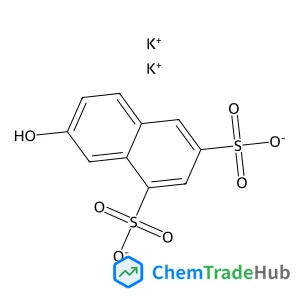
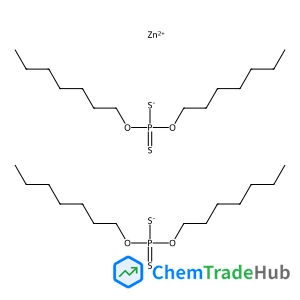
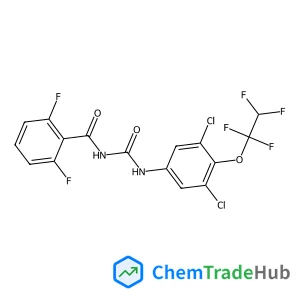
![2-{3-[4-(3-Chlorophenyl)-1-piperazinyl]propyl}[1,2,4]triazolo[4,3-a]pyridin-3(2H)-one hydrochloride (1:1) structure](https://cnstatic.chemtradehub.com/structs/253/25332-39-2-496e.webp "2-{3-[4-(3-Chlorophenyl)-1-piperazinyl]propyl}[1,2,4]triazolo[4,3-a]pyridin-3(2H)-one hydrochloride (1:1) structure")
![1-(Hexopyranosyloxy)-4a,5-dihydroxy-7-methyl-1,4a,5,6,7,7a-hexahydrocyclopenta[c]pyran-7-yl 3-phenylacrylate structure](https://cnstatic.chemtradehub.com/structs/192/19210-12-9-ecae.webp "1-(Hexopyranosyloxy)-4a,5-dihydroxy-7-methyl-1,4a,5,6,7,7a-hexahydrocyclopenta[c]pyran-7-yl 3-phenylacrylate structure")
推荐供应商




免责声明
本页面提供的学术期刊信息仅供参考和研究使用。我们与任何期刊出版商均无关联,也不处理投稿事宜。如有投稿相关咨询,请直接联系相关期刊出版商。
如发现页面信息有误,请发送邮件至 support@chemtradehub.com 联系我们。我们将及时核实并处理您的问题。