



NPG Asia Materials
基本信息
期刊简写:
NPG ASIA MATER
影响因子:
8.6
ISSN:
1884-4049
研究领域:
ENGINEERING TECHNOLOGY
h-index:
57
自引率:
1.2%
年发文量:
70
SCI收录来源:
Science Citation Index Expanded
期刊官网:
http://www.nature.com/am
期刊介绍:
NPG Asia Materials is an open access, international journal publishing peer-reviewed review and primary research articles that cover all aspects of the materials sciences. The journal is global in outlook and reach and its base in the Asia-Pacific reflects the substantial — and increasing — output of materials research from the region. NPG Asia Materials is aimed at an audience of scientists and researchers across the full spectrum of materials research, and publishes articles from the physical and chemical sciences, biotechnology and nanotechnology. The journal welcomes high-quality review and research articles from the most rapidly advancing fields that lie at the borders between materials science and engineering and the classical disciplines of physics, chemistry and biology. The journal features both theoretical and experimental aspects of research in the following areas related to materials science: Biomaterials and biosensors Electronic, magnetic and superconducting materials Energy conversion, catalysis and separation Inorganic, composite and hybrid materials Metals and alloys Nanomaterials Optics, photonics and optoelectronics Organic, carbon-based and soft materials Theory, modelling and simulations Emphasis is placed on the novelty of the research, either in the sense of novel materials or synthetic methods, or in the sense of novel properties that lead to advanced functionality and applications of previously known materials. Both experimental and theoretical studies will be considered for publication. Studies on synthetic methods should demonstrate the generality of the approach or the advance represented in applying the material to practical devices. Equally, research on advances in methodology, processes or applied device engineering should demonstrate more than an incremental improvement on existing system and so be of the highest possible interest to our broad readership.
CiteScore
CiteScore
15.4
SJR
2.136
SNIP
1.61
| 学科 | 排名 | 百分位 |
|---|---|---|
MathematicsModeling and Simulation |
4 / 324 | 98% |
期刊统计
期/年
Submission to first editorial decision: 16 days
Submission to Accept: 137 days
审稿周期
€3690 EUR/$4490 USD/£3090 GBP
论文处理费
投稿信息
投稿网址:
https://mts-am.nature.com/cgi-bin/main.plex收录体裁:
Articles, Review Articles, Perspective, Editorial
相关文献
Assessment of density-functionals for describing the X− + CH3ONO2 gas-phase reactions with X = F, OH, CH2CN
Yaicel G. Proenza, Elizete Ventura, Silmar A. do Monte, Ricardo L. Longo
2014-10-22
Paper
DOI: 10.1039/C4CP03674C
Formation of dibenzofuran, dibenzo-p-dioxin and their hydroxylated derivatives from catechol
Mohammednoor Altarawneh, Bogdan Z. Dlugogorski
2014-11-21
Paper
DOI: 10.1039/C4CP04168B
Ligand(s)-to-metal charge transfer as a factor controlling the equilibrium constants of late first-row transition metal complexes: revealing the Irving–Williams thermodynamical series
Pradeep R. Varadwaj, Arpita Varadwaj, Bih-Yaw Jin
2014-10-27
Communication
DOI: 10.1039/C4CP03953J
Intermediates caught in the act: tracing insulin amyloid fibril formation in time by combined optical spectroscopy, light scattering, mass spectrometry and microscopy
A. Gladytz, T. Häupl, K. R. Siefermann
2014-11-12
Paper
DOI: 10.1039/C4CP03072A
Can metal-free silicon-doped hexagonal boron nitride nanosheets and nanotubes exhibit activity toward CO oxidation?
Sen Lin, Xinxin Ye, Jing Huang
2014-11-03
Paper
DOI: 10.1039/C4CP05007J
Autocatalytic growth of ZnO nanorods from flat Au(111)-supported ZnO films
Leandro Pascua, Hans-Joachim Freund
2014-10-27
Paper
DOI: 10.1039/C4CP03730H
Metastable behavior of noble gas inserted tin and lead fluorides
Sudip Pan, Ashutosh Gupta, Subhajit Mandal, Diego Moreno, Gabriel Merino, Pratim K. Chattaraj
2014-11-11
Paper
DOI: 10.1039/C4CP03856H
Ab initio quantum dynamical analysis of ultrafast nonradiative transitions via conical intersections in pyrazine
Manabu Kanno, Yuta Ito, Noriyuki Shimakura, Shiro Koseki, Hirohiko Kono
2014-11-26
Paper
DOI: 10.1039/C4CP04807E
您可能还喜欢
化合物问答
4-[4-三氟甲基苯基]恶唑(CAS号:1126636-40-5)通常如何合成?
4-[4-三氟甲基苯基]恶唑通常通过将4-三氟甲基苯酚与异硫氰酸苯酯在有机溶剂中进行酯化反应合成。该反应可在无水条件下,使用适当的催化剂,如四丁基氢氧化铵,以提...
1126636-40-54-(4-(Trifluoromethy...
59729-32-71-[3-(Dimethylamino)...
化合物问答
RockPhos Pd G3(CAS号:2009020-38-4)通常如何合成?
RockPhos Pd G3 通常通过钯催化偶联反应合成,使用配体 (2'-Amino-2-biphenylyl)(methanesulfonato-kappa...
2009020-38-4(2'-Amino-2-biphenyl...
化合物问答
1-哌啶甲酰胺(CAS号:2158-03-4)的市场或研究趋势如何?
1-哌啶甲酰胺作为有机合成中的重要中间体,其市场需求主要受医药、农药、染料等行业推动。近年来,随着新药开发和绿色化学的发展,该化合物的研究趋势集中在开发更高效、...
2158-03-41-Piperidinecarboxam...
化合物问答
2-(二苯基膦基)乙胺(CAS号:4848-43-5)适用哪些法规指南?
2-(二苯基膦基)乙胺适用于多种法规指南,包括但不限于《全球化学品统一分类和标签制度》(GHS),欧盟《化学品注册、评估、授权和限制》法规(REACH),以及美...
4848-43-52-(Diphenylphosphino...
化合物问答
如何储存间苯二甲酸二烯丙酯(CAS号:1087-21-4)?
间苯二甲酸二烯丙酯应储存在阴凉、干燥、通风良好的地方,远离火源和热源。储存容器应密封,避免光照和高温。储存温度应控制在25℃以下,相对湿度应低于80%。避免与其...
1087-21-4Diallyl isophthalate
化合物问答
什么是间甲苯异硫代异氰酸酯(CAS号:621-30-7)?
间甲苯异硫代异氰酸酯是一种有机化合物,分子式为C7H7NO2S,具有刺激性气味。它是一种重要的有机合成中间体,在合成其他化合物时广泛应用。
621-30-71-Isothiocyanato-3-m...
化合物问答
在合成中是否有N-Boc-D-苯丙氨醇(CAS号:106454-69-7)的替代品?
在合成中,可以考虑使用N-Cbz-D-苯丙氨醇或N-Fmoc-D-苯丙氨醇作为替代品。这些化合物同样具有保护氨基的功能,且在合成过程中表现出良好的反应性能。
106454-69-72-Methyl-2-propanyl ...
化合物问答
3-羟甲基-2-氧异丙基吡啶(CAS号:954240-50-7)的主要用途是什么?
3-羟甲基-2-氧异丙基吡啶主要用于有机合成领域,可以作为合成其他药物、农药或精细化学品的中间体。此外,它还可能在实验室研究中作为特定反应的前体或溶剂。
954240-50-7(2-Isopropoxy-3-pyri...
化合物问答
6-氨基-9-甲基嘌呤(CAS号:700-00-5)应用于哪些行业?
6-氨基-9-甲基嘌呤目前主要应用于医药行业,作为某些药物的中间体。此外,它还可能用于聚合物、传感器和半导体的某些领域,作为功能性单体或掺杂剂。
700-00-59-Methyl-9H-purin-6-...
推荐化合物
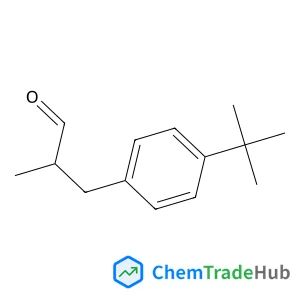
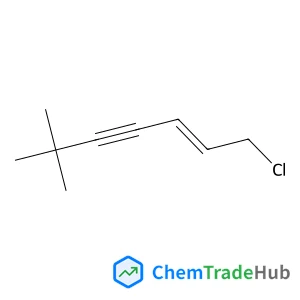
![3-[(4-Nitrobenzyl)oxy]-3-oxopropanoic Acid structure](https://cnstatic.chemtradehub.com/structs/773/77359-11-6-0d04.webp "3-[(4-Nitrobenzyl)oxy]-3-oxopropanoic Acid structure")
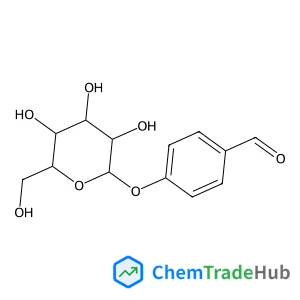
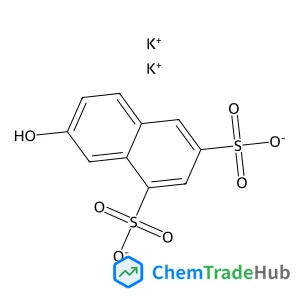
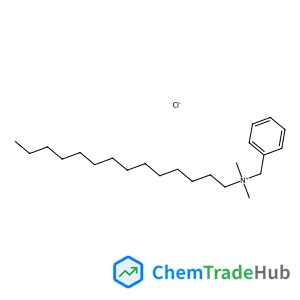
推荐供应商




免责声明
本页面提供的学术期刊信息仅供参考和研究使用。我们与任何期刊出版商均无关联,也不处理投稿事宜。如有投稿相关咨询,请直接联系相关期刊出版商。
如发现页面信息有误,请发送邮件至 support@chemtradehub.com 联系我们。我们将及时核实并处理您的问题。