









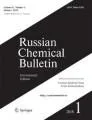
Russian Chemical Bulletin
基本信息
期刊简写:
RUSS CHEM B+
影响因子:
1.7
ISSN:
1066-5285
研究领域:
CHEMICAL
h-index:
36
自引率:
52.9%
年发文量:
326
SCI收录来源:
Science Citation Index Expanded
期刊官网:
https://www.springer.com/11172
期刊介绍:
Publishing nearly 500 original articles on actual trends in chemistry per year, by leading Scientists from Russia and throughout the world, Russian Chemical Bulletin is a prominent international journal. The coverage of the journal spans practically all areas of fundamental chemical research including: General and Inorganic Chemistry; Physical Chemistry; Chemical Physics; Organic Chemistry; Organometallic and Coordination Chemistry; Chemistry of Natural Compounds, Bioorganic and Biomolecular Chemistry; Medicinal Chemistry; Chemistry of Polymers; Supramolecular Chemistry; Nanochemistry; Materials Chemistry; Interdisciplinary Articles. The journal does not publish papers dealing with highly specialized or purely applied subjects. Papers containing material published or submitted for publication in other journals are not accepted. The Russian Chemical Bulletin publishes papers containing the results of original studies as Full Papers, Brief Communications, or Letters to the Editor. The journal also publishes Analytical Reviews (including authoґs reviews and prognostic reviews) dealing with topical problems of chemical science as well as information communications. Author´s analytical reviews should represent an integration and analysis of results of a series of studies dealing with a common topic mostly carried out by one author or a group of authors. Prognostic and analytical reviews should provide a critical consideration of the current state and prospects for development of relevant issues of chemical sciences. The size of reviews is not strictly limited. The size of Full Papers is not strictly limited: however, it is desirable that it does not exceed 16 pages of typewritten text (three figures are considered equivalent to one page). The size of a Brief Communication should not exceed eight typewritten pages. Letters to the Editor should briefly present fundamentally important scientific results requiring rapid publication. A Letter to the Editor should not exceed in size four typewritten pages.
CiteScore
CiteScore
2.7
SJR
0.292
SNIP
0.624
| 学科 | 排名 | 百分位 |
|---|---|---|
ChemistryGeneral Chemistry |
230 / 408 | 43% |
期刊统计
Monthly
期/年
审稿周期
论文处理费
投稿信息
投稿网址:
https://www.springer.com/chemistry/journal/11172相关文献
New 6-oxa-2-silabicyclo[2.2.0]hexanes by photochemical conversion of acyl(allyl)(dimethyl)silanes
Catherine Hammaecher, Charles Portella
2008-09-30
Communication
DOI: 10.1039/B812550C
Noncovalent insertion of ferrocenes into the protein shell of apo-ferritin
Jochen Niemeyer, Satoshi Abe, Tatsuo Hikage, Gerhard Erker, Yoshihito Watanabe
2008-11-06
Communication
DOI: 10.1039/B813181C
Sn(iv) phosphonates as catalysts in solvent-free Baeyer–Villiger oxidations using H2O2
Sharath Kirumakki, Sandani Samarajeewa, Robert Harwell, Atashi Mukherjee, Rolfe H. Herber, Abraham Clearfield
2008-10-08
Communication
DOI: 10.1039/B807938B
Efficient mono- and bis-functionalization of 3,6-dichloropyridazine using (tmp)2Zn·2MgCl2·2LiCl
Stefan Wunderlich, Paul Knochel
2008-11-04
Communication
DOI: 10.1039/B815903C
A robust strategy for the preparation of libraries of metallopeptides. A new paradigm for the discovery of targeted molecular imaging and therapy agents
Andrea F. Armstrong, Nick Oakley, Shannon Parker, Patrick W. Causey, Jennifer Lemon, Alfredo Capretta, Craig Zimmerman, John Joyal, Francis Appoh, Jon Zubieta, John W. Babich, Gurmit Singh, John F. Valliant
2008-09-24
Communication
DOI: 10.1039/B810706H
Ion jelly: a tailor-made conducting material for smart electrochemical devices
Pedro Vidinha, Carlos Pinheiro, Ana R. Brás, Tânia Carvalho, Teresa Santos-Silva, Abhik Mukhopadhyay, Maria J. Romão, Jorge Parola, Madalena Dionisio, Joaquim M. S. Cabral, Carlos A. M. Afonso, Susana Barreiros
2008-10-03
Communication
DOI: 10.1039/B811647D
Highly regioselective ring-opening of trisubstituted aziridines by sulfur-stabilised carbanions
Santiago Carballares, Donald Craig, Christopher J. T. Hyland, Pengfei Lu, Tanya Mathie, Andrew J. P. White
2008-11-26
Communication
DOI: 10.1039/B815971H
Controlled self-sorting in the assembly of ‘multi-gelator’ gels‡
Jamie R. Moffat, David K. Smith
2008-11-19
Communication
DOI: 10.1039/B818058J
Azaarene cis-dihydrodiol-derived 2,2′-bipyridine ligands for asymmetric allylic oxidation and cyclopropanation
Derek R. Boyd, Narain D. Sharma, Lenuta Sbircea, Deirdre Murphy, Tayeb Belhocine, John F. Malone, Stuart L. James, Christopher C. R. Allen
2008-10-09
Communication
DOI: 10.1039/B814678K
Sensitive liposomes encoded with oligonucleotideamphiphiles: a biocompatible switch
Gregory Giannone
2008-09-23
Communication
DOI: 10.1039/B812398E
您可能还喜欢
化合物问答
4-[4-三氟甲基苯基]恶唑(CAS号:1126636-40-5)通常如何合成?
4-[4-三氟甲基苯基]恶唑通常通过将4-三氟甲基苯酚与异硫氰酸苯酯在有机溶剂中进行酯化反应合成。该反应可在无水条件下,使用适当的催化剂,如四丁基氢氧化铵,以提...
1126636-40-54-(4-(Trifluoromethy...
59729-32-71-[3-(Dimethylamino)...
化合物问答
RockPhos Pd G3(CAS号:2009020-38-4)通常如何合成?
RockPhos Pd G3 通常通过钯催化偶联反应合成,使用配体 (2'-Amino-2-biphenylyl)(methanesulfonato-kappa...
2009020-38-4(2'-Amino-2-biphenyl...
化合物问答
1-哌啶甲酰胺(CAS号:2158-03-4)的市场或研究趋势如何?
1-哌啶甲酰胺作为有机合成中的重要中间体,其市场需求主要受医药、农药、染料等行业推动。近年来,随着新药开发和绿色化学的发展,该化合物的研究趋势集中在开发更高效、...
2158-03-41-Piperidinecarboxam...
化合物问答
2-(二苯基膦基)乙胺(CAS号:4848-43-5)适用哪些法规指南?
2-(二苯基膦基)乙胺适用于多种法规指南,包括但不限于《全球化学品统一分类和标签制度》(GHS),欧盟《化学品注册、评估、授权和限制》法规(REACH),以及美...
4848-43-52-(Diphenylphosphino...
化合物问答
如何储存间苯二甲酸二烯丙酯(CAS号:1087-21-4)?
间苯二甲酸二烯丙酯应储存在阴凉、干燥、通风良好的地方,远离火源和热源。储存容器应密封,避免光照和高温。储存温度应控制在25℃以下,相对湿度应低于80%。避免与其...
1087-21-4Diallyl isophthalate
化合物问答
什么是间甲苯异硫代异氰酸酯(CAS号:621-30-7)?
间甲苯异硫代异氰酸酯是一种有机化合物,分子式为C7H7NO2S,具有刺激性气味。它是一种重要的有机合成中间体,在合成其他化合物时广泛应用。
621-30-71-Isothiocyanato-3-m...
化合物问答
在合成中是否有N-Boc-D-苯丙氨醇(CAS号:106454-69-7)的替代品?
在合成中,可以考虑使用N-Cbz-D-苯丙氨醇或N-Fmoc-D-苯丙氨醇作为替代品。这些化合物同样具有保护氨基的功能,且在合成过程中表现出良好的反应性能。
106454-69-72-Methyl-2-propanyl ...
化合物问答
3-羟甲基-2-氧异丙基吡啶(CAS号:954240-50-7)的主要用途是什么?
3-羟甲基-2-氧异丙基吡啶主要用于有机合成领域,可以作为合成其他药物、农药或精细化学品的中间体。此外,它还可能在实验室研究中作为特定反应的前体或溶剂。
954240-50-7(2-Isopropoxy-3-pyri...
化合物问答
6-氨基-9-甲基嘌呤(CAS号:700-00-5)应用于哪些行业?
6-氨基-9-甲基嘌呤目前主要应用于医药行业,作为某些药物的中间体。此外,它还可能用于聚合物、传感器和半导体的某些领域,作为功能性单体或掺杂剂。
700-00-59-Methyl-9H-purin-6-...
推荐化合物
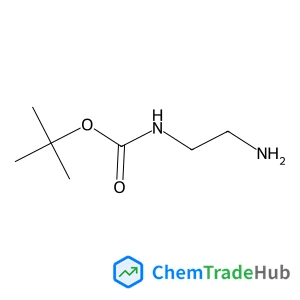
![Bis[(1,2,3,4,5-eta)-1-(diphenylphosphino)cyclopentadienyl]iron structure](https://cnstatic.chemtradehub.com/structs/121/12150-46-8-ecd2.webp "Bis[(1,2,3,4,5-eta)-1-(diphenylphosphino)cyclopentadienyl]iron structure")
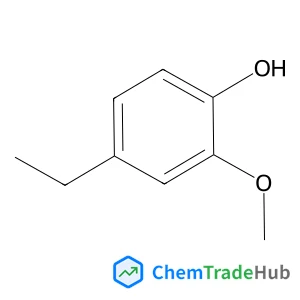
![2-Bromodibenzo[b,d]furan structure](https://cnstatic.chemtradehub.com/structs/86-/86-76-0-1814.webp "2-Bromodibenzo[b,d]furan structure")
推荐供应商





免责声明
本页面提供的学术期刊信息仅供参考和研究使用。我们与任何期刊出版商均无关联,也不处理投稿事宜。如有投稿相关咨询,请直接联系相关期刊出版商。
如发现页面信息有误,请发送邮件至 support@chemtradehub.com 联系我们。我们将及时核实并处理您的问题。