










Water Research
基本信息
期刊简写:
WATER RES
影响因子:
11.4
ISSN:
0043-1354
研究领域:
ENVIRONMENTAL SCIENCE AND ECOLOGY
h-index:
263
自引率:
7.9%
年发文量:
1329
SCI收录来源:
Science Citation Index Expanded
期刊官网:
https://www.sciencedirect.com/journal/water-research
期刊介绍:
Water Research has an open access companion journal Water Research X, sharing the same aims and scope, editorial team, submission system and rigorous peer review. Water Research publishes refereed, original research papers on all aspects of the science and technology of the anthropogenic water cycle, water quality, and its management worldwide. A broad outline of the journal's scope includes: •Treatment processes for water and wastewaters (municipal, agricultural, industrial, and on-site treatment), including resource recovery and residuals management; •Urban hydrology including sewer systems, stormwater management, and green infrastructure; •Drinking water treatment and distribution; •Potable and non-potable water reuse; •Sanitation, public health, and risk assessment; •Anaerobic digestion, solid and hazardous waste management, including source characterization and the effects and control of leachates and gaseous emissions; •Contaminants (chemical, microbial, anthropogenic particles such as nanoparticles or microplastics) and related water quality sensing, monitoring, fate, and assessment; •Anthropogenic impacts on inland, tidal, coastal and urban waters, focusing on surface and ground waters, and point and non-point sources of pollution; •Environmental restoration, linked to surface water, groundwater and groundwater remediation; •Analysis of the interfaces between sediments and water, and between water and atmosphere, focusing specifically on anthropogenic impacts; •Mathematical modelling, systems analysis, machine learning, and beneficial use of big data related to the anthropogenic water cycle; •Socio-economic, policy, and regulations studies. Water Research is an interdisciplinary journal with an applied edge. This means that papers that go into too many details of one of the supporting disciplines (such as chemistry, toxicology, microbiology, material sciences, etc.) without making a good link with water research in general may be rejected up-front. More information on types of manuscripts that are not suitable for Water Research are discussed in an editorial available at https://doi.org/10.1016/j.watres.2012.01.038. Audience: Biologists, chemical engineers, chemists, civil engineers, environmental engineers, limnologists, and microbiologists. Note that Water Research/Water Research X do not do pre-submission evaluations. Please carefully review the journal scope and previous issues of the journals to assess the fit of your manuscript. The handling editor will then evaluate suitability of your full manuscript. Elsevier and IWA have also jointly launched two specialist titles which authors are welcome to submit to: The open access Water Resources and Industry focuses on the role that industry plays in the exploitation, management and treatment of water resources. Water Resources and Economics addresses the financial and economic dimensions associated with water resources use and governance. Benefits to authors We also provide many author benefits, including a liberal copyright policy, special discounts on Elsevier publications and much more. Please click here for more information on our author services. Please see our Guide for Authors for information on article submission. If you require any further information or help, please visit our Support Center
CiteScore
CiteScore
20.8
SJR
3.596
SNIP
2.192
| 学科 | 排名 | 百分位 |
|---|---|---|
EngineeringCivil and Structural Engineering |
2 / 379 | 99% |
期刊统计
Semimonthly
期/年
Time to first decision: 15days
Review time: 68days
Submission to acceptance: 101days
Acceptance to publication: 2days
审稿周期
$4520
论文处理费
投稿信息
投稿网址:
https://www.editorialmanager.com/WR收录体裁:
RESEARCH PAPER
REVIEW PAPERS
COMMENTS
MAKING WAVES
REVIEW PAPERS
COMMENTS
MAKING WAVES
相关文献
Second-harmonic generation for studying structural motion of biological molecules in real time and space
2007-09-07
Paper
DOI: 10.1039/B710505C
Molecular dynamics study of dicarbollide anions in nitrobenzene solution and at its aqueous interface. Synergistic effect in the Eu(iii) assisted extraction
G. Chevrot, R. Schurhammer, G. Wipff
2007-09-28
Paper
DOI: 10.1039/B711284J
Dependence of the nascent vibrational distribution of NO(v) on the photolysis wavelength of NO2 in the range λ = 266–327 nm measured by time-resolved Fourier transform infrared emission
C. Brooks, G. Hancock, M. Saunders
2007-08-03
Paper
DOI: 10.1039/B710594K
Localized orbital theory and ammonia triborane
Joseph E. Subotnik, Alex Sodt, Martin Head-Gordon
2007-08-29
Paper
DOI: 10.1039/B709171K
Influence of the d orbital occupation on the nature and strength of copper cation–π interactions: threshold collision-induced dissociation and theoretical studies
Chunhai Ruan, Zhibo Yang, M. T. Rodgers
2007-09-25
Paper
DOI: 10.1039/B709820K
Intersystem crossing driven by vibronic spin–orbit coupling: a case study on psoralen
Jörg Tatchen, Natalie Gilka, Christel M. Marian
2007-09-03
Paper
DOI: 10.1039/B706410A
您可能还喜欢
化合物问答
4-[4-三氟甲基苯基]恶唑(CAS号:1126636-40-5)通常如何合成?
4-[4-三氟甲基苯基]恶唑通常通过将4-三氟甲基苯酚与异硫氰酸苯酯在有机溶剂中进行酯化反应合成。该反应可在无水条件下,使用适当的催化剂,如四丁基氢氧化铵,以提...
1126636-40-54-(4-(Trifluoromethy...
59729-32-71-[3-(Dimethylamino)...
化合物问答
RockPhos Pd G3(CAS号:2009020-38-4)通常如何合成?
RockPhos Pd G3 通常通过钯催化偶联反应合成,使用配体 (2'-Amino-2-biphenylyl)(methanesulfonato-kappa...
2009020-38-4(2'-Amino-2-biphenyl...
化合物问答
1-哌啶甲酰胺(CAS号:2158-03-4)的市场或研究趋势如何?
1-哌啶甲酰胺作为有机合成中的重要中间体,其市场需求主要受医药、农药、染料等行业推动。近年来,随着新药开发和绿色化学的发展,该化合物的研究趋势集中在开发更高效、...
2158-03-41-Piperidinecarboxam...
化合物问答
2-(二苯基膦基)乙胺(CAS号:4848-43-5)适用哪些法规指南?
2-(二苯基膦基)乙胺适用于多种法规指南,包括但不限于《全球化学品统一分类和标签制度》(GHS),欧盟《化学品注册、评估、授权和限制》法规(REACH),以及美...
4848-43-52-(Diphenylphosphino...
化合物问答
如何储存间苯二甲酸二烯丙酯(CAS号:1087-21-4)?
间苯二甲酸二烯丙酯应储存在阴凉、干燥、通风良好的地方,远离火源和热源。储存容器应密封,避免光照和高温。储存温度应控制在25℃以下,相对湿度应低于80%。避免与其...
1087-21-4Diallyl isophthalate
化合物问答
什么是间甲苯异硫代异氰酸酯(CAS号:621-30-7)?
间甲苯异硫代异氰酸酯是一种有机化合物,分子式为C7H7NO2S,具有刺激性气味。它是一种重要的有机合成中间体,在合成其他化合物时广泛应用。
621-30-71-Isothiocyanato-3-m...
化合物问答
在合成中是否有N-Boc-D-苯丙氨醇(CAS号:106454-69-7)的替代品?
在合成中,可以考虑使用N-Cbz-D-苯丙氨醇或N-Fmoc-D-苯丙氨醇作为替代品。这些化合物同样具有保护氨基的功能,且在合成过程中表现出良好的反应性能。
106454-69-72-Methyl-2-propanyl ...
化合物问答
3-羟甲基-2-氧异丙基吡啶(CAS号:954240-50-7)的主要用途是什么?
3-羟甲基-2-氧异丙基吡啶主要用于有机合成领域,可以作为合成其他药物、农药或精细化学品的中间体。此外,它还可能在实验室研究中作为特定反应的前体或溶剂。
954240-50-7(2-Isopropoxy-3-pyri...
化合物问答
6-氨基-9-甲基嘌呤(CAS号:700-00-5)应用于哪些行业?
6-氨基-9-甲基嘌呤目前主要应用于医药行业,作为某些药物的中间体。此外,它还可能用于聚合物、传感器和半导体的某些领域,作为功能性单体或掺杂剂。
700-00-59-Methyl-9H-purin-6-...
推荐化合物
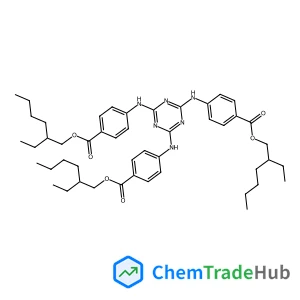
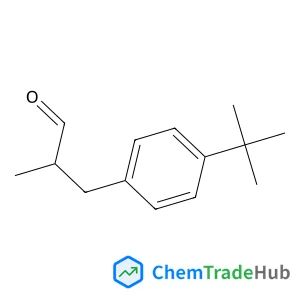
![2-Bromodibenzo[b,d]furan structure](https://cnstatic.chemtradehub.com/structs/86-/86-76-0-1814.webp "2-Bromodibenzo[b,d]furan structure")
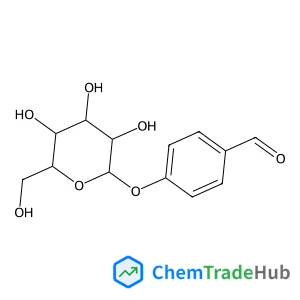
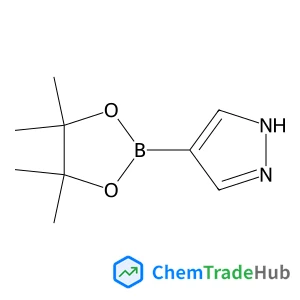
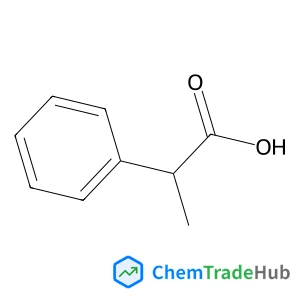
推荐供应商



免责声明
本页面提供的学术期刊信息仅供参考和研究使用。我们与任何期刊出版商均无关联,也不处理投稿事宜。如有投稿相关咨询,请直接联系相关期刊出版商。
如发现页面信息有误,请发送邮件至 support@chemtradehub.com 联系我们。我们将及时核实并处理您的问题。