


Ultrafast proton transfer in the S1 state of 1-chloroacetylaminoanthraquinone
文献信息
发布日期
2001-03-01
DOI
10.1039/B007312L
影响因子
3.676
作者
Frederik V. R. Neuwahl, Laura Bussotti, Roberto Righini, Guy Buntinx
查看原文
摘要
Excited state intramolecular proton transfer (ESIPT) in 1-chloroacetylaminoanthraquinone (CAAQ) and 1,8-dihydroxyanthraquinone (DHAQ) in solution is investigated at room temperature by means of femtosecond transient absorption spectroscopy. While ESIPT is practically instantaneous in DHAQ, in CAAQ the same process occurs with measurable kinetics, with a time constant of 100 fs. The energy diagrams for the ground and excited states of the proton-transferred and non-proton-transferred species, compatible with these observations, are discussed and an estimate is given for the activation energy of the process.
期刊推荐

Critical Reviews in Solid State and Materials Sciences
Atomization and Sprays
Journal of Asian Natural Products Research

Main Group Chemistry

Chinese Journal of Chemistry
Biocatalysis and Biotransformation

NDT & E International
Herald of the Russian Academy of Sciences

Electroanalysis
Bioorganic & Medicinal Chemistry Letters
相关文献
Comment on “Brownian diffusion of a particle at an air/liquid interface: elastic (not viscous) response of the surface”
G. Boniello, A. Stocco, C. Blanc, M. Nobili
2017-07-28
Comment
DOI: 10.1039/C7CP02970E
Limestone calcination under calcium-looping conditions for CO2 capture and thermochemical energy storage in the presence of H2O: an in situ XRD analysis
Jose Manuel Valverde, Santiago Medina
2017-02-22
Paper
DOI: 10.1039/C7CP00260B
Two-photon absorption in a series of 2,6-disubstituted BODIPY dyes
Leonardo W. T. Barros, Thiago A. S. Cardoso, Angela Bihlmeier, Dominik K. Kölmel, Carlos H. Brito Cruz, Lazaro A. Padilha
2017-07-20
Paper
DOI: 10.1039/C6CP07849D
Theoretical tuning of the singlet–triplet energy gap to achieve efficient long-wavelength thermally activated delayed fluorescence emitters: the impact of substituents
Lijuan Wang, Tao Li, Peicheng Feng, Yan Song
2017-07-17
Paper
DOI: 10.1039/C7CP02615C
A simple bulk modulus model for crystal materials based on the bond valence model
Xiao Liu, Hao Wang, Weimin Wang, Zhengyi Fu
2017-07-27
Paper
DOI: 10.1039/C7CP03739B
Novel benzodithiophene-based polymer acceptors for efficient organic solar cells
Quan-Song Li, Ze-Sheng Li
2017-08-08
Paper
DOI: 10.1039/C7CP04372D
Self-thermophoretic motion of controlled assembled micro-/nanomotors
Xiankun Lin, Tieyan Si, Zhiguang Wu, Qiang He
2017-05-22
Perspective
DOI: 10.1039/C7CP02561K
Compositional phase diagram and microscopic mechanism of Ba1−xCaxZryTi1−yO3 relaxor ferroelectrics
Shi-Yu Liu, Yang Meng, Shiyang Liu, De-Jun Li, Yaping Li, Yingdi Liu, Yaogen Shen, Sanwu Wang
2017-07-27
Paper
DOI: 10.1039/C7CP04530A
Solvent diffusion in polymer-embedded hollow nanoparticles studied by in situ small angle X-ray scattering
Zhi Hong Chen, Sun Hye Hwang, Xiang-bing Zeng, Jongmin Roh, Jyongsik Jang
2017-07-21
Paper
DOI: 10.1039/C7CP03741D
Redox cycling of iron by carbon dot enhanced chemiluminescence: mechanism of electron–hole induction in carbon dot
Syed Niaz Ali Shah, Ling Lin, Yongzan Zheng, Dingkun Zhang, Jin-Ming Lin
2017-07-17
Paper
DOI: 10.1039/C7CP03724D
您可能还喜欢
化合物问答
如何储存1,2-环己二酮环乙缩醛(CAS号:4746-96-7)?
1,2-环己二酮环乙缩醛应储存在阴凉、干燥、通风良好的地方,避免阳光直射。建议使用密封容器保存,并保持环境温度在室温范围内,远离火源和热源。
4746-96-71,4-Dioxaspiro[4.5]d...
化合物问答
Ecopladib(CAS号:381683-92-7)的市场或研究趋势如何?
Ecopladib作为一种新型的药物,主要应用于治疗高胆固醇等疾病。目前,市场和研究趋势显示,Ecopladib因其独特的药理作用而受到关注。随着对心血管疾病治...
381683-92-7Ecopladib
化合物问答
2,3-Dimethyl-3H-imidazo[4,5-c]pyridine(CAS号:52538-09-7)通常如何合成?
2,3-二甲基-3H-咪唑[4,5-c]吡啶通常通过咪唑和2,3-二甲基吡啶的缩合反应合成。具体来说,将咪唑和2,3-二甲基吡啶在适当的溶剂中进行加热或加压反应...
52538-09-72,3-Dimethyl-3H-imid...
化合物问答
2,3,4,5-tetrahydro-1H-3-苯并氮杂环;盐酸盐(CAS号:17379-01-0)的市场或研究趋势如何?
该化合物在药物化学和有机合成中有一定的应用。近年来,随着对新型药物化合物的需求增加,该化合物的研究趋势主要集中在探索其生物活性,尤其是其在神经系统疾病治疗中的潜...
17379-01-02,3,4,5-Tetrahydro-1...
68-90-6(2-Ethyl-1-benzofura...
化合物问答
如何储存盐酸甘氨酸丁酯(CAS号:13048-99-2)?
盐酸甘氨酸丁酯应储存在阴凉、干燥、通风良好的地方,避免阳光直射和高温环境,温度应控制在25℃以下。储存容器应密封,避免与空气中的水分和酸性物质接触,以防发生水解...
13048-99-2Butyl glycinate hydr...
化合物问答
什么是2-Iodo-N,N-dimethylbenzamide(CAS号:54616-46-5)?
2-碘-N,N-二甲基苯胺是一种有机化合物,化学名为2-Iodo-N,N-dimethylbenzamide。其分子式为C<sub>9</sub>H<sub>1...
54616-46-52-Iodo-N,N-dimethylb...
16817-90-6N-Cyclohexylglycinam...
化合物问答
5-溴-2-(4H-1,2,4-三唑-4-基)吡啶(CAS号:959240-99-4)的市场或研究趋势如何?
随着医药、农药和新材料领域的发展,该化合物作为关键中间体的应用日益增多。特别是在药物合成中,由于其独特的化学性质,可以用于合成多种药物分子。未来的研究趋势可能集...
959240-99-45-Bromo-2-(4H-1,2,4-...
化合物问答
2,4-二溴-6-三氟甲基嘧啶(CAS号:785778-00-9)通常如何合成?
2,4-二溴-6-三氟甲基嘧啶通常通过溴化反应合成。首先,将6-三氟甲基嘧啶与溴化剂(如液溴)在适当的溶剂(如二氯甲烷、四氢呋喃)中反应,加入适当的催化剂(如四...
785778-00-92,4-Dibromo-6-(trifl...
来源期刊
Physical Chemistry Chemical Physics

CiteScore:
5.5
自引率:
10.3%
年发文量:
3036
Physical Chemistry Chemical Physics (PCCP) is an international journal co-owned by 19 physical chemistry and physics societies from around the world. This journal publishes original, cutting-edge research in physical chemistry, chemical physics and biophysical chemistry. To be suitable for publication in PCCP, articles must include significant innovation and/or insight into physical chemistry; this is the most important criterion that reviewers and Editors will judge against when evaluating submissions. The journal has a broad scope and welcomes contributions spanning experiment, theory, computation and data science. Topical coverage includes spectroscopy, dynamics, kinetics, statistical mechanics, thermodynamics, electrochemistry, catalysis, surface science, quantum mechanics, quantum computing and machine learning. Interdisciplinary research areas such as polymers and soft matter, materials, nanoscience, energy, surfaces/interfaces, and biophysical chemistry are welcomed if they demonstrate significant innovation and/or insight into physical chemistry. Joined experimental/theoretical studies are particularly appreciated when complementary and based on up-to-date approaches.
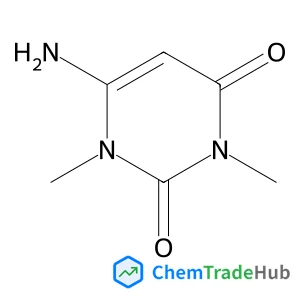
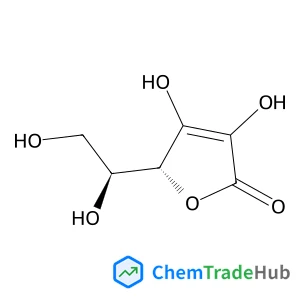
推荐化合物
推荐供应商






免责声明
本页面提供的学术期刊信息仅供参考和研究使用。我们与任何期刊出版商均无关联,也不处理投稿事宜。如有投稿相关咨询,请直接联系相关期刊出版商。
如发现页面信息有误,请发送邮件至 support@chemtradehub.com 联系我们。我们将及时核实并处理您的问题。