


Polyenic/polymethinic relationships for donor–acceptor substituted stilbenoids: Structural, electronic and spectroscopic aspects
文献信息
发布日期
2001-04-05
DOI
10.1039/B010135O
影响因子
3.676
作者
Marina Dekhtyar, Wolfgang Rettig
查看原文
摘要
A selection of donor–acceptor-substituted stilbenoids of strongly differing polarities was investigated by the AM1 method with full geometry optimization in the ground and the excited state. The results obtained including structural parameters, electronic density distribution, molecular orbital (MO) energies and localizations and S0–S1 energy gaps were rationalized using topological approaches, the Hückel MO (HMO) and the long chain approximation. In this context, a number of analytical expressions were deduced for the molecular characteristics of an arbitrarily terminated conjugated chain and they were employed to make a correlation between two series of model compounds with varied asymmetry, open-chain polyenes (ACH–(CHCH)5–CHD, I) and their ring-terminated analogues (AC5H4–CHCH–C5H4D, II), where A and D represent acceptor and donor moieties. As a result, the relationship of donor–acceptor-substituted stilbenes to polymethines and polyenes was elucidated, and the special role of the aromatic character in π-electron-based stilbenoid peculiarities was interpreted.
期刊推荐
Acta Metallurgica Sinica-English Letters
Journal of the Indian Institute of Science
Cellulose
Polycyclic Aromatic Compounds

Colloid Journal
Bioorganic & Medicinal Chemistry Letters

Critical Reviews in Solid State and Materials Sciences
Medicinal Chemistry Research
Journal of Asian Natural Products Research
Biocatalysis and Biotransformation
相关文献
A total loss of innocence: double ortho-metallation of bis(triphenylphosphano)iminium cation, [N(PPh3)2]+, by tris(η-naphthalene)tantalate(1−)‡
Victor J. Sussman, John E. Ellis
2008-10-01
Communication
DOI: 10.1039/B811320C
Highly enantioselective carbon–carbon bond formation by Cu-catalyzed asymmetric [2,3]-sigmatropic rearrangement: application to the syntheses of seven-membered oxacycles and six-membered carbocycles
Gullapalli Kumaraswamy, Kadivendi Sadaiah, Duggirala Subrahmanya Ramakrishna, Naresh Police, Balasubramanian Sridhar, Jagadeesh Bharatam
2008-09-17
Communication
DOI: 10.1039/B810770J
A simple route to novel D spherosilicones; the first crystallographic structures of D6 and D8 cages
Alan R. Bassindale, Zhihua Liu, Peter G. Taylor, Peter N. Horton, Michael B. Hursthouse
2008-09-29
Communication
DOI: 10.1039/B808456D
Internal amide-triggered cycloaromatization of maduropeptin-like nine-membered enediyne
Yutaro Norizuki, Kazuo Komano, Itaru Sato, Masahiro Hirama
2008-09-15
Communication
DOI: 10.1039/B811355F
Crystalline low band-gap alternating indolocarbazole and benzothiadiazole-cored oligothiophene copolymer for organic solar cell applications‡
Jianping Lu, Fushun Liang, Nicolas Drolet, Jianfu Ding, Ye Tao, Raluca Movileanu
2008-09-15
Communication
DOI: 10.1039/B811031J
Covalent surface modification of a metal–organic framework: selective surface engineering viaCuI-catalyzed Huisgen cycloaddition
Tendai Gadzikwa, Guang Lu, Charlotte L. Stern, Scott R. Wilson, Joseph T. Hupp, SonBinh T. Nguyen
2008-10-08
Communication
DOI: 10.1039/B805101A
Facile synthesis of aminophenylboronic acid-functionalized magnetic nanoparticles for selective separation of glycopeptides and glycoproteins
Wei Zhou, Ning Yao, Guoping Yao, Chunhui Deng, Xiangmin Zhang, Pengyuan Yang
2008-09-25
Communication
DOI: 10.1039/B808800D
Axial chirality control of troposBIPHEP–Rh complexes by chiral dienes: synergy effect in catalytic asymmetric hydrogenation‡
Kohsuke Aikawa, Yūki Takabayashi, Susumu Kawauchi, Koichi Mikami
2008-09-30
Communication
DOI: 10.1039/B809683J
Stabilization of CeO2nanoparticles in a CO2 rich solvent
Martin J. Hollamby, Kieran Trickett, Ana Vesperinas, Carl Rivett, David C. Steytler, Zoe Schnepp, Jon Jones, Richard K. Heenan, Robert M. Richardson, Otto Glatter, Julian Eastoe
2008-09-29
Communication
DOI: 10.1039/B811563J
One-pot solvothermal synthesis of FePt/Fe3O4 core–shell nanoparticles
Chih-Wei Lai, Yu-Hsiu Wang, Borade Prajakta Uttam, Yu-Chun Chen, Chien-Liang Liu, Hon-Man Liu, Chun-Yen Chen, Pi-Tai Chou
2008-09-19
Communication
DOI: 10.1039/B810965F
您可能还喜欢
化合物问答
2-氨基-2-(5-甲基噻吩-2-基)乙酸(CAS号:89776-66-9)应用于哪些行业?
2-氨基-2-(5-甲基噻吩-2-基)乙酸主要应用于医药、聚合物、传感器和半导体等行业。在医药领域,它作为中间体用于合成各种药物。在聚合物行业,它可以用作稳定剂...
89776-66-9Amino(5-methyl-2-thi...
化合物问答
什么是N-(叔丁氧羰基)-3-碘吲唑(CAS号:290368-00-2)?
N-(叔丁氧羰基)-3-碘吲唑是一种化学化合物,其英文名称为2-Methyl-2-propanyl 3-iodo-1H-indazole-1-carboxyla...
290368-00-22-Methyl-2-propanyl ...
化合物问答
N-芴甲氧羰基-D-谷氨酸(CAS号:104091-09-0)的市场或研究趋势如何?
该化合物作为重要的保护基,广泛应用于生物有机化学合成中,尤其在肽类、蛋白质和寡核苷酸的研究领域。随着合成生物学和药物开发的进展,该化合物的需求持续增长。未来的研...
104091-09-0N-[(9H-Fluoren-9-ylm...
化合物问答
2-乙氧基-1-萘酰氯(CAS号:55150-29-3)的市场或研究趋势如何?
2-乙氧基-1-萘酰氯在研究领域中主要用于合成研究和有机化学反应,随着有机合成技术的发展,其市场应用和研究兴趣可能会有所增长。尤其是在新型药物合成和新材料开发领...
55150-29-32-Ethoxy-1-naphthoyl...
化合物问答
1-甲氧基菜豆素(CAS号:65428-13-9)的主要用途是什么?
1-甲氧基菜豆素主要应用于有机合成、药物化学领域,作为合成其他有机化合物的中间体或前体。此外,由于其特殊的化学性质,也可能用于某些特定的化学研究和实验中。
65428-13-9(6aR,11aR)-1-Methoxy...
化合物问答
small>-2-氨基丁酸(CAS号:106873-99-8)的主要用途是什么?
small>-2-氨基丁酸主要应用于有机合成和化学研究中,作为中间体或试剂使用。此外,它还可能用于某些药物合成过程中。
106873-99-82-Formamidobutanoic ...
化合物问答
什么是5-氨基-2-氯-n-(2-呋喃甲基)苯甲酰胺(CAS号:926216-59-3)?
5-氨基-2-氯-n-(2-呋喃甲基)苯甲酰胺是一种有机化合物,其分子式为C11H9ClN3O。它具有一定的生物活性,在合成化学和药物化学中有一定的应用价值。
926216-59-35-Amino-2-chloro-N-(...
化合物问答
4-(3-溴苯甲酰基)-哌嗪-1-羧酸叔丁酯(CAS号:890153-34-1)适用哪些法规指南?
该化合物根据其化学性质和用途,可能需要符合GHS(全球化学品统一分类和标签制度)的分类标准,包括急性毒性、皮肤腐蚀/刺激、严重眼损伤/眼刺激等类别。此外,根据其...
890153-34-12-Methyl-2-propanyl ...
化合物问答
如何储存(9ci)-2,4-二甲基-1H-吡咯-3-甲腈(CAS号:26187-28-0)?
应将(9ci)-2,4-二甲基-1H-吡咯-3-甲腈存放在阴凉、干燥的地方,避免阳光直射。储存容器应密封良好,防止挥发和污染。建议温度保持在20-25℃之间,湿...
26187-28-02,4-Dimethyl-1H-pyrr...
化合物问答
巨大戟醇-5,20-缩丙酮-3-当归酸酯(CAS号:87980-68-5)通常如何合成?
该化合物通常通过合成当归酸酯的方法制备,具体步骤为将当归酸酯与巨大戟醇-5,20-缩丙酮进行缩合反应,反应条件为温和的酸性环境,通常使用三氟乙酸作为催化剂。该合...
87980-68-5(4S,5S,6R,18R)-5-Hyd...
来源期刊
Physical Chemistry Chemical Physics

CiteScore:
5.5
自引率:
10.3%
年发文量:
3036
Physical Chemistry Chemical Physics (PCCP) is an international journal co-owned by 19 physical chemistry and physics societies from around the world. This journal publishes original, cutting-edge research in physical chemistry, chemical physics and biophysical chemistry. To be suitable for publication in PCCP, articles must include significant innovation and/or insight into physical chemistry; this is the most important criterion that reviewers and Editors will judge against when evaluating submissions. The journal has a broad scope and welcomes contributions spanning experiment, theory, computation and data science. Topical coverage includes spectroscopy, dynamics, kinetics, statistical mechanics, thermodynamics, electrochemistry, catalysis, surface science, quantum mechanics, quantum computing and machine learning. Interdisciplinary research areas such as polymers and soft matter, materials, nanoscience, energy, surfaces/interfaces, and biophysical chemistry are welcomed if they demonstrate significant innovation and/or insight into physical chemistry. Joined experimental/theoretical studies are particularly appreciated when complementary and based on up-to-date approaches.
推荐化合物
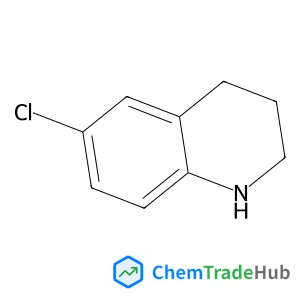
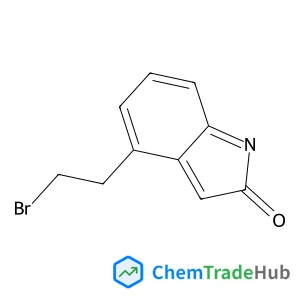
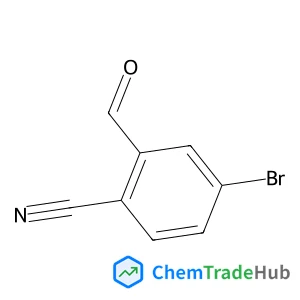
![2-Methyl-2-propanyl 4-{2-fluoro-5-[(4-oxo-3,4-dihydro-1-phthalazinyl)methyl]benzoyl}-1-piperazinecarboxylate structure](https://cnstatic.chemtradehub.com/structs/763/763114-04-1-65a9.webp "2-Methyl-2-propanyl 4-{2-fluoro-5-[(4-oxo-3,4-dihydro-1-phthalazinyl)methyl]benzoyl}-1-piperazinecarboxylate structure")
推荐供应商



免责声明
本页面提供的学术期刊信息仅供参考和研究使用。我们与任何期刊出版商均无关联,也不处理投稿事宜。如有投稿相关咨询,请直接联系相关期刊出版商。
如发现页面信息有误,请发送邮件至 support@chemtradehub.com 联系我们。我们将及时核实并处理您的问题。