






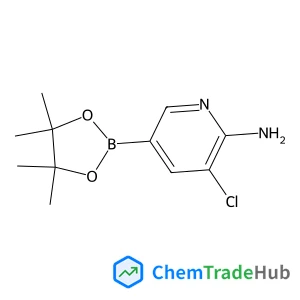
3-Chloro-5-(4,4,5,5-tetramethyl-1,3,2-dioxaborolan-2-yl)-2-pyridinamine
CAS号:
1032758-99-8
分子式:
C11H16BClN2O2
Yun-Hong Zhang, Li-Jun Zhao
The ATR-FTIR spectra of aqueous LiClO4, NaClO4, and Mg(ClO4)2 solutions with ClO4− concentrations ranging from 0 to 3.00 mol dm−3 were obtained. After subtracting the spectra of pure water, positive peaks on the high wavenumber side and negative peaks on the low wavenumber side of the O–H stretching bands are observed in the difference spectra. The positive peaks appear constantly at about 3580 cm−1 independent of cation, which are assigned to the water molecules weakly hydrogen-bonded with ClO4−. However, the negative peaks appear at 3203, 3196, and 3254 cm−1 for LiClO4, NaClO4, and Mg(ClO4)2 solutions, respectively, and the peak areas show significant difference with increasing the concentration of perchlorate anions and are dependent on cations. The negative peaks are attributed to the “structure breaking” effect of perchlorate ions on the hydrogen bond network of water, which is in agreement with Raman spectroscopic studies. Besides the “structure breaking” effect of ClO4− on destroying the strong hydrogen bonds of the water molecules with fully hydrogen-bonded five-molecule tetrahedral nearest neighbor structure, the difference of the negative peaks are the results of the different “structure making” effect of the three cations, which is consistent with the ability of the polarization and hydration, in the order of Na+ < Li+ ≪ Mg2+. The overall shifting of the v3 band of perchlorate ions towards low wavenumber with increasing the concentration of perchlorates is attributed to the presence of solvent separated ion pairs, i.e., M⋯(H2O)n⋯ClO4−. The symmetric stretching vibration (v1) of perchlorate ions, which is an infrared inactive mode for free perchlorate ions, shows a weak band at ∼930 cm−1 in a wide concentration range of the three systems. The appearance of the weak band is considered as the perturbation of the ZnSe/water interface on perchlorate ions.
Rajesh Kumar, Haijun Yan, Adam Johan Bergren
DOI: 10.1039/C1CP20755E
Weiwei Zhou, Tao Chen, Kim Seng Tan, Xingtao Jia, Zhiqiang Luo, Chunxiao Cong, Huanping Yang, Chang Ming Li
DOI: 10.1039/C1CP21917K
Andreia Mota, Jason P. Hallett, Maxim L. Kuznetsov, Isabel Correia
DOI: 10.1039/C1CP20800D
Anmin Zheng, Shing-Jong Huang, Feng Deng
DOI: 10.1039/C1CP20417C
Stefanie A. Sherrill, Jonathon Duay, Zhe Gui, Parag Banerjee, Gary W. Rubloff
DOI: 10.1039/C1CP21815H
Andrew Das Arulsamy, Zlatko Kregar, Kristina Eleršič, Martina Modic, Uma Shankar Subramani
DOI: 10.1039/C1CP20138G
Xavier Aparicio-Anglès, Anna Clotet, Josep M. Poblet
DOI: 10.1039/C0CP02602F
Micael J. T. Oliveira, Miguel A. L. Marques
DOI: 10.1039/C1CP20719A
Christine Cézard, Frédéric Aubry, Florence Djedaïni-Pilard, François-Yves Dupradeau
DOI: 10.1039/C1CP20854C
3 - (二氟甲基)-1 -氟苯需遵循联合国全球化学品统一分类和标签制度(GHS),包括急性毒性、皮肤腐蚀/刺激、严重眼损伤/眼刺激等分类。同时,该化合物还需符...
3,5-二甲基苯胺通常通过乙苯的氨解反应合成。反应中使用硫酸作为催化剂,反应温度为120-130°C。乙苯在硫酸存在下与氨反应,生成3,5-二甲基苯胺和苯胺副产...
3-甲基异噻唑-5-胺在适当使用和储存条件下是相对安全的,但在操作时应注意防护措施。应避免吸入粉尘,避免与皮肤和眼睛直接接触。在操作过程中,应穿戴适当的防护装备...
3-(1,3-噻唑-2-基)-1H-吲哚通常通过多步合成方法制备。首先,由噻唑-2-基溴化物和吲哚进行偶联反应,得到中间体。然后,通过还原反应将中间体转化为所需...
4-溴-2-氟苯甲基氯主要用于有机合成中间体,特别是在医药、农药和染料等领域。作为一种具有特定结构的化合物,它在合成复杂有机分子时扮演重要角色。
处理Fmoc-β-(3-噻吩基)-D-Ala-OH时,应佩戴防护手套、护目镜和实验服。操作应在通风橱内进行。如发生泄露,应立即用大量水冲洗,并通知实验室管理人员...
氮化硅通常通过氮化硅的直接反应合成,即在高温下将四氯化硅与氨气反应。具体步骤是将四氯化硅和氨气混合并加热至1300-1700℃,在该条件下,四氯化硅与氨气反应生...
Cetirizine EP Impurity B DiHCl通常通过一锅法合成,首先将4-氯苯基-苯甲基氯甲酸酯与1-哌嗪乙酸反应,生成相应的酸,然后与盐酸反应...
1-哌啶-4-基丁-1-酮应储存在阴凉、干燥的地方,避免阳光直射。存储容器应密封,并确保通风良好。建议储存温度不超过25℃,湿度保持在相对较低的水平。
含有VORUCICLIB的废料应进行专业的收集和处理,包括使用适当的容器进行隔离,避免与其他化学品接触。处理方法通常包括化学中和、沉淀反应或吸附过程,随后进行焚...

Physical Chemistry Chemical Physics (PCCP) is an international journal co-owned by 19 physical chemistry and physics societies from around the world. This journal publishes original, cutting-edge research in physical chemistry, chemical physics and biophysical chemistry. To be suitable for publication in PCCP, articles must include significant innovation and/or insight into physical chemistry; this is the most important criterion that reviewers and Editors will judge against when evaluating submissions. The journal has a broad scope and welcomes contributions spanning experiment, theory, computation and data science. Topical coverage includes spectroscopy, dynamics, kinetics, statistical mechanics, thermodynamics, electrochemistry, catalysis, surface science, quantum mechanics, quantum computing and machine learning. Interdisciplinary research areas such as polymers and soft matter, materials, nanoscience, energy, surfaces/interfaces, and biophysical chemistry are welcomed if they demonstrate significant innovation and/or insight into physical chemistry. Joined experimental/theoretical studies are particularly appreciated when complementary and based on up-to-date approaches.
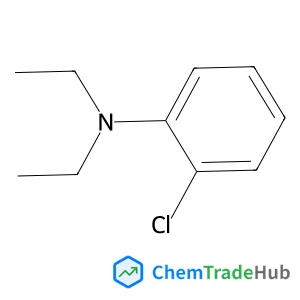
![5-Methyl-4,5,6,7-tetrahydropyrazolo[1,5-a]pyrazin-2-amine structure](https://cnstatic.chemtradehub.com/structs/122/1227210-33-4-8d64.webp "5-Methyl-4,5,6,7-tetrahydropyrazolo[1,5-a]pyrazin-2-amine structure")




