




A variation on Luzzati's soap phases. Room temperature thermotropic liquid crystals
文献信息
发布日期
2004-03-15
DOI
10.1039/B315595C
影响因子
3.676
作者
Robert W. Corkery
查看原文
摘要
Remarkable room-temperature liquid crystallinity is observed for a wide range of metal soaps. Incorporation of saturated, mid-chain mono-methyl branched C17 fatty acid (mid-chain branched fatty acid) into metal soaps lowers the liquid crystalline transition to below room temperature. Soaps of Na, Mg, Al, Ca, Cu, Zn, Sr, Ag, Cd, La, Ce, Tb and Lu are synthesized and characterized via XRD, FTIR, DSC, optical microscopy, density determinations and other physical methods. The main room temperature mesophase identified in the soaps here is a liquid crystalline hexagonal columnar phase, first described by Luzzati et al. A comparative analysis of the branched soaps with their saturated, linear analogues is given. Implications for room temperature columnar soap structure is discussed in terms of the various physical parameters found for these soaps.
相关文献
Explanation for the conductivity difference of half-Heusler transparent conductors via ionization energy
Mi Zhong, Wei Zeng, Fu-Sheng Liu, Bin Tang, Qi-Jun Liu
2021-03-23
Paper
DOI: 10.1039/D1CP00382H
Strain-tunable electronic structure and anisotropic transport properties in Janus MoSSe and g-SiC van der Waals heterostructure
Yu-Liang Liu, Wen-Kai Zhao, Ying Shi, Chuan-Lu Yang
2021-03-25
Paper
DOI: 10.1039/D1CP00483B
Pulse sequence and sample formulation optimization for dipolar order mediated 1H→13C cross-polarization
Stuart J. Elliott, Olivier Cala, Quentin Stern, Dmitry Eshchenko, Roberto Melzi, James G. Kempf, Sami Jannin
2021-04-01
Paper
DOI: 10.1039/D1CP00429H
Monitoring the active sites for the hydrogen evolution reaction at model carbon surfaces
Regina M. Kluge, Richard W. Haid, Ifan E. L. Stephens, Federico Calle-Vallejo
2021-03-25
Paper
DOI: 10.1039/D1CP00434D
Reversed selectivity of photocatalytic CO2 reduction over metallic Pt and Pt(ii) oxide cocatalysts
Junyi Wang, Youzi Li, Jiangting Zhao, Zhuo Xiong, Junying Zhang, Yongchun Zhao
2021-03-31
Paper
DOI: 10.1039/D1CP00407G
Prototropic forms of hydroxy derivatives of naphthoic acid within deep eutectic solvents
Vaishali Khokhar, Siddharth Pandey
2021-03-17
Paper
DOI: 10.1039/D1CP00845E
Through space JFH spin–spin coupling constant transmission pathways in 2-(trifluoromethyl)thiophenol: formation of unusual stabilizing bifurcated CF⋯HS and CF⋯SH interactions
Vinícius C. Port, Lucas A. Zeoly, Fernando Coelho, Rodrigo A. Cormanich
2021-02-23
Paper
DOI: 10.1039/D0CP05887D
Unraveling the cGAS catalytic mechanism upon DNA activation through molecular dynamics simulations
Jordi Soler, Pedro Paiva, Maria J. Ramos, Pedro A. Fernandes, Marie Brut
2021-04-05
Paper
DOI: 10.1039/D1CP00378J
Negative linear compressibility in nanoporous metal–organic frameworks rationalized by the empty channel structural mechanism
2021-03-22
Paper
DOI: 10.1039/D1CP00214G
您可能还喜欢
化合物问答
4-[[6-(3-苯基苯基)-7H-嘌呤-2-基]氨基]苯磺酰胺(CAS号:2079895-42-2)适用哪些法规指南?
该化合物需遵循REACH法规以确保其安全使用和管理。同时,根据其潜在的生物降解性和毒性,也需要符合GHS分类中的相应要求。此外,若用于医药或食品相关领域,则还需...
2079895-42-24-{[6-(3-Biphenylyl)...
化合物问答
反式-度骨化醇(CAS号:74007-20-8)的物理化学性质是什么?
反式-度骨化醇是一种脂溶性维生素D3的衍生物,呈无色或白色结晶性粉末,不溶于水,溶于乙醇、丙酮、氯仿等有机溶剂。其分子式为C28H44O,分子量为404.65。...
74007-20-8trans-Doxercalcifero...
化合物问答
莲花掌苷(CAS号:59282-56-3)的市场或研究趋势如何?
莲花掌苷作为一种天然产物,近年来在抗炎、抗癌等生物活性研究方面显示出一定的潜力,因此市场需求逐渐增长。市场动态方面,随着天然产物开发的深入,预计该化合物的研究会...
59282-56-3Lindleyin
化合物问答
2-溴-6-(吡咯烷-1-基)吡啶-4-硼酸频那醇酯(CAS号:1150271-64-9)应用于哪些行业?
2-溴-6-(吡咯烷-1-基)吡啶-4-硼酸频那醇酯在医药领域有着广泛的应用,它可以用作药物合成中的中间体。此外,它还可以用于有机合成,特别是在构建复杂杂环化合...
1150271-64-92-Bromo-6-(1-pyrroli...
化合物问答
什么是methyl 2-(4-bromophenyl)-3-methylbutanoate(CAS号:1061284-70-5)?
methyl 2-(4-溴苯基)-3-甲基丁酸甲酯是一种化学物质,分子式为C12H13BrO2。它是一种有机化合物,具有一定的挥发性和易燃性。
1061284-70-52-(4-Bromo-phenyl)-3...
化合物问答
CJC1-295(CAS号:863288-34-0)的物理化学性质是什么?
CJC1-295是一种具有复杂肽链结构的化合物,其分子量约为1875 Da。该化合物在水中具有一定的溶解性,但在有机溶剂中的溶解性不佳。它是一种反应活性化合物,...
863288-34-0L-tyrosyl-D-alanyl-L...
化合物问答
三正丁基锍碘(CAS号:18146-62-8)的市场或研究趋势如何?
三正丁基锍碘作为一种重要的有机硫化合物,主要用于有机合成中作为亲电试剂。近年来,由于其在合成中的广泛应用,市场对其需求持续增长。此外,随着绿色化学的发展,对其替...
18146-62-8Tributylsulfonium io...
化合物问答
雌二醇-[13C3]同位素内标(CAS号:1261254-48-1)通常如何合成?
雌二醇-[13C3]同位素内标通常通过在雌二醇分子中引入[13C3]同位素来合成。常见的方法是通过化学标记反应,如与[13C3]标记的甲基溴化物进行亲核取代反应...
1261254-48-117beta-Estradiol-2,3...
化合物问答
N1-(2-吡啶甲基)-N2-(2-甲基-1-萘基)草酰胺(CAS号:2611225-93-3)的物理化学性质是什么?
N1-(2-吡啶甲基)-N2-(2-甲基-1-萘基)草酰胺为固体化合物,具有良好的结晶形态,分子量为340.34 g/mol。该化合物在水中的溶解度较低,但在有...
2611225-93-3N-(2-Methyl-1-naphth...
化合物问答
如何处理含有十五碳烯酸甲酯(顺-10)(C15:1)标准品(CAS号:90176-52-6)的废料?
含有十五碳烯酸甲酯(顺-10)(C15:1)标准品的废料应首先进行适当收集和储存,避免与其他化学品混合。然后,可采用焚烧或交由专业废物处理公司进行处理。处理过程...
90176-52-6(Z)-10-Pentadecenoic...
来源期刊
Physical Chemistry Chemical Physics

CiteScore:
5.5
自引率:
10.3%
年发文量:
3036
Physical Chemistry Chemical Physics (PCCP) is an international journal co-owned by 19 physical chemistry and physics societies from around the world. This journal publishes original, cutting-edge research in physical chemistry, chemical physics and biophysical chemistry. To be suitable for publication in PCCP, articles must include significant innovation and/or insight into physical chemistry; this is the most important criterion that reviewers and Editors will judge against when evaluating submissions. The journal has a broad scope and welcomes contributions spanning experiment, theory, computation and data science. Topical coverage includes spectroscopy, dynamics, kinetics, statistical mechanics, thermodynamics, electrochemistry, catalysis, surface science, quantum mechanics, quantum computing and machine learning. Interdisciplinary research areas such as polymers and soft matter, materials, nanoscience, energy, surfaces/interfaces, and biophysical chemistry are welcomed if they demonstrate significant innovation and/or insight into physical chemistry. Joined experimental/theoretical studies are particularly appreciated when complementary and based on up-to-date approaches.
推荐化合物
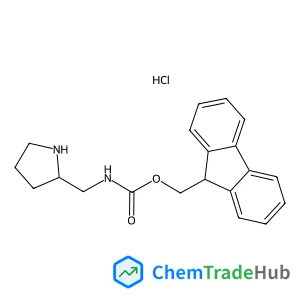
(S)-(9H-Fluoren-9-yl)methyl (pyrrolidin-2-ylmethyl)carbamate hydrochloride
CAS号:
1217813-15-4
分子式:
C20H23ClN2O2

![[(5-Methyl-1,3,4-thiadiazol-2-yl)sulfanyl]acetic acid structure](https://cnstatic.chemtradehub.com/structs/509/50918-26-8-4ce8.webp "[(5-Methyl-1,3,4-thiadiazol-2-yl)sulfanyl]acetic acid structure")
推荐供应商


免责声明
本页面提供的学术期刊信息仅供参考和研究使用。我们与任何期刊出版商均无关联,也不处理投稿事宜。如有投稿相关咨询,请直接联系相关期刊出版商。
如发现页面信息有误,请发送邮件至 support@chemtradehub.com 联系我们。我们将及时核实并处理您的问题。