


Applicability of some mass spectrometric criteria for the confirmation of pesticide residues
文献信息
发布日期
2004-08-13
DOI
10.1039/B405024J
影响因子
4.616
作者
Eugenia Soboleva, Karam Ahad, Árpád Ambrus
查看原文
摘要
This study was initiated to demonstrate the impact of tolerance intervals calculated based on experimental data and standard criteria on the capability to detect and identify pesticide residues by GC-MS in plant extract. The tolerance intervals specified by the current guidelines and standards (EU, EPA, ISO, EC) result in a large number of false negative values. The tolerance intervals calculated based on the actually measured ion ratios at 2 different probability levels did not provide a better estimate. Based on experimental findings a 2-phase procedure for confirmation of pesticide residues is recommended. The first screening phase comprises identification of those pesticide residues that are likely to be present avoiding false negatives as far as possible. Relatively large tolerance intervals, ±30% of absolute ion abundances ratios, have to be used at this point. When 2 or 3 selected ion ratios are within the established tolerance intervals the residue is confirmed. When the ions detected still indicate the possible presence of a residue the result may be reported as tentatively identified. However, when the result would lead to regulatory action, second confirmatory phase has to be undertaken. This can be achieved with the same GC-MS equipment, by injecting matrix-matched standards of the suspected analyte, in order to compensate for matrix influence on ion ratios. Alternatively, methods using different physico-chemical properties of the compound have to be used. The choice of the technique depends on their availability, time and cost.
期刊推荐
Pharmacological Reviews
Fibre Chemistry
Organic Preparations and Procedures International

Science
Proceedings of the National Academy of Sciences of the United States of America
Journal of Medicinal Chemistry
Kinetics and Catalysis
Israel Journal of Chemistry
Journal of Heterocyclic Chemistry

Science Progress
相关文献
Ullmann coupling mediated assembly of an electrically driven altitudinal molecular rotor
Colin J. Murphy, Zachary C. Smith, Alex Pronschinski, Emily A. Lewis, Melissa L. Liriano, Chloe Wong, Christopher J. Ivimey, Mitchell Duffy, Wojciech Musial, Andrew J. Therrien, Samuel W. Thomas III, E. Charles H. Sykes
2015-11-03
Paper
DOI: 10.1039/C5CP05294G
Thiophene functionalized silicon-containing aggregation-induced emission enhancement materials: applications as fluorescent probes for the detection of nitroaromatic explosives in aqueous-based solutions
Xuefeng Wang, Jiangyan Bian, Lichao Xu, Hua Wang, Shengyu Feng
2015-11-16
Paper
DOI: 10.1039/C5CP05473G
The effect of Mg2+ incorporation on the structure of calcium carbonate clusters: investigation by the anharmonic downward distortion following method
Satoshi Maeda, Takaya Nagai
2015-12-09
Paper
DOI: 10.1039/C5CP05139H
Solvent transport through hard–soft segmented polymer nanocomposites
Sangram K. Rath, Saji S. Edatholath, T. Umasankar Patro, Kathi Sudarshan, P. U. Sastry, Pradeep K. Pujari, G. Harikrishnan
2015-12-16
Paper
DOI: 10.1039/C5CP04432D
The influence of active site conformations on the hydride transfer step of the thymidylate synthase reaction mechanism
Amnon Kohen, Vicent Moliner
2015-04-02
Paper
DOI: 10.1039/C5CP01239B
Surface-functionalized monolayered nanodots of a transition metal oxide and their properties
Masashi Honda, Yuya Oaki, Hiroaki Imai
2015-11-17
Paper
DOI: 10.1039/C5CP05584A
Requirements of first-principles calculations of X-ray absorption spectra of liquid water
Thomas Fransson, Iurii Zhovtobriukh, Patrick Norman, Lars G. M. Pettersson
2015-11-19
Paper
DOI: 10.1039/C5CP03919C
In situ 2D-extraction of DNA wheels by 3D through-solution transport
Keitel Cervantes-Salguero, Waka Nakanishi, Ibuki Kawamata, Kosuke Minami, Hirokazu Komatsu, Satoshi Murata
2015-11-16
Communication
DOI: 10.1039/C5CP05765E
Ultrafast excited state hydrogen atom transfer in salicylideneaniline driven by changes in aromaticity
Luis Gutiérrez-Arzaluz, Fernando Cortés-Guzmán, Tomás Rocha-Rinza, Jorge Peón
2015-08-06
Communication
DOI: 10.1039/C5CP03699B
The fabrication of In2O3/In2S3/Ag nanocubes for efficient photoelectrochemical water splitting
Rui Xu, Haohua Li, Wenwen Zhang, Zepeng Yang, Guiwu Liu, Ziwei Xu, Haicheng Shao
2015-12-17
Paper
DOI: 10.1039/C5CP05833C
您可能还喜欢
化合物问答
硅烷偶联剂ZQ-172(CAS号:1067-53-4)的主要用途是什么?
硅烷偶联剂ZQ-172主要用于增强无机填料与有机高分子材料之间的相容性,常见于橡胶、塑料、涂料和胶黏剂等复合体系中。其硅氧烷基团可与玻璃纤维、二氧化硅等无机物表...
1067-53-46-(2-Methoxyethoxy)-...
化合物问答
如何处理含有6-(2,4-二甲氧基苯基)-2-吡啶甲醇(CAS号:887981-31-9)的废料?
对于含有该化合物的废料,首先应收集并分类存放,避免与其它化学品混合。在处理前,需进行必要的检测,确定其含量和性质。随后,可以采用化学氧化、生物降解或物理吸附等方...
887981-31-9[6-(2,4-Dimethoxyphe...
化合物问答
甲砜霉素甘氨酸酯盐酸盐(CAS号:2611-61-2)的物理化学性质是什么?
该化合物为白色或类白色结晶性粉末,不溶于水,溶于乙醇和氯仿。分子量为403.03 g/mol。它具有手性,含有三个手性中心,分别为2S,3R构型。该化合物在酸性...
2611-61-2(2S,3R)-2-[(Dichloro...
化合物问答
如何储存反式-环丙烷-1,2-二胺双盐酸盐(CAS号:3187-76-6)?
反式-环丙烷-1,2-二胺双盐酸盐应存放在阴凉、干燥且通风良好的地方,避免阳光直射。储存容器应密封,以防挥发和受潮。同时,应远离火源和热源,确保储存环境温度不超...
3187-76-6trans-1,2-Diaminocyc...
化合物问答
什么是吩嗪硫酸甲酯(CAS号:299-11-6)?
吩嗪硫酸甲酯是一种有机化合物,化学结构由吩嗪环与甲酯基团构成,分子式为C10H9N2SO4。其为吩嗪类衍生物,具有典型的芳香环结构和酯基官能团,常作为氧化剂或染...
299-11-65-Methylphenazin-5-i...
化合物问答
N1-异丙基二乙烯三胺(CAS号:207399-20-0)的市场或研究趋势如何?
随着绿色化学和环保意识的提高,N1-异丙基二乙烯三胺的研究趋势正向低毒、环保的方向发展。市场趋势方面,由于其在功能性材料、药物合成等领域的需求,预计其市场需求将...
207399-20-0N-(2-Aminoethyl)-N'-...
化合物问答
4,4-Dimethyl-5,6-dihydro-4H-cyclopenta[d][1,3]thiazol-2-amine(CAS号:1182284-47-4)应用于哪些行业?
该化合物在医药、聚合物、传感器和半导体领域有潜在的应用。在医药领域,作为一种新型的噻唑类化合物,它可能具有抗炎、抗病毒等生物活性。在聚合物领域,该化合物可用作增...
1182284-47-44,4-Dimethyl-5,6-dih...
化合物问答
处理5-(PYRIDIN-4-YL)-OXAZOL-2-YLAMINE(CAS号:1014629-83-4)时应注意哪些实验室安全事项?
在处理5-(吡啶-4-基)-2-氧代-1-氧杂环己烷-3-胺时,应佩戴防护眼镜、手套和防护服。实验应在通风橱中进行,以避免吸入有害气体。如果发生泄露,应立即用大...
1014629-83-45-(4-Pyridinyl)-1,3-...
化合物问答
什么是伊托必利N-氧化物(CAS号:141996-98-7)?
伊托必利N-氧化物是一种化学化合物,其分子结构是伊托必利的N位进行氧化处理后的产物。它具有一定的生物活性,主要用于药物研究和开发。
141996-98-7Itopride N-Oxide
化合物问答
氟氯烟酸(CAS号:82671-06-5)安全吗?
氟氯烟酸属于有机氯化物,具有一定的毒性,需谨慎处理。在操作过程中,应佩戴防护手套、护目镜和实验服,避免吸入其粉尘或蒸汽。接触皮肤或眼睛可能导致刺激,应采取适当的...
82671-06-52,6-Dichloro-5-fluor...
来源期刊
Analyst

CiteScore:
7.8
自引率:
5.6%
年发文量:
653
Analyst publishes analytical and bioanalytical research that reports premier fundamental discoveries and inventions, and the applications of those discoveries, unconfined by traditional discipline barriers.
推荐化合物
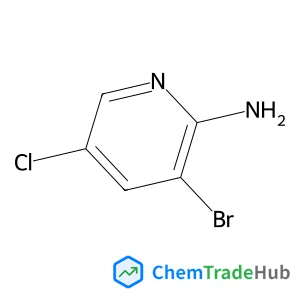
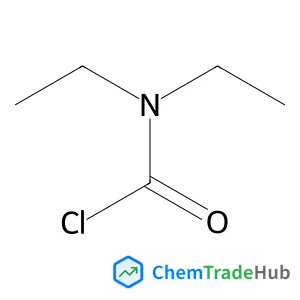
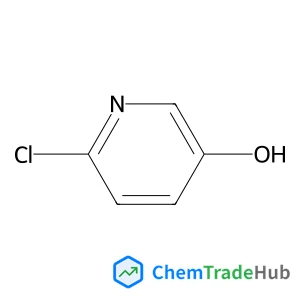
推荐供应商



免责声明
本页面提供的学术期刊信息仅供参考和研究使用。我们与任何期刊出版商均无关联,也不处理投稿事宜。如有投稿相关咨询,请直接联系相关期刊出版商。
如发现页面信息有误,请发送邮件至 support@chemtradehub.com 联系我们。我们将及时核实并处理您的问题。