







Front cover
文献信息
发布日期
DOI
10.1039/B4RP90021A
影响因子
0
作者
查看原文
摘要
A graphical abstract is available for this content
相关文献
Self-recognition and hydrogen bonding by polycyclic bridgehead monoalcohols
Amelia García Fraile, David G. Morris, Antonio García Martínez, Santiago de la Moya Cerero, Kenneth W. Muir, Karl S. Ryder, Enrique Teso Vilar
2003-01-21
Paper
DOI: 10.1039/B209427D
Combined application of organozinc chemistry and one-pot hydroboration–Suzuki coupling to the synthesis of amino acids
Arantxa Rodríguez, David D. Miller, Richard F. W. Jackson
2003-02-20
Paper
DOI: 10.1039/B300536D
Direct determination of rate constants for coupling between aromatic radical anions and alkyl and benzyl radicals by laser-flash photolysis
Torben Lund, Peter Christensen, Robert Wilbrandt
2003-02-20
Paper
DOI: 10.1039/B209594G
Cascade intramolecular rearrangement/cycloaddition of nitrocyclopropane carboxylates with alkynes/alkenes: access to uncommon bi(hetero)cyclic systems
Rohit Kumar Varshnaya, Priyanka Singh, Navpreet Kaur, Prabal Banerjee
2021-01-21
Research Article
DOI: 10.1039/D0QO01535K
Rh(iii)-Catalyzed sulfonylamination of α-indolyl alcohols via Csp2–Csp3 bond cleavage
Xinwei Hu, Zheng Tan, Zhipeng Liu, Fengjuan Chen, Huanfeng Jiang, Wei Zeng
2020-12-30
Research Article
DOI: 10.1039/D0QO01426E
Carbon dioxide-promoted palladium-catalyzed dehydration of primary allylic alcohols: access to substituted 1,3-dienes
Yan-Kai Huang, Wen-Zhen Zhang, Ke Zhang, Wen-Le Wang, Xiao-Bing Lu
2020-12-30
Research Article
DOI: 10.1039/D0QO01465F
Using combinatorial methods to arrive at a quantitative structure–stability relationship for a new class of one-armed cationic peptide receptors targeting the C-terminus of the amyloid β-peptide
Carsten Schmuck, Martin Heil
2003-01-27
Paper
DOI: 10.1039/B211425A
From a 1,2-azaborinine to large BN-PAHs via electrophilic cyclization: synthesis, characterization and promising optical properties
2020-08-20
Research Article
DOI: 10.1039/D0QO00723D
Recent advances in quinazolinones as an emerging molecular platform for luminescent materials and bioimaging
Zhiming Xing, Wanhui Wu, Yongxiang Miao, Yingqun Tang, Youkang Zhou, Lifang Zheng, Yang Fu, Zhibin Song, Yiyuan Peng
2021-02-02
Review Article
DOI: 10.1039/D0QO01425G
您可能还喜欢
化合物问答
2-Bromo-4-chloro-1-(difluoromethyl)benzene(CAS号:1261476-50-9)的市场或研究趋势如何?
随着环保要求的提高和安全意识的增强,该化合物的研究和应用趋势正逐渐转向更安全、更环境友好的替代品。市场关注点主要集中在开发新型合成方法和绿色化学路径,以减少有害...
1261476-50-92-Bromo-4-chloro-1-(...
化合物问答
如何处理含有2,9 - 二苯基-1,10 - 菲罗啉(CAS号:25677-69-4)的废料?
处理含有2,9 - 二苯基 - 1,10 - 菲罗啉的废料时,应先将其收集在适当的容器中,避免与其他化学品混合。随后,可以通过水解或氧化等方法进行处理,直至达到...
25677-69-42,9-Diphenyl-1,10-ph...
化合物问答
处理(6-氯-吡嗪-3-基)-(4-乙基-哌嗪-1-基)-甲酮(CAS号:1178836-15-1)时应注意哪些实验室安全事项?
处理(6-氯-吡嗪-3-基)-(4-乙基-哌嗪-1-基)-甲酮时,应穿戴适当的个人防护装备(PPE),包括手套、护目镜和实验室外套。在通风橱中操作以确保良好的通...
1178836-15-1(6-Chloro-3-pyridazi...
化合物问答
处理(R)-2-氯-1-(2,4-二氯苯基)乙醇(CAS号:114446-57-0)时应注意哪些实验室安全事项?
在处理(R)-2-氯-1-(2,4-二氯苯基)乙醇时,应佩戴防护眼镜、实验室外套和手套,确保通风橱开启以减少接触和吸入的风险。避免直接接触皮肤和眼睛。处理过程中...
114446-57-0(1R)-2-Chloro-1-(2,4...
化合物问答
在合成中是否有3-氯-6-(3-氯哌啶-1-基)吡嗪(CAS号:1185310-37-5)的替代品?
可考虑使用类似结构的化合物作为替代品,如3-氯-6-(哌啶-1-基)吡嗪或3-氯-6-(2-氯哌啶-1-基)吡嗪,这些化合物在结构上与目标化合物相似,可能具有相...
1185310-37-53-Chloro-6-(3-chloro...
化合物问答
苯并三氮唑-5-甲酸乙酯(CAS号:73605-91-1)通常如何合成?
该化合物可以通过乙酸乙酯与5-溴-1H-苯并三氮唑的反应合成,通常在无水条件下进行。合成过程中,需要使用适当的溶剂如乙酸乙酯,并在适当的温度下反应。该反应具有较...
73605-91-1Ethyl 1H-benzotriazo...
化合物问答
什么是一水硫酸镁(CAS号:14168-73-1)?
一水硫酸镁是一种无机化合物,化学式为MgSO₄·H₂O,CAS号为14168-73-1。它由镁离子、硫酸根离子和一个结晶水分子组成,通常呈现为白色粉末或颗粒状固...
14168-73-1Magnesium sulfate hy...
化合物问答
氘代-1,3-二氯-2-丙醇(CAS号:1173020-20-6)应用于哪些行业?
氘代-1,3-二氯-2-丙醇主要应用于医药和有机合成领域,作为研究化合物的氘代替代品,用于标记和追踪反应过程。此外,在聚合物和半导体生产中也有一定的应用潜力。
1173020-20-61,3-Dichloro-2-(~2~H...
化合物问答
如何储存氰乙酸环己酯(CAS号:52688-11-6)?
氰乙酸环己酯应储存在阴凉、干燥、通风良好的环境中,远离火源和热源,防止阳光直射。储存容器应密封良好,避免与空气接触,防止发生不必要的反应。
52688-11-6Cyclohexyl cyanoacet...
化合物问答
2-碘-4-硝基苯胺(CAS号:6293-83-0)的市场或研究趋势如何?
目前,2-碘-4-硝基苯胺在医药和农药领域有一定的研究和应用,尤其是在开发新型药物和农药产品方面。然而,由于其潜在的环境和健康风险,行业正趋向于寻找更为安全和环...
6293-83-02-iodo-4-nitroanilin...
来源期刊
Chemistry Education Research and Practice
CiteScore:
4.8
自引率:
38.5%
年发文量:
67
Chemistry Education Research and Practice (CERP) is the journal for teachers, researchers and other practitioners at all levels of chemistry education. It is published free of charge electronically four times a year, thanks to sponsorship by the Royal Society of Chemistry's Education Division. Coverage includes the following: Research, and reviews of research, in chemistry education Evaluations of effective innovative practice in the teaching of chemistry In-depth analyses of issues of direct relevance to chemistry education The objectives of the journal: To provide researchers with the means to publish their work in full in a journal exclusively dedicated to chemistry education To offer teachers of chemistry at all levels a place where they can share effective ideas and methods for the teaching and learning of chemistry To bridge the gap between the two groups so that researchers will have their results seen by those who could benefit from using them, and practitioners will gain from encountering the ideas and results of those who have made a particular study of the learning process
推荐化合物
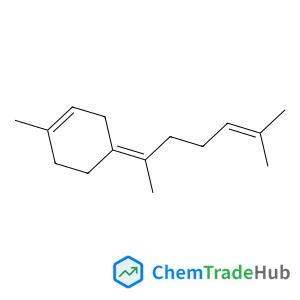
![(1R)-3-Bromo-1,7,7-trimethylbicyclo[2.2.1]heptan-2-one structure](https://cnstatic.chemtradehub.com/structs/102/10293-06-8-dd8a.webp "(1R)-3-Bromo-1,7,7-trimethylbicyclo[2.2.1]heptan-2-one structure")
推荐供应商






免责声明
本页面提供的学术期刊信息仅供参考和研究使用。我们与任何期刊出版商均无关联,也不处理投稿事宜。如有投稿相关咨询,请直接联系相关期刊出版商。
如发现页面信息有误,请发送邮件至 support@chemtradehub.com 联系我们。我们将及时核实并处理您的问题。