












Identification of the estrogen receptor Cd-binding sites by chemical modification
文献信息
发布日期
2005-06-09
DOI
10.1039/B501192B
影响因子
4.616
作者
Victor J. Nesatyy, Barbara V. Rutishauser, Rik I. L. Eggen, Marc J.-F. Suter
查看原文
摘要
The widely reported interactions of the estrogen receptor (ER) with endocrine disrupting chemicals (EDCs) present in the environment gave raise to public concern and led to a number of screening and testing initiatives on the international level. Recent studies indicated that certain heavy metals, including cadmium, can mimic the effects of the endogenous estrogen receptor agonist 17β-estradiol, and lead to estrogen receptor activation. Previous studies of the chimeric proteins, which incorporate the ligand-binding domain of the human ER, identified Cys 381, Cys 447, Glu 523, His 524 and Asp 538 as possible sites of interactions with cadmium. In the present study we utilized the rainbow trout ER ligand-binding domain fused to glutathione-S-transferase, and used Cd-shielding against various types of chemical modification of the fusion protein to study non-covalent interactions between the ER and Cd. The distribution of exposed and shielded residues allowed to identify amino acid residues involved in the interaction. Our data indicated preferential protection of Cys groups by cadmium, suggesting their involvement in the interaction. This supports data found in the literature on the strong binding affinity of the thiol group towards metals. However, not all Cys in the fusion protein sequence were protected against chemical modification, illustrating the importance of their chemical environment. In general, the location of rtER-LBD Cys residues implicated in Cd interactions did not confirm assignments made by alanine-scanning mutagenesis for the hER, probably due to differences in experimental setup and fusion proteins used. The involvement of other functional groups such as carboxylic acids in the Cd interactions, though not confirmed, can not be completely ruled out due to the general limitations of the chemical modification approach discussed in detail. Suggestions for an improved experimental setup were made.
相关文献
High thermal stability of core–shell structures dominated by negative interface energy
Yong-Fu Zhu, Ning Zhao, Bo Jin, Ming Zhao, Qing Jiang
2017-03-10
Paper
DOI: 10.1039/C6CP08061H
Ethoxy and silsesquioxane derivatives of antimony as dopant precursors: unravelling the structure and thermal stability of surface species on SiO2
P. Florian, C. Thieuleux
2017-02-23
Paper
DOI: 10.1039/C6CP08583K
Tracking areal lithium densities from neutron activation – quantitative Li determination in self-organized TiO2 nanotube anode materials for Li-ion batteries
E. Portenkirchner, G. Neri, J. Lichtinger, J. Brumbarov, R. Gernhäuser, J. Kunze-Liebhäuser
2017-03-02
Paper
DOI: 10.1039/C7CP00180K
A velocity map imaging study of the photodissociation of the methyl iodide cation
S. Marggi Poullain, D. V. Chicharro, L. Rubio-Lago, L. Bañares
2017-02-24
Paper
DOI: 10.1039/C7CP00319F
Infrared spectra of HSCS+, c-HSCS, and HCS2− produced on electron bombardment of CS2 in solid para-hydrogen
Masashi Tsuge
2017-03-13
Paper
DOI: 10.1039/C7CP00988G
Wet chemical etching induced stress relaxed nanostructures on polar & non-polar epitaxial GaN films
Abhiram Gundimeda, Bhasker Gahtori, Nita Dilawar, Ved Varun Aggarwal, Manju Singh, Rajib Rakshit
2017-03-07
Paper
DOI: 10.1039/C7CP00380C
Dangerous liaisons: anion-induced protonation in phosphate–polyamine interactions and their implications for the charge states of biologically relevant surfaces
Gregorio Laucirica, Waldemar A. Marmisollé, Omar Azzaroni
2017-03-03
Paper
DOI: 10.1039/C6CP08793K
Stability of reverse micelles in rare-earth separation: a chemical model based on a molecular approach
Yushu Chen, Magali Duvail, Philippe Guilbaud, Jean-François Dufrêche
2017-02-10
Paper
DOI: 10.1039/C6CP07843E
Spectroscopic evidence for the origin of odd–even effects in self-assembled monolayers and effects of substrate roughness
Jian Liu, Ian D. Tevis, Richard S. Andino, Christina M. Miller, Lawrence D. Ziegler, Xin Chen
2017-02-15
Paper
DOI: 10.1039/C6CP07580K
CH3NH3PbI3 films prepared by combining 1- and 2-step deposition: how crystal growth conditions affect properties
Muhamad Z. Mokhtar, Mu Chen, Eric Whittaker, Bruce Hamilton, Nicholas Aristidou, Ali Gholinia, Saif A. Haque, Brian R. Saunders
2017-02-17
Paper
DOI: 10.1039/C7CP00471K
您可能还喜欢
化合物问答
硅烷偶联剂ZQ-172(CAS号:1067-53-4)的主要用途是什么?
硅烷偶联剂ZQ-172主要用于增强无机填料与有机高分子材料之间的相容性,常见于橡胶、塑料、涂料和胶黏剂等复合体系中。其硅氧烷基团可与玻璃纤维、二氧化硅等无机物表...
1067-53-46-(2-Methoxyethoxy)-...
化合物问答
如何处理含有6-(2,4-二甲氧基苯基)-2-吡啶甲醇(CAS号:887981-31-9)的废料?
对于含有该化合物的废料,首先应收集并分类存放,避免与其它化学品混合。在处理前,需进行必要的检测,确定其含量和性质。随后,可以采用化学氧化、生物降解或物理吸附等方...
887981-31-9[6-(2,4-Dimethoxyphe...
化合物问答
甲砜霉素甘氨酸酯盐酸盐(CAS号:2611-61-2)的物理化学性质是什么?
该化合物为白色或类白色结晶性粉末,不溶于水,溶于乙醇和氯仿。分子量为403.03 g/mol。它具有手性,含有三个手性中心,分别为2S,3R构型。该化合物在酸性...
2611-61-2(2S,3R)-2-[(Dichloro...
化合物问答
如何储存反式-环丙烷-1,2-二胺双盐酸盐(CAS号:3187-76-6)?
反式-环丙烷-1,2-二胺双盐酸盐应存放在阴凉、干燥且通风良好的地方,避免阳光直射。储存容器应密封,以防挥发和受潮。同时,应远离火源和热源,确保储存环境温度不超...
3187-76-6trans-1,2-Diaminocyc...
化合物问答
什么是吩嗪硫酸甲酯(CAS号:299-11-6)?
吩嗪硫酸甲酯是一种有机化合物,化学结构由吩嗪环与甲酯基团构成,分子式为C10H9N2SO4。其为吩嗪类衍生物,具有典型的芳香环结构和酯基官能团,常作为氧化剂或染...
299-11-65-Methylphenazin-5-i...
化合物问答
N1-异丙基二乙烯三胺(CAS号:207399-20-0)的市场或研究趋势如何?
随着绿色化学和环保意识的提高,N1-异丙基二乙烯三胺的研究趋势正向低毒、环保的方向发展。市场趋势方面,由于其在功能性材料、药物合成等领域的需求,预计其市场需求将...
207399-20-0N-(2-Aminoethyl)-N'-...
化合物问答
4,4-Dimethyl-5,6-dihydro-4H-cyclopenta[d][1,3]thiazol-2-amine(CAS号:1182284-47-4)应用于哪些行业?
该化合物在医药、聚合物、传感器和半导体领域有潜在的应用。在医药领域,作为一种新型的噻唑类化合物,它可能具有抗炎、抗病毒等生物活性。在聚合物领域,该化合物可用作增...
1182284-47-44,4-Dimethyl-5,6-dih...
化合物问答
处理5-(PYRIDIN-4-YL)-OXAZOL-2-YLAMINE(CAS号:1014629-83-4)时应注意哪些实验室安全事项?
在处理5-(吡啶-4-基)-2-氧代-1-氧杂环己烷-3-胺时,应佩戴防护眼镜、手套和防护服。实验应在通风橱中进行,以避免吸入有害气体。如果发生泄露,应立即用大...
1014629-83-45-(4-Pyridinyl)-1,3-...
化合物问答
什么是伊托必利N-氧化物(CAS号:141996-98-7)?
伊托必利N-氧化物是一种化学化合物,其分子结构是伊托必利的N位进行氧化处理后的产物。它具有一定的生物活性,主要用于药物研究和开发。
141996-98-7Itopride N-Oxide
化合物问答
氟氯烟酸(CAS号:82671-06-5)安全吗?
氟氯烟酸属于有机氯化物,具有一定的毒性,需谨慎处理。在操作过程中,应佩戴防护手套、护目镜和实验服,避免吸入其粉尘或蒸汽。接触皮肤或眼睛可能导致刺激,应采取适当的...
82671-06-52,6-Dichloro-5-fluor...
来源期刊
Analyst

CiteScore:
7.8
自引率:
5.6%
年发文量:
653
Analyst publishes analytical and bioanalytical research that reports premier fundamental discoveries and inventions, and the applications of those discoveries, unconfined by traditional discipline barriers.
推荐化合物
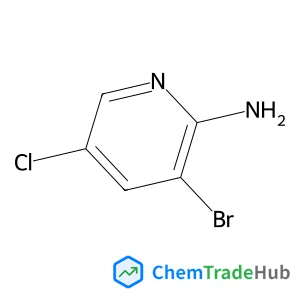
![N-[(9H-Fluoren-9-ylmethoxy)carbonyl]serine structure](https://cnstatic.chemtradehub.com/structs/737/73724-45-5-b0dc.webp "N-[(9H-Fluoren-9-ylmethoxy)carbonyl]serine structure")
推荐供应商






免责声明
本页面提供的学术期刊信息仅供参考和研究使用。我们与任何期刊出版商均无关联,也不处理投稿事宜。如有投稿相关咨询,请直接联系相关期刊出版商。
如发现页面信息有误,请发送邮件至 support@chemtradehub.com 联系我们。我们将及时核实并处理您的问题。