



Adsorption of sulfur dioxide on hematite and goethite particle surfaces
文献信息
发布日期
2007-08-30
DOI
10.1039/B709167B
影响因子
3.676
作者
Jonas Baltrusaitis, Vicki H. Grassian
查看原文
摘要
The adsorption of sulfur dioxide (SO2) on iron oxide particle surfaces at 296 K has been investigated using X-ray photoelectron spectroscopy (XPS). A custom-designed XPS ultra-high vacuum chamber was coupled to an environmental reaction chamber so that the effects of adsorbed water and molecular oxygen on the reaction of SO2 with iron oxide surfaces could be followed at atmospherically relevant pressures. In the absence of H2O and O2, exposure of hematite (α-Fe2O3) and goethite (α-FeOOH) to SO2 resulted predominantly in the formation of adsorbed sulfite (SO32−), although evidence for adsorbed sulfate (SO42−) was also found. At saturation, the coverage of adsorbed sulfur species was the same on both α-Fe2O3 and α-FeOOH as determined from the S2p : Fe2p ratio. Equivalent saturation coverages and product ratios of sulfite to sulfate were observed on these oxide surfaces in the presence of water vapor at pressures between 6 and 18 Torr, corresponding to 28 to 85% relative humidity (RH), suggesting that water had no effect on the adsorption of SO2. In contrast, molecular oxygen substantially influenced the interactions of SO2 with iron oxide surfaces, albeit to a much larger extent on α-Fe2O3 relative to α-FeOOH. For α-Fe2O3, adsorption of SO2 in the presence of molecular oxygen resulted in the quantitative formation of SO42− with no detectable SO32−. Furthermore, molecular oxygen significantly enhanced the extent of SO2 uptake on α-Fe2O3, as indicated by the greater than two-fold increase in the S2p : Fe2p ratio. Although SO2 uptake is still enhanced on α-Fe2O3 in the presence of molecular oxygen and water, the enhancement factor decreases with increasing RH. In the case of α-FeOOH, there is an increase in the amount of SO42− in the presence of molecular oxygen, however, the predominant surface species remained SO32− and there is no enhancement in SO2 uptake as measured by the S2p : Fe2p ratio. A mechanism involving molecular oxygen activation on oxygen vacancy sites is proposed as a possible explanation for the non-photochemical oxidation of sulfur dioxide on iron oxide surfaces. The concentration of these sites depends on the exact environmental conditions of RH.
期刊推荐

Herald of the Russian Academy of Sciences
Acta Metallurgica Sinica-English Letters

Journal of the Indian Institute of Science
Bioorganic & Medicinal Chemistry
Journal of Chemical Sciences
Bioorganic & Medicinal Chemistry Letters
Journal of Asian Natural Products Research
Atomization and Sprays

Medicinal Chemistry Research

Topics in Catalysis
相关文献
EPR and optical studies of erbium-doped β-PbF2 single-crystals and nanocrystals in transparent glass–ceramics
Géraldine Dantelle, Michel Mortier, Daniel Vivien
2007-08-30
Paper
DOI: 10.1039/B706735F
Multiphoton dissociation dynamics of BrCl and the BrCl+cation
Olivier P. J. Vieuxmaire, N. Hendrik Nahler, Richard N. Dixon, Michael N. R. Ashfold
2007-08-30
Paper
DOI: 10.1039/B709222A
On the origin of the forward peak and backward oscillations in the F + H2(v = 0) → HF(v′ = 2) + H reaction
D. Sokolovski, S. Cavalli, V. Aquilanti
2007-09-13
Paper
DOI: 10.1039/B709427B
Kinetic explosion and bistability in adsorption and reaction of acetic acid on Pd(110)
Michael Bowker, Chris Morgan, Vladimir P. Zhdanov
2007-09-13
Paper
DOI: 10.1039/B709384E
Molecular dynamics study of dicarbollide anions in nitrobenzene solution and at its aqueous interface. Synergistic effect in the Eu(iii) assisted extraction
G. Chevrot, R. Schurhammer, G. Wipff
2007-09-28
Paper
DOI: 10.1039/B711284J
Coverage dependent structures of oligopyridine adlayers on (111) oriented Ag films
Matthias Roos, Harry E. Hoster, Achim Breitruck, R. Jürgen Behm
2007-08-30
Paper
DOI: 10.1039/B708578H
Chlorine–benzene complexes—the reliability of density functionals for non-covalent radical complexes‡
A. K. Croft, H. M. Howard-Jones
2007-08-21
Paper
DOI: 10.1039/B704966H
Chemorheological analysis and model-free kinetics of acid catalysed furfuryl alcohol polymerization
Nathanael Guigo, Alice Mija, Luc Vincent, Nicolas Sbirrazzuoli
2007-08-08
Paper
DOI: 10.1039/B707950H
您可能还喜欢
化合物问答
4-[4-三氟甲基苯基]恶唑(CAS号:1126636-40-5)通常如何合成?
4-[4-三氟甲基苯基]恶唑通常通过将4-三氟甲基苯酚与异硫氰酸苯酯在有机溶剂中进行酯化反应合成。该反应可在无水条件下,使用适当的催化剂,如四丁基氢氧化铵,以提...
1126636-40-54-(4-(Trifluoromethy...
59729-32-71-[3-(Dimethylamino)...
化合物问答
RockPhos Pd G3(CAS号:2009020-38-4)通常如何合成?
RockPhos Pd G3 通常通过钯催化偶联反应合成,使用配体 (2'-Amino-2-biphenylyl)(methanesulfonato-kappa...
2009020-38-4(2'-Amino-2-biphenyl...
化合物问答
1-哌啶甲酰胺(CAS号:2158-03-4)的市场或研究趋势如何?
1-哌啶甲酰胺作为有机合成中的重要中间体,其市场需求主要受医药、农药、染料等行业推动。近年来,随着新药开发和绿色化学的发展,该化合物的研究趋势集中在开发更高效、...
2158-03-41-Piperidinecarboxam...
化合物问答
2-(二苯基膦基)乙胺(CAS号:4848-43-5)适用哪些法规指南?
2-(二苯基膦基)乙胺适用于多种法规指南,包括但不限于《全球化学品统一分类和标签制度》(GHS),欧盟《化学品注册、评估、授权和限制》法规(REACH),以及美...
4848-43-52-(Diphenylphosphino...
化合物问答
如何储存间苯二甲酸二烯丙酯(CAS号:1087-21-4)?
间苯二甲酸二烯丙酯应储存在阴凉、干燥、通风良好的地方,远离火源和热源。储存容器应密封,避免光照和高温。储存温度应控制在25℃以下,相对湿度应低于80%。避免与其...
1087-21-4Diallyl isophthalate
化合物问答
什么是间甲苯异硫代异氰酸酯(CAS号:621-30-7)?
间甲苯异硫代异氰酸酯是一种有机化合物,分子式为C7H7NO2S,具有刺激性气味。它是一种重要的有机合成中间体,在合成其他化合物时广泛应用。
621-30-71-Isothiocyanato-3-m...
化合物问答
在合成中是否有N-Boc-D-苯丙氨醇(CAS号:106454-69-7)的替代品?
在合成中,可以考虑使用N-Cbz-D-苯丙氨醇或N-Fmoc-D-苯丙氨醇作为替代品。这些化合物同样具有保护氨基的功能,且在合成过程中表现出良好的反应性能。
106454-69-72-Methyl-2-propanyl ...
化合物问答
3-羟甲基-2-氧异丙基吡啶(CAS号:954240-50-7)的主要用途是什么?
3-羟甲基-2-氧异丙基吡啶主要用于有机合成领域,可以作为合成其他药物、农药或精细化学品的中间体。此外,它还可能在实验室研究中作为特定反应的前体或溶剂。
954240-50-7(2-Isopropoxy-3-pyri...
化合物问答
6-氨基-9-甲基嘌呤(CAS号:700-00-5)应用于哪些行业?
6-氨基-9-甲基嘌呤目前主要应用于医药行业,作为某些药物的中间体。此外,它还可能用于聚合物、传感器和半导体的某些领域,作为功能性单体或掺杂剂。
700-00-59-Methyl-9H-purin-6-...
来源期刊
Physical Chemistry Chemical Physics

CiteScore:
5.5
自引率:
10.3%
年发文量:
3036
Physical Chemistry Chemical Physics (PCCP) is an international journal co-owned by 19 physical chemistry and physics societies from around the world. This journal publishes original, cutting-edge research in physical chemistry, chemical physics and biophysical chemistry. To be suitable for publication in PCCP, articles must include significant innovation and/or insight into physical chemistry; this is the most important criterion that reviewers and Editors will judge against when evaluating submissions. The journal has a broad scope and welcomes contributions spanning experiment, theory, computation and data science. Topical coverage includes spectroscopy, dynamics, kinetics, statistical mechanics, thermodynamics, electrochemistry, catalysis, surface science, quantum mechanics, quantum computing and machine learning. Interdisciplinary research areas such as polymers and soft matter, materials, nanoscience, energy, surfaces/interfaces, and biophysical chemistry are welcomed if they demonstrate significant innovation and/or insight into physical chemistry. Joined experimental/theoretical studies are particularly appreciated when complementary and based on up-to-date approaches.
推荐化合物
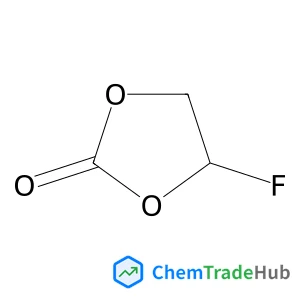
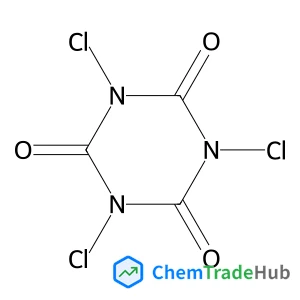
推荐供应商


免责声明
本页面提供的学术期刊信息仅供参考和研究使用。我们与任何期刊出版商均无关联,也不处理投稿事宜。如有投稿相关咨询,请直接联系相关期刊出版商。
如发现页面信息有误,请发送邮件至 support@chemtradehub.com 联系我们。我们将及时核实并处理您的问题。