





Microcantilever biosensors based on conformational change of proteins
文献信息
发布日期
2008-02-25
DOI
10.1039/B713330H
影响因子
4.616
作者
Hai-Feng Ji, Hongyan Gao, Koutilya R. Buchapudi, Xin Yang, Xiaohe Xu, Marvin K. Schulte
查看原文
摘要
Microcantilevers (MCLs) hold a position as a cost-effective and highly sensitive sensor platform for medical diagnostics, environmental analysis and fast throughput analysis. MCLs are unique in that adsorption of analytes on the microcantilever (MCL) surface changes the surface characteristics of the MCL and results in bending of the MCL. Surface stress due to conformation change of proteins and other polymers has been a recent focus of MCL research. Since conformational changes in proteins can be produced through binding of anylates at specific receptor sites, MCLs that respond to conformational change induced surface stress are promising as transducers of chemical information and are ideal for developing microcantilever-based biosensors. The MCL can also potentially be used to investigate conformational change of proteins induced by non-binding events such as post-translational modification and changes in temperature or pH. This review will provide an overview of MCL biosensors based on conformational change of proteins bound to the MCL surface. The models include conformational change of proteins, proteins on membranes, enzymes, DNA and other polymers.
相关文献
p/n-Polarity of thiophene oligomers in photovoltaic cells: role of molecular vs. supramolecular properties
Anesh Gopal, Akinori Saeki, Shu Seki
2015-03-16
Paper
DOI: 10.1039/C5CP01044F
Elucidating factors important for monovalent cation selectivity in enzymes: E. coli β-galactosidase as a model
Robert W. Wheatley, Douglas H. Juers, Bogdan B. Lev, Reuben E. Huber, Sergei Yu. Noskov
2015-03-20
Paper
DOI: 10.1039/C4CP04952G
Molecular thermodynamics of metabolism: quantum thermochemical calculations for key metabolites
C. Panayiotou
2015-03-12
Paper
DOI: 10.1039/C4CP05825A
Enhancing electrochemical performance by control of transport properties in buffer layers – solid oxide fuel/electrolyser cells
Devaraj Ramasamy, Narendar Nasani, Ana D. Brandão, Domingo Pérez Coll, Duncan P. Fagg
2015-04-02
Paper
DOI: 10.1039/C5CP00778J
Order and disorder around Cr3+ in chromium doped persistent luminescent AB2O4 spinels
Neelima Basavaraju, Kaustubh R. Priolkar, Didier Gourier, Aurélie Bessière, Bruno Viana
2015-03-24
Paper
DOI: 10.1039/C5CP01097G
Diffusion-influenced reactions in a hollow nano-reactor with a circular hole
2015-02-25
Paper
DOI: 10.1039/C4CP05605A
The effect of polymer solubilizing side-chains on solar cell stability
Graham E. Morse, Agnès Rivaton, Thomas Chassé, Christine Taviot-Gueho, Nicolas Blouin, Owen R. Lozman, Steven Tierney
2015-04-14
Paper
DOI: 10.1039/C5CP01158B
Influence of stearic acid coating of the NaCl surface on the reactivity with NO2 under humidity
S. Sobanska, J. Barbillat, M. Moreau, N. Nuns, I. De Waele, D. Petitprez, Y. Tobon, C. Brémard
2015-03-20
Paper
DOI: 10.1039/C4CP05655H
Infrared spectroscopy of N2 adsorption on size selected cobalt cluster cations in isolation
2015-03-18
Communication
DOI: 10.1039/C5CP00047E
Outside rules inside: the role of electron-active substituents in thiophene-based heterophenoquinones
L. Brambilla, E. Parisini, C. Castiglioni
2015-02-16
Paper
DOI: 10.1039/C4CP05748A
您可能还喜欢
化合物问答
什么是3-表南美楝属二醇(CAS号:19942-04-2)?
3-表南美楝属二醇是一种具有特定立体化学结构的化合物,其分子式为C31H52O2,属于甾醇类化合物。它具有光学活性,是一种复杂的有机分子,主要存在于一些植物中。
19942-04-2(3S,5R,8R,9R,10R,13R...
化合物问答
3-羧基-5-碘苯甲酸甲酯(CAS号:50765-22-5)应用于哪些行业?
3-羧基-5-碘苯甲酸甲酯主要应用于医药行业,作为合成某些药物中间体的重要原料。此外,它还可能用于聚合物的改性、传感器的制备以及半导体材料的制备等领域。
50765-22-5Methyl 3-hydroxy-5-i...
化合物问答
什么是3-Bromoindolin-2-one(CAS号:22942-87-6)?
3-Bromoindolin-2-one是一种含有溴代基团的吲哚酮衍生物,分子式为C9H7BrNO。它是一种无色固体,具有一定的挥发性,熔点为158-159°C...
22942-87-63-Bromoindolin-2-one
化合物问答
如何处理含有L-Lysyl-L-phenylalanyl-L-isoleucylglycyl-L-leucyl-L-methioninamide(CAS号:2990-43-4)的废料?
对于含有该化合物的废液,应先进行中和处理,然后根据其毒性和活性选择合适的处置方法。可以考虑焚烧处理或由专业的化学品废物处理公司进行无害化处理。处理过程中需注意环...
2990-43-4L-Lysyl-L-phenylalan...
化合物问答
ANGIOTENSIN 1/2 + A (2 - 8)(CAS号:51833-76-2)的物理化学性质是什么?
ANGIOTENSIN 1/2 + A (2 - 8)是一种蛋白质类化合物,具有典型的蛋白质性质。它的分子量约为5900 Da。该化合物在水中具有一定的溶解性,...
51833-76-2ANGIOTENSIN 1/2 + A ...
化合物问答
如何储存2-甲基硫代嘧啶-5-硼酸频那酯(CAS号:940284-18-4)?
应将该化合物存放在阴凉干燥、通风良好的地方,避免阳光直射。建议将化合物密封保存在避光的、干燥的容器中,远离火源和高温环境。
940284-18-42-(Methylthio)-5-(4,...
化合物问答
什么是苏丹红IV氘代物 标准品(CAS号:1014689-18-9)?
苏丹红IV氘代物 标准品是一种含有氘代标记的苏丹红IV化合物,是一种用于化合物分析、结构确证以及代谢研究的标准物质。
1014689-18-91-[(E)-{2-Methyl-4-[...
化合物问答
(+)-2-Amino-6-propionamido-d3-tetrahydrobenzothiazole(CAS号:1217680-69-7)适用哪些法规指南?
该化合物需要遵循《全球化学品统一分类和标签制度》(GHS)中的分类和标签要求,具体分类需依据其毒性和物理化学性质。此外,还需要符合《欧盟化学品注册、评估、授权和...
1217680-69-7(+)-2-Amino-6-propio...
化合物问答
如何储存2-氨基-2-(2-吡啶)乙酸乙酯(CAS号:55243-15-7)?
2-氨基-2-(2-吡啶)乙酸乙酯应储存于阴凉、干燥、通风良好的环境中,避免高温和光照。应使用密封容器储存,并远离易燃物、氧化剂和其他危险化学品。
55243-15-7Ethyl 2-amino-2-(pyr...
化合物问答
3-羟基-4-甲氧基吡啶-2-羧酸(CAS号:210300-09-7)的主要用途是什么?
3-羟基-4-甲氧基吡啶-2-羧酸主要用于合成其他有机化合物,如药物合成、农药合成和染料合成等。此外,它还可用作中间体和试剂,在化学研究领域也有一定的应用。
210300-09-73-Hydroxy-4-methoxy-...
来源期刊
Analyst

CiteScore:
7.8
自引率:
5.6%
年发文量:
653
Analyst publishes analytical and bioanalytical research that reports premier fundamental discoveries and inventions, and the applications of those discoveries, unconfined by traditional discipline barriers.
推荐化合物
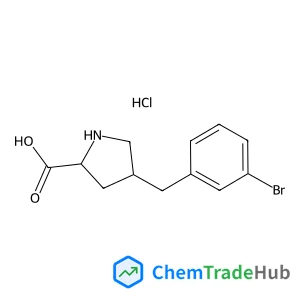
(2S,4R)-4-(3-Bromobenzyl)pyrrolidine-2-carboxylic acid hydrochloride
CAS号:
1049734-10-2
分子式:
C12H15BrClNO2
![Ethyl ({[(2-methyl-2-propanyl)oxy]carbonyl}amino)(2-pyridinyl)acetate structure](https://cnstatic.chemtradehub.com/structs/313/313490-90-3-dd15.webp "Ethyl ({[(2-methyl-2-propanyl)oxy]carbonyl}amino)(2-pyridinyl)acetate structure")
Ethyl ({[(2-methyl-2-propanyl)oxy]carbonyl}amino)(2-pyridinyl)acetate
CAS号:
313490-90-3
分子式:
C14H20N2O4
推荐供应商




免责声明
本页面提供的学术期刊信息仅供参考和研究使用。我们与任何期刊出版商均无关联,也不处理投稿事宜。如有投稿相关咨询,请直接联系相关期刊出版商。
如发现页面信息有误,请发送邮件至 support@chemtradehub.com 联系我们。我们将及时核实并处理您的问题。