


SERS-activating effect of chlorides on borate-stabilized silver nanoparticles: formation of new reduced adsorption sites and induced nanoparticle fusion
文献信息
发布日期
2008-03-03
DOI
10.1039/B718178G
影响因子
3.676
作者
Karolína Šišková, Blanka Vlčková, Josef Štěpánek
查看原文
摘要
Changes in morphology, surface reactivity and surface-enhancement of Raman scattering induced by modification of borate-stabilized Ag nanoparticles by adsorbed chlorides have been explored using TEM, EDX analysis and SERS spectra of probing adsorbate 2,2′-bipyridine (bpy) excited at 514.5 nm and evaluated by factor analysis. At fractional coverages of the parent Ag nanoparticles by adsorbed chlorides <0.6, the Ag colloid/Cl−/bpy systems were found to be constituted by fractal aggregates of Ag nanoparticles fairly uniform in size (10 ± 2 nm) and SERS spectra of Ag+-bpy surface species were detected. The latter result was interpreted in terms of the presence of oxidized Ag+ and/or Agn+ adsorption sites, which have been encountered also in systems with the chemically untreated Ag nanoparticles. At chloride coverages >0.6, a fusion of fractal aggregates into the compact aggregates of touching and/or interpenetrating Ag nanoparticles has been observed and found to be accompanied by the formation of another surface species, Ag-bpy, as well as by the increase of the overall SERS enhancement of bpy by factor of 40. The same Ag-bpy surface species has been detected under the strongly reducing conditions of reduction of silver nitrate by sodium borohydride in the presence of bpy. The formation of Ag-bpy is thus interpreted in terms of the stabilization of reduced Ag(0) adsorption sites by adsorbed bpy. The formation of reduced adsorption sites on Ag nanoparticle surfaces at chloride coverages >0.6 is discussed in terms of local changes in the work function of Ag. Finally, the SERS spectral detection of Ag-bpy species is proposed as a tool for probing the presence of reduced Ag(0) adsorption sites in systems with chemically modified Ag nanoparticles.
期刊推荐

Organic Preparations and Procedures International
Journal of Medicinal Chemistry
Kinetics and Catalysis
Pharmacological Reviews

Science Progress
Fibre Chemistry

Proceedings of the National Academy of Sciences of the United States of America
Israel Journal of Chemistry
Journal of Organometallic Chemistry

European Journal of Wood and Wood Products
相关文献
Quantum chemical investigation of the thermal denitrogenation of 1-pyrazoline
Renuka Pradhan, Upakarasamy Lourderaj
2017-09-26
Paper
DOI: 10.1039/C7CP05320G
B(OH)4− hydration and association in sodium metaborate solutions by X-ray diffraction and empirical potential structure refinement
Souta Higa, Chunhui Fang, Yan Fang, Wenqian Zhang, Toshio Yamaguchi
2017-09-28
Paper
DOI: 10.1039/C7CP05107G
Periodic DFT+U investigation of the bulk and surface properties of marcasite (FeS2)
Nelson Y. Dzade
2017-09-14
Paper
DOI: 10.1039/C7CP04413E
Nucleation and growth of lead oxide particles in liquid lead-bismuth eutectic
Kris Rosseel, Jun Lim, Alessandro Marino, Geraldine Heynderickx, Alexander Aerts
2017-10-05
Paper
DOI: 10.1039/C7CP05068B
Revealing tunnelling details by normalized differential conductance analysis of transport across molecular junctions
2017-09-27
Communication
DOI: 10.1039/C7CP05536F
Crystallographic features of poly(vinylidene fluoride) film upon an attractive substrate of KBr
Rui Huang, Gang Wang, Shuo Guo, Ke Wang, Qiang Fu
2017-09-18
Paper
DOI: 10.1039/C7CP04741J
A global method for handling fluorescence spectra at high concentration derived from the competition between emission and absorption of colloidal CdTe quantum dots
Thomas Noblet, Laurent Dreesen, Julie Hottechamps, Christophe Humbert
2017-09-06
Paper
DOI: 10.1039/C7CP03484A
Atomistic observation of the collision and migration of Li on MoSe2 and WS2 surfaces through ab initio molecular dynamics
Viet Q. Bui, Thang Bach Phan, Yoshiyuki Kawazoe
2017-09-15
Paper
DOI: 10.1039/C7CP05847K
Theoretical illumination of highly original photoreactive 3MC states and the mechanism of the photochemistry of Ru(ii) tris(bidentate) complexes
Isabelle M. Dixon, Jean-Louis Heully, Fabienne Alary, Paul I. P. Elliott
2017-09-25
Paper
DOI: 10.1039/C7CP05532C
您可能还喜欢
化合物问答
如何处理含有8-氯咪唑并[1,2-A]吡嗪(CAS号:69214-33-1)的废料?
处理含有8-氯咪唑并[1,2-A]吡嗪的废料时,应首先将其收集并进行化学回收或降解。如果无法回收,需采用安全的化学处理方法,如中和、氧化还原或沉淀。处理过程中需...
69214-33-18-chloroimidazo[1,2-...
化合物问答
Calhex 231 hydrochloride(CAS号:2387505-78-2)适用哪些法规指南?
Calhex 231 hydrochloride 需要遵循《全球化学品统一分类和标签制度》(GHS)的分类和标签要求,以及欧盟的《化学品注册、评估、授权和限制条...
2387505-78-24-Chloro-N-[(1S,2S)-...
化合物问答
11-Beta,17-alpha,21-三羟基-5-beta-孕烯-3,20-二酮(CAS号:1482-50-4)的物理化学性质是什么?
11-Beta,17-alpha,21-三羟基-5-beta-孕烯-3,20-二酮是一种无色结晶性粉末,分子量为372.45 g/mol。该化合物在水中的溶解度...
1482-50-45β-Dihydrocortisol
化合物问答
处理5-异丙基-1,3,4-恶二唑-2-羧酸(CAS号:944907-13-5)时应注意哪些实验室安全事项?
处理5-异丙基-1,3,4-恶二唑-2-羧酸时应注意以下安全事项:穿戴适当的个人防护装备,包括实验室外套、手套和护目镜;操作应在通风橱中进行,以减少吸入或接触有...
944907-13-55-Isopropyl-1,3,4-ox...
化合物问答
benzyl 3-bromopropanoate(CAS号:90841-55-7)安全吗?
Benzyl 3-bromopropanoate属于有毒物质,吸入、摄入或皮肤接触均可能对人体造成伤害。操作时应佩戴防护眼镜、口罩和手套,避免吸入蒸汽和直接接触...
90841-55-7Benzyl 3-bromopropan...
化合物问答
什么是(R)-N-苄氧羰基-3,4-二氢-1H-异喹啉羧酸(CAS号:151004-88-5)?
(R)-N-苄氧羰基-3,4-二氢-1H-异喹啉羧酸是一种含有苄氧羰基和异喹啉环结构的化合物,分子式为C17H15NO3。它是一种有机化合物,具有一定的生物活性...
151004-88-5(1R)-2-[(Benzyloxy)c...
化合物问答
在合成中是否有1-苄基吡啶嗡-3-羧酸盐(CAS号:15990-43-9)的替代品?
可以考虑使用1-苄基吡啶-3-羧酸盐作为1-苄基吡啶嗡-3-羧酸盐的替代品。此外,还可以探索其他类似物,如1-苄基吡啶-3-氨基甲酸酯等。具体的替代品选择需根据...
15990-43-91-Benzyl-3-pyridiniu...
化合物问答
(2,6-二甲基吡啶-3-基)甲醇(CAS号:582303-10-4)安全吗?
(2,6-二甲基吡啶-3-基)甲醇在使用时需注意安全,应避免吸入其蒸汽,接触皮肤和眼睛。操作应在通风良好的环境中进行,佩戴适当的个人防护装备。
582303-10-4(2,6-Dimethyl-3-pyri...
化合物问答
5-溴-2-乙烯基吡啶(CAS号:226883-52-9)的物理化学性质是什么?
5-溴-2-乙烯基吡啶是一种有机化合物,外观为白色固体,具有良好的结晶性。分子量约为190.03 g/mol。它的溶解性在水中较差,但在有机溶剂如二氯甲烷、甲醇...
226883-52-95-Bromo-2-vinylpyrid...
化合物问答
2-羟基-3-硝基-5-甲基吡啶(CAS号:7464-14-4)应用于哪些行业?
2-羟基-3-硝基-5-甲基吡啶主要应用于医药、聚合物和半导体行业。在医药领域,它可以用作合成其他药物的中间体。在聚合物领域,它可以作为功能性单体参与聚合反应,...
7464-14-45-Methyl-3-nitro-2(1...
来源期刊
Physical Chemistry Chemical Physics

CiteScore:
5.5
自引率:
10.3%
年发文量:
3036
Physical Chemistry Chemical Physics (PCCP) is an international journal co-owned by 19 physical chemistry and physics societies from around the world. This journal publishes original, cutting-edge research in physical chemistry, chemical physics and biophysical chemistry. To be suitable for publication in PCCP, articles must include significant innovation and/or insight into physical chemistry; this is the most important criterion that reviewers and Editors will judge against when evaluating submissions. The journal has a broad scope and welcomes contributions spanning experiment, theory, computation and data science. Topical coverage includes spectroscopy, dynamics, kinetics, statistical mechanics, thermodynamics, electrochemistry, catalysis, surface science, quantum mechanics, quantum computing and machine learning. Interdisciplinary research areas such as polymers and soft matter, materials, nanoscience, energy, surfaces/interfaces, and biophysical chemistry are welcomed if they demonstrate significant innovation and/or insight into physical chemistry. Joined experimental/theoretical studies are particularly appreciated when complementary and based on up-to-date approaches.
推荐化合物
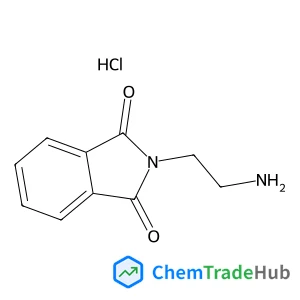
推荐供应商






免责声明
本页面提供的学术期刊信息仅供参考和研究使用。我们与任何期刊出版商均无关联,也不处理投稿事宜。如有投稿相关咨询,请直接联系相关期刊出版商。
如发现页面信息有误,请发送邮件至 support@chemtradehub.com 联系我们。我们将及时核实并处理您的问题。