


Selective mesoporous adsorbents for Ag+/Cu2+ separation
文献信息
发布日期
2008-02-21
DOI
10.1039/B719961A
影响因子
6.222
作者
Koon Fung Lam, Xinqing Chen, Chi Mei Fong, King Lun Yeung
查看原文
摘要
Three different approaches, including (1) manipulating the site chemistry, (2) controlling the spacing between neighbouring sites and (3) altering the adsorbates by the use of chelates, were successfully used to prepare MCM-41 adsorbents with excellent selectivity for silver adsorption from solutions containing copper.
期刊推荐
Photochemical & Photobiological Sciences
Nature Reviews Drug Discovery
European Journal of Organic Chemistry
Current Pharmaceutical Biotechnology

Physical Chemistry Chemical Physics
Faraday Discussions
Foundations of Chemistry

Green Chemistry
Journal of Enzyme inhibition and Medicinal Chemistry
Journal of Medical Biochemistry
相关文献
Carbon–fluorine bond activation—looking at and learning from unsolvated systems
Ulf Mazurek, Helmut Schwarz
2003-04-04
Feature Article
DOI: 10.1039/B211850E
Transformation of a C-methylcalix[4]resorcinarene-based host–guest complex from a wave-like to a novel triangular brick-wall architecture
Bao-Qing Ma, Philip Coppens
2003-01-22
Communication
DOI: 10.1039/B212548J
Noncatalytic Heck coupling reaction using supercritical water
Rong Zhang, Masahiro Sato
2003-06-02
Communication
DOI: 10.1039/B302683C
Anchor chain length alters the apparent mechanism of chloride channel function in SCMTR derivatives
Paul H. Schlesinger, Natasha K. Djedovič, Riccardo Ferdani, Jolanta Pajewska, Robert Pajewski, George W. Gokel
2003-01-06
Communication
DOI: 10.1039/B211629B
Composite hopanoid biosynthesis in Zymomonas mobilis: N-acetyl-d-glucosamine as precursor for the cyclopentane ring linked to bacteriohopanetetrol
Stéphane P. Vincent, Pierre Sinay, Michel Rohmer
2003-02-25
Communication
DOI: 10.1039/B212685K
Chiral discrimination in the intramolecular abstraction of allylic hydrogens by benzophenone triplets
Francisco Boscá, Inmaculada Andreu, Isabel M. Morera, Abdelouahid Samadi
2003-06-03
Communication
DOI: 10.1039/B303263A
A novel concept to activate enediynes for DNA cleavage
Michael Schmittel, Giampietro Viola, Francesco Dall’Acqua, Guido Morbach
2003-02-11
Communication
DOI: 10.1039/B211783E
Microemulsion-mediated solvothermal synthesis of nanosized CdS-sensitized TiO2 crystalline photocatalyst
Jimmy C. Yu, Ling Wu, Jun Lin, Puishan Li, Quan Li
2003-06-02
Communication
DOI: 10.1039/B302418K
Olefin/paraffin solubility in a solid polymer electrolyte membrane
T. C. Merkel, Z. He, A. Morisato, I. Pinnau
2003-06-03
Communication
DOI: 10.1039/B301420G
Sub-Tcelectron transfer at the HTSC/polymer interface
Nicolas Le-Poul, Stephen J. Green, J. Paul Attfield
2003-02-07
Communication
DOI: 10.1039/B300023K
您可能还喜欢
化合物问答
2-Bromo-4-chloro-1-(difluoromethyl)benzene(CAS号:1261476-50-9)的市场或研究趋势如何?
随着环保要求的提高和安全意识的增强,该化合物的研究和应用趋势正逐渐转向更安全、更环境友好的替代品。市场关注点主要集中在开发新型合成方法和绿色化学路径,以减少有害...
1261476-50-92-Bromo-4-chloro-1-(...
化合物问答
如何处理含有2,9 - 二苯基-1,10 - 菲罗啉(CAS号:25677-69-4)的废料?
处理含有2,9 - 二苯基 - 1,10 - 菲罗啉的废料时,应先将其收集在适当的容器中,避免与其他化学品混合。随后,可以通过水解或氧化等方法进行处理,直至达到...
25677-69-42,9-Diphenyl-1,10-ph...
化合物问答
处理(6-氯-吡嗪-3-基)-(4-乙基-哌嗪-1-基)-甲酮(CAS号:1178836-15-1)时应注意哪些实验室安全事项?
处理(6-氯-吡嗪-3-基)-(4-乙基-哌嗪-1-基)-甲酮时,应穿戴适当的个人防护装备(PPE),包括手套、护目镜和实验室外套。在通风橱中操作以确保良好的通...
1178836-15-1(6-Chloro-3-pyridazi...
化合物问答
处理(R)-2-氯-1-(2,4-二氯苯基)乙醇(CAS号:114446-57-0)时应注意哪些实验室安全事项?
在处理(R)-2-氯-1-(2,4-二氯苯基)乙醇时,应佩戴防护眼镜、实验室外套和手套,确保通风橱开启以减少接触和吸入的风险。避免直接接触皮肤和眼睛。处理过程中...
114446-57-0(1R)-2-Chloro-1-(2,4...
化合物问答
在合成中是否有3-氯-6-(3-氯哌啶-1-基)吡嗪(CAS号:1185310-37-5)的替代品?
可考虑使用类似结构的化合物作为替代品,如3-氯-6-(哌啶-1-基)吡嗪或3-氯-6-(2-氯哌啶-1-基)吡嗪,这些化合物在结构上与目标化合物相似,可能具有相...
1185310-37-53-Chloro-6-(3-chloro...
化合物问答
苯并三氮唑-5-甲酸乙酯(CAS号:73605-91-1)通常如何合成?
该化合物可以通过乙酸乙酯与5-溴-1H-苯并三氮唑的反应合成,通常在无水条件下进行。合成过程中,需要使用适当的溶剂如乙酸乙酯,并在适当的温度下反应。该反应具有较...
73605-91-1Ethyl 1H-benzotriazo...
化合物问答
什么是一水硫酸镁(CAS号:14168-73-1)?
一水硫酸镁是一种无机化合物,化学式为MgSO₄·H₂O,CAS号为14168-73-1。它由镁离子、硫酸根离子和一个结晶水分子组成,通常呈现为白色粉末或颗粒状固...
14168-73-1Magnesium sulfate hy...
化合物问答
氘代-1,3-二氯-2-丙醇(CAS号:1173020-20-6)应用于哪些行业?
氘代-1,3-二氯-2-丙醇主要应用于医药和有机合成领域,作为研究化合物的氘代替代品,用于标记和追踪反应过程。此外,在聚合物和半导体生产中也有一定的应用潜力。
1173020-20-61,3-Dichloro-2-(~2~H...
化合物问答
如何储存氰乙酸环己酯(CAS号:52688-11-6)?
氰乙酸环己酯应储存在阴凉、干燥、通风良好的环境中,远离火源和热源,防止阳光直射。储存容器应密封良好,避免与空气接触,防止发生不必要的反应。
52688-11-6Cyclohexyl cyanoacet...
化合物问答
2-碘-4-硝基苯胺(CAS号:6293-83-0)的市场或研究趋势如何?
目前,2-碘-4-硝基苯胺在医药和农药领域有一定的研究和应用,尤其是在开发新型药物和农药产品方面。然而,由于其潜在的环境和健康风险,行业正趋向于寻找更为安全和环...
6293-83-02-iodo-4-nitroanilin...
来源期刊
Chemical Communications

CiteScore:
8.6
自引率:
4.7%
年发文量:
2458
ChemComm publishes urgent research which is of outstanding significance and interest to experts in the field, while also appealing to the journal’s broad chemistry readership. Our communication format is ideally suited to short, urgent studies that are of such importance that they require accelerated publication. Our scope covers all topics in chemistry, and research at the interface of chemistry and other disciplines (such as materials science, nanoscience, physics, engineering and biology) where there is a significant novelty in the chemistry aspects. Major topic areas covered include: Analytical Chemistry Catalysis Chemical Biology and medicinal chemistry Computational Chemistry and Machine Learning Energy and sustainable chemistry Environmental Chemistry Green Chemistry Inorganic Chemistry Materials Chemistry Nanoscience Organic Chemistry Physical Chemistry Polymer Chemistry Supramolecular Chemistry
推荐化合物
![(3E)-3-[4-Hydroxy-3,5-bis(2-methyl-2-propanyl)benzylidene]dihydro-2(3H)-furanone structure](https://cnstatic.chemtradehub.com/structs/102/102271-49-8-cba7.webp "(3E)-3-[4-Hydroxy-3,5-bis(2-methyl-2-propanyl)benzylidene]dihydro-2(3H)-furanone structure")
![4-[(4-Bromophenyl)sulfonyl]thiomorpholine structure](https://cnstatic.chemtradehub.com/structs/223/223555-81-5-2d67.webp "4-[(4-Bromophenyl)sulfonyl]thiomorpholine structure")
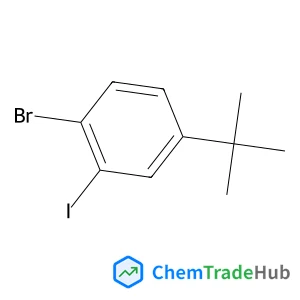
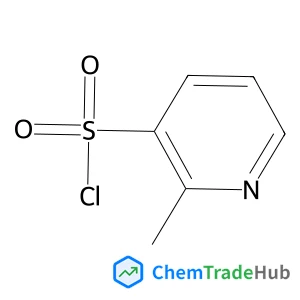
推荐供应商




免责声明
本页面提供的学术期刊信息仅供参考和研究使用。我们与任何期刊出版商均无关联,也不处理投稿事宜。如有投稿相关咨询,请直接联系相关期刊出版商。
如发现页面信息有误,请发送邮件至 support@chemtradehub.com 联系我们。我们将及时核实并处理您的问题。