






Surface-adsorbed silver half-shells as a platform for surface-enhanced immunoassays; optimization through morphological control
文献信息
发布日期
2009-01-13
DOI
10.1039/B808784A
影响因子
4.616
作者
查看原文
摘要
We have investigated the effectiveness of surface-adsorbed silver half-shells for inducing the surface-enhanced fluorescence phenomenon. Our simple structure consists of a dense monolayer of monodispersive latex sphere covered by thermally evaporated silver, some tens of nm thick. In order to increase its effectiveness as a platform for immunoassay, we explored three physical parameters; the diameter of the latex sphere, the deposition thickness and the adsorption density of the latex sphere. The maximum enhancement of 25.5 was achieved using the sphere with 56 nm diameter with 10 nm silver deposited. As for the adsorption density, the maximum fluorescence signal was achieved with a relatively sparse adsorption density, 12.5 per µm2vs. 105.9 per µm2, corresponding to the full coverage. With the adsorption density also optimized, the enhancement was further increased by a factor of three.
相关文献
Chemiluminescence thrombin aptasensor using high-activity DNAzyme as catalytic label
2008-09-23
Communication
DOI: 10.1039/B809296F
Mercury or silver atoms bridging trinuclear titanium imido–nitrido systems
Avelino Martín, Noelia Martínez-Espada, Miguel Mena, Marta E. G. Mosquera, Adrián Pérez-Redondo, Carlos Yélamos
2008-11-11
Communication
DOI: 10.1039/B814982H
A template-free nano-wrapping technique for the fabrication of copper hollow nanospheres smaller than 20 nm
Frank Leung-Yuk Lam, Tommy Chi-Yan Martin, Xijun Hu
2008-11-04
Communication
DOI: 10.1039/B812651H
An alternative approach to develop a highly sensitive and selective chemosensor for the colorimetric sensing of cyanide in water
Xiaoding Lou, Liyao Zhang, Jingui Qin, Zhen Li
2008-10-01
Communication
DOI: 10.1039/B812746H
Polyfunctional benzylic zinc chlorides by the direct insertion of magnesium into benzylic chlorides in the presence of LiCl and ZnCl2
Albrecht Metzger, Fabian M. Piller, Paul Knochel
2008-10-01
Communication
DOI: 10.1039/B812396A
Post-assembly error-checking in subphthalocyanine based M3L2 metallosupramolecular capsules‡
Christian G. Claessens, M. Jesús Vicente-Arana, Tomás Torres
2008-11-04
Communication
DOI: 10.1039/B815898C
Preparation of active and robust palladium nanoparticlecatalysts stabilized by diamine-functionalized mesoporous polymers
Rong Xing, Yueming Liu, Haihong Wu, Xiaohong Li, Mingyuan He, Peng Wu
2008-10-27
Communication
DOI: 10.1039/B815186E
Silver-enhanced fluorescence emission of single quantum dot nanocomposites
Yi Fu, Jian Zhang, Joseph R. Lakowicz
2008-11-19
Communication
DOI: 10.1039/B816736B
Selectivity control in enantioselective four-component reactions of aryl diazoacetates with alcohols, aldehydes and amines: an efficient approach to synthesizing chiral β-amino-α-hydroxyesters
Xinfang Xu, Jing Zhou, Liping Yang, Wenhao Hu
2008-11-11
Communication
DOI: 10.1039/B816104F
Tandem conjugate addition–elimination reaction promoted by chiral pyrrolidinyl sulfonamide (CPS)‡
2008-09-24
Communication
DOI: 10.1039/B810905M
您可能还喜欢
化合物问答
4-[4-三氟甲基苯基]恶唑(CAS号:1126636-40-5)通常如何合成?
4-[4-三氟甲基苯基]恶唑通常通过将4-三氟甲基苯酚与异硫氰酸苯酯在有机溶剂中进行酯化反应合成。该反应可在无水条件下,使用适当的催化剂,如四丁基氢氧化铵,以提...
1126636-40-54-(4-(Trifluoromethy...
59729-32-71-[3-(Dimethylamino)...
化合物问答
RockPhos Pd G3(CAS号:2009020-38-4)通常如何合成?
RockPhos Pd G3 通常通过钯催化偶联反应合成,使用配体 (2'-Amino-2-biphenylyl)(methanesulfonato-kappa...
2009020-38-4(2'-Amino-2-biphenyl...
化合物问答
1-哌啶甲酰胺(CAS号:2158-03-4)的市场或研究趋势如何?
1-哌啶甲酰胺作为有机合成中的重要中间体,其市场需求主要受医药、农药、染料等行业推动。近年来,随着新药开发和绿色化学的发展,该化合物的研究趋势集中在开发更高效、...
2158-03-41-Piperidinecarboxam...
化合物问答
2-(二苯基膦基)乙胺(CAS号:4848-43-5)适用哪些法规指南?
2-(二苯基膦基)乙胺适用于多种法规指南,包括但不限于《全球化学品统一分类和标签制度》(GHS),欧盟《化学品注册、评估、授权和限制》法规(REACH),以及美...
4848-43-52-(Diphenylphosphino...
化合物问答
如何储存间苯二甲酸二烯丙酯(CAS号:1087-21-4)?
间苯二甲酸二烯丙酯应储存在阴凉、干燥、通风良好的地方,远离火源和热源。储存容器应密封,避免光照和高温。储存温度应控制在25℃以下,相对湿度应低于80%。避免与其...
1087-21-4Diallyl isophthalate
化合物问答
什么是间甲苯异硫代异氰酸酯(CAS号:621-30-7)?
间甲苯异硫代异氰酸酯是一种有机化合物,分子式为C7H7NO2S,具有刺激性气味。它是一种重要的有机合成中间体,在合成其他化合物时广泛应用。
621-30-71-Isothiocyanato-3-m...
化合物问答
在合成中是否有N-Boc-D-苯丙氨醇(CAS号:106454-69-7)的替代品?
在合成中,可以考虑使用N-Cbz-D-苯丙氨醇或N-Fmoc-D-苯丙氨醇作为替代品。这些化合物同样具有保护氨基的功能,且在合成过程中表现出良好的反应性能。
106454-69-72-Methyl-2-propanyl ...
化合物问答
3-羟甲基-2-氧异丙基吡啶(CAS号:954240-50-7)的主要用途是什么?
3-羟甲基-2-氧异丙基吡啶主要用于有机合成领域,可以作为合成其他药物、农药或精细化学品的中间体。此外,它还可能在实验室研究中作为特定反应的前体或溶剂。
954240-50-7(2-Isopropoxy-3-pyri...
化合物问答
6-氨基-9-甲基嘌呤(CAS号:700-00-5)应用于哪些行业?
6-氨基-9-甲基嘌呤目前主要应用于医药行业,作为某些药物的中间体。此外,它还可能用于聚合物、传感器和半导体的某些领域,作为功能性单体或掺杂剂。
700-00-59-Methyl-9H-purin-6-...
来源期刊
Analyst

CiteScore:
7.8
自引率:
5.6%
年发文量:
653
Analyst publishes analytical and bioanalytical research that reports premier fundamental discoveries and inventions, and the applications of those discoveries, unconfined by traditional discipline barriers.
推荐化合物
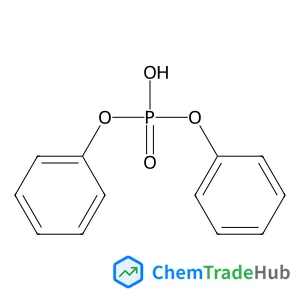
![[2',6'-bis(propan-2-yloxy)-[1,1'-biphenyl]-3-yl]dicyclohexylphosphane structure](https://cnstatic.chemtradehub.com/structs/787/787618-22-8-dda2.webp "[2',6'-bis(propan-2-yloxy)-[1,1'-biphenyl]-3-yl]dicyclohexylphosphane structure")
[2',6'-bis(propan-2-yloxy)-[1,1'-biphenyl]-3-yl]dicyclohexylphosphane
CAS号:
787618-22-8
分子式:
C30H43O2P
推荐供应商





免责声明
本页面提供的学术期刊信息仅供参考和研究使用。我们与任何期刊出版商均无关联,也不处理投稿事宜。如有投稿相关咨询,请直接联系相关期刊出版商。
如发现页面信息有误,请发送邮件至 support@chemtradehub.com 联系我们。我们将及时核实并处理您的问题。