


Extended Förster theory for determining intraprotein distances Part III. Partial donor–donor energy migration among reorienting fluorophores
文献信息
发布日期
2008-10-14
DOI
10.1039/B810661D
影响因子
3.676
作者
N. Norlin, P. Håkansson, P.-O. Westlund, L. B.-Å. Johansson
查看原文
摘要
An extended Förster theory (EFT) is derived and outlined for electronic energy migration between two fluorescent molecules which are chemically identical, but photophysically non-identical. These molecules exhibit identical absorption and fluorescence spectra, while their fluorescence lifetimes differ. The latter means that the excitation probability becomes irreversible. Unlike the case of equal lifetimes, which is often referred to as, donor–donor energy migration (DDEM), the observed fluorescence relaxation is then no longer invariant to the energy migration process. To distinguish, the present case is therefore referred to as partial donor–donor energy migration (PDDEM). The EFT of PPDEM is described by a stochastic master equation (SME), which has been derived from the stochastic Liouville equation (SLE) of motion. The SME accounts for the reorienting as well as the translational motions of the interacting chromophores. Synthetic fluorescence lifetime and depolarisation data that mimics time-correlated single photon counting experiments have been generated and re-analysed. The rates of reorientation, as well as the orientational configurations of the interacting D-groups were examined. Moreover the EFT of PPDEM overcomes the classical “κ2-problem” and the frequently applied approximation of 〈κ2〉 = 2/3 in the data analyses. An outline for the analyses of fluorescence lifetime and depolarisation data is also given, which might prove applicable to structural studies of D-labelled macromolecules, e.g. proteins. The EFT presented here brings the analyses of PDDEM data to the same level of molecular detail as that used in ESR- and NMR-spectroscopy.
期刊推荐
Pharmacological Reviews

Proceedings of the National Academy of Sciences of the United States of America
Journal of Physics and Chemistry of Solids
Journal of Organometallic Chemistry
Science Progress
Organic Preparations and Procedures International
Journal of Heterocyclic Chemistry

Molecular Pharmacology
Kinetics and Catalysis
Planta Medica
相关文献
Atomically accurate site-specific ligand tailoring of highly acid- and alkali-resistant Ti(iv)-based metallamacrocycle for enhanced CO2 photoreduction
Yi-Qi Tian, Lin-Fang Dai, Wen-Lei Mu, Wei-Dong Yu, Jun Yan, Chao Liu
2023-11-30
Edge Article
DOI: 10.1039/D3SC06046B
Rapid, iterative syntheses of unsymmetrical di- and triarylboranes from crystalline aryldifluoroboranes
Douglas Turnbull, Marc-André Légaré
2023-11-17
Edge Article
DOI: 10.1039/D3SC05071H
A β-barrel-like tetramer formed by a β-hairpin derived from Aβ
Tuan D. Samdin, Chelsea R. Jones, Gretchen Guaglianone, Adam G. Kreutzer, J. Alfredo Freites, Michał Wierzbicki
2023-11-28
Edge Article
DOI: 10.1039/D3SC05185D
Quantitative detection of microRNA-21 in vivo using in situ assembled photoacoustic and SERS nanoprobes
Liting Zheng, Qingqing Li, Ying Wu, Lichao Su, Wei Du, Jibin Song, Lanlan Chen, Huanghao Yang
2023-11-21
Edge Article
DOI: 10.1039/D3SC04371A
An expeditive and green chemo-enzymatic route to diester sinapoyl-l-malate analogues: sustainable bioinspired and biosourced UV filters and molecular heaters
Benjamin Rioux, Louis M. M. Mouterde, Jimmy Alarcan, Matthias J. A. Vink, Jack M. Woolley, Aurélien A. M. Peru, Matthieu M. Mention, Fanny Brunissen, Giel Berden, Jos Oomens, Albert Braeuning, Florent Allais
2023-11-21
Edge Article
DOI: 10.1039/D3SC04836E
Cobalt-catalyzed decarboxylative difluoroalkylation of nitrophenylacetic acid salts
Ebbin Joseph, Ian Smith, Jon A. Tunge
2023-11-16
Edge Article
DOI: 10.1039/D3SC05583C
Thermally activated delayed fluorescence in a deep red dinuclear iridium(iii) complex: a hidden mechanism for short luminescence lifetimes
Andrey V. Zaytsev, Amit Sil, Glib V. Baryshnikov, J. A. Gareth Williams, Fernando B. Dias, Valery N. Kozhevnikov
2023-11-14
Edge Article
DOI: 10.1039/D3SC04450E
Facile synthesis of 1,2-aminoalcohols via α-C–H aminoalkylation of alcohols by photoinduced hydrogen-atom transfer catalysis
Joaquim Caner, Akira Matsumoto
2023-11-16
Edge Article
DOI: 10.1039/D3SC05305A
An erythrocyte membrane-camouflaged fluorescent covalent organic framework for starving/nitric oxide/immunotherapy of triple-negative breast cancer
Fang Yuan, Cuiling Zhang, Xianzhu Luo, Shasha Cheng, Yingxin Zhu, Yuezhong Xian
2023-07-28
Edge Article
DOI: 10.1039/D3SC02022C
Artificial cells with viscoadaptive behavior based on hydrogel-loaded giant unilamellar vesicles
2023-12-04
Edge Article
DOI: 10.1039/D3SC04687G
您可能还喜欢
化合物问答
5-氯咪唑并[1,2-c]嘧啶(CAS号:1208086-02-5)适用哪些法规指南?
5-氯咪唑并[1,2-c]嘧啶需遵循多项法规指南,包括但不限于GHS(全球化学品统一分类和标签制度),用于危险品的分类和标签。此外,根据其用途,还需遵循REAC...
1208086-02-55-Chloroimidazo[1,2-...
化合物问答
3-磺丙基十六烷基二甲基铵(CAS号:2281-11-0)应用于哪些行业?
3-磺丙基十六烷基二甲基铵广泛应用于医药、聚合物、传感器和半导体等领域。在医药行业,它作为乳化剂和稳定剂用于制备药物制剂;在聚合物行业中,作为增塑剂和抗静电剂;...
2281-11-03-[Hexadecyl(dimethy...
化合物问答
(R)-1-苄氧羰基-2-苄基哌嗪盐酸(CAS号:1217753-37-1)应用于哪些行业?
(R)-1-苄氧羰基-2-苄基哌嗪盐酸主要应用于医药、有机合成等行业。它作为药物合成中的中间体,具有重要的应用价值。此外,该化合物还可用于聚合物合成、传感器制造...
1217753-37-1(R)-Benzyl 3-benzylp...
化合物问答
什么是Benzo[c][1,2,5]thiadiazole-5,6-dithiol(CAS号:127498-45-7)?
Benzo[c][1,2,5]thiadiazole-5,6-二硫醇是一种含硫的有机化合物,具有独特的化学结构。该化合物的分子式为C8H5NOS4,分子量为22...
127498-45-7Benzo[c][1,2,5]thiad...
化合物问答
处理(5-氯-2-甲基吲哚-3)-乙酸(CAS号:19017-52-8)时应注意哪些实验室安全事项?
处理(5-氯-2-甲基吲哚-3)-乙酸时应佩戴防护眼镜和手套,保护皮肤和眼睛。通风橱应开启以确保良好的通风。如果不慎接触皮肤或眼睛,应立即用大量清水冲洗并寻求医...
19017-52-8(5-Chloro-2-methyl-1...
化合物问答
在合成中是否有生物素亚砜(CAS号:3376-83-8)的替代品?
在合成中,生物素亚砜的替代品包括生物素、生物素硫代半缩醛等。生物素硫代半缩醛作为生物素的衍生物,具有相似的化学性质,但在某些反应中可能表现出不同的行为。选择替代...
3376-83-8Biotin sulfoxide
化合物问答
在合成中是否有(4-氟四氢-2H-吡喃-4-基)甲醇(CAS号:883442-46-4)的替代品?
在合成过程中,可以考虑使用含有类似结构的化合物作为替代品,例如4-氟-2-羟基-1,3-二氧戊环或其他含有相应氟原子的四氢呋喃衍生物。这些化合物在化学性质上与目...
883442-46-4(4-Fluorooxan-4-YL)m...
化合物问答
2,3-二氢吡咯并[1,2-C]嘧啶-1,4-二酮(CAS号:223432-94-8)安全吗?
2,3-二氢吡咯并[1,2-C]嘧啶-1,4-二酮在处理时需要适当的安全措施。它属于一般化学品,虽然相对稳定,但在高温或强酸强碱条件下可能分解或发生化学反应。建...
223432-94-82,3-dihydropyrrolo[1...
化合物问答
如何储存反式-3-庚烯(CAS号:14686-14-7)?
反式-3-庚烯应储存在阴凉、通风良好的地方,避免阳光直射和高温。储存容器应密封,放置在温度不超过25℃的环境中,并远离火源和热源。建议使用耐腐蚀的容器,并确保良...
14686-14-73-Heptene
化合物问答
1-乙酰基-1H-吲哚-6-甲腈(CAS号:1017791-09-1)安全吗?
1-乙酰基-1H-吲哚-6-甲腈的毒性较低,但在操作时仍需谨慎。使用时应避免吸入其粉尘或烟雾,避免皮肤接触,佩戴防护眼镜和手套。
1017791-09-11-acetyl-1H-indole-6...
来源期刊
Physical Chemistry Chemical Physics

CiteScore:
5.5
自引率:
10.3%
年发文量:
3036
Physical Chemistry Chemical Physics (PCCP) is an international journal co-owned by 19 physical chemistry and physics societies from around the world. This journal publishes original, cutting-edge research in physical chemistry, chemical physics and biophysical chemistry. To be suitable for publication in PCCP, articles must include significant innovation and/or insight into physical chemistry; this is the most important criterion that reviewers and Editors will judge against when evaluating submissions. The journal has a broad scope and welcomes contributions spanning experiment, theory, computation and data science. Topical coverage includes spectroscopy, dynamics, kinetics, statistical mechanics, thermodynamics, electrochemistry, catalysis, surface science, quantum mechanics, quantum computing and machine learning. Interdisciplinary research areas such as polymers and soft matter, materials, nanoscience, energy, surfaces/interfaces, and biophysical chemistry are welcomed if they demonstrate significant innovation and/or insight into physical chemistry. Joined experimental/theoretical studies are particularly appreciated when complementary and based on up-to-date approaches.
推荐化合物
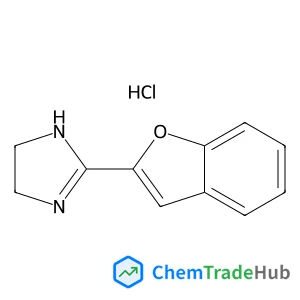
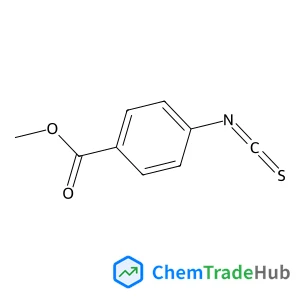
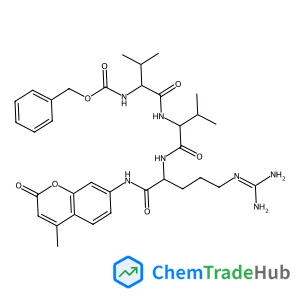
推荐供应商






免责声明
本页面提供的学术期刊信息仅供参考和研究使用。我们与任何期刊出版商均无关联,也不处理投稿事宜。如有投稿相关咨询,请直接联系相关期刊出版商。
如发现页面信息有误,请发送邮件至 support@chemtradehub.com 联系我们。我们将及时核实并处理您的问题。