



Selective detection of dopamine using a combined permselective film of electropolymerized (poly-tyramine and poly-pyrrole-1-propionic acid) on a boron-doped diamondelectrode
文献信息
发布日期
2008-12-05
DOI
10.1039/B814317J
影响因子
4.616
作者
Fengjun Shang, Yali Liu, Sabahudin Hrapovic, Jeremy D. Glennon
查看原文
摘要
An effective and robust electrochemical approach has been developed for selective detection of dopamine in the presence of 3,4-dihydroxyphenylalanine (L-DOPA), ascorbic acid, uric acid and other dopamine metabolites. A ‘layer-by-layer’ film of tyramine and pyrrole-1-propionic acid (PPA) was formed by subsequent electropolymerization on a boron-doped diamond (BDD) electrode with an overall thickness of ∼33 nm as estimated by AFM. The formation of the electropolymerized homogeneous film was also confirmed by SEM and Raman spectroscopy. The modified BDD electrode exhibited rapid response to dopamine within 6 s and a detection limit of 50 nM with excellent reproducibility. The stable electropolymerized film was capable of excluding electroactive interference from 20 µM L-DOPA, 20 µM 3,4-dihydroxyphenylacetic acid (DOPAC), and ascorbic and uric acids at normal physiological conditions (100 µM each). The modified electrode could be used for several repeated analyses of dopamine at 5 µM, without noticeable surface fouling. A plausible mechanism for permselectivity was suggested and supported by pertinent experimental data.
相关文献
Structural and defect chemistry guidelines for Sr(V,Nb)O3-based SOFC anode materials
J. Macías, A. A. Yaremchenko, D. P. Fagg, J. R. Frade
2015-03-16
Paper
DOI: 10.1039/C5CP00069F
Getting order in mesostructured thin films, from pore organization to crystalline walls, the case of 3-glycidoxypropyltrimethoxysilane
Davide Carboni, Alessandra Pinna, Heinz Amenitsch, Maria F. Casula, Danilo Loche, Luca Malfatti, Plinio Innocenzi
2015-03-12
Paper
DOI: 10.1039/C5CP00433K
Tuning the reactivity of a dissociative force field: proton transfer properties of aqueous H3O+ and their dependence on the three-body interaction
Martin J. Wiedemair, Manuel Hitzenberger, Thomas S. Hofer
2015-03-20
Paper
DOI: 10.1039/C4CP05607H
Comment on “How to interpret Onsager cross terms in mixed ionic electronic conductors” by I. Riess, Phys. Chem. Chem. Phys., 2014, 16, 22513
Han-Ill Yoo, Manfred Martin, Juergen Janek
2015-03-04
Comment
DOI: 10.1039/C4CP05737F
Influence of electric potentials on friction of sliding contacts lubricated by an ionic liquid
Christian Dold, Tobias Amann, Andreas Kailer
2015-03-12
Communication
DOI: 10.1039/C4CP05965D
Interfacial interaction and lateral association of cross-seeding assemblies between hIAPP and rIAPP oligomers
Mingzhen Zhang, Rundong Hu, Hong Chen, Yung Chang, Xiong Gong, Fufeng Liu, Jie Zheng
2015-02-16
Paper
DOI: 10.1039/C4CP05658B
Outside rules inside: the role of electron-active substituents in thiophene-based heterophenoquinones
L. Brambilla, E. Parisini, C. Castiglioni
2015-02-16
Paper
DOI: 10.1039/C4CP05748A
Dissociation of CO2 on rhodium nanoclusters (Rh13) in various structures supported on unzipped graphene oxide – a DFT study
Chun-Chih Chang, Jia-Jen Ho
2015-03-24
Paper
DOI: 10.1039/C5CP01121C
Enhancement of the thermoelectric figure of merit in DNA-like systems induced by Fano and Dicke effects
Hua-Hua Fu, Lei Gu, Dan-Dan Wu, Zu-Quan Zhang
2015-03-25
Paper
DOI: 10.1039/C4CP04382K
您可能还喜欢
化合物问答
什么是3-表南美楝属二醇(CAS号:19942-04-2)?
3-表南美楝属二醇是一种具有特定立体化学结构的化合物,其分子式为C31H52O2,属于甾醇类化合物。它具有光学活性,是一种复杂的有机分子,主要存在于一些植物中。
19942-04-2(3S,5R,8R,9R,10R,13R...
化合物问答
3-羧基-5-碘苯甲酸甲酯(CAS号:50765-22-5)应用于哪些行业?
3-羧基-5-碘苯甲酸甲酯主要应用于医药行业,作为合成某些药物中间体的重要原料。此外,它还可能用于聚合物的改性、传感器的制备以及半导体材料的制备等领域。
50765-22-5Methyl 3-hydroxy-5-i...
化合物问答
什么是3-Bromoindolin-2-one(CAS号:22942-87-6)?
3-Bromoindolin-2-one是一种含有溴代基团的吲哚酮衍生物,分子式为C9H7BrNO。它是一种无色固体,具有一定的挥发性,熔点为158-159°C...
22942-87-63-Bromoindolin-2-one
化合物问答
如何处理含有L-Lysyl-L-phenylalanyl-L-isoleucylglycyl-L-leucyl-L-methioninamide(CAS号:2990-43-4)的废料?
对于含有该化合物的废液,应先进行中和处理,然后根据其毒性和活性选择合适的处置方法。可以考虑焚烧处理或由专业的化学品废物处理公司进行无害化处理。处理过程中需注意环...
2990-43-4L-Lysyl-L-phenylalan...
化合物问答
ANGIOTENSIN 1/2 + A (2 - 8)(CAS号:51833-76-2)的物理化学性质是什么?
ANGIOTENSIN 1/2 + A (2 - 8)是一种蛋白质类化合物,具有典型的蛋白质性质。它的分子量约为5900 Da。该化合物在水中具有一定的溶解性,...
51833-76-2ANGIOTENSIN 1/2 + A ...
化合物问答
如何储存2-甲基硫代嘧啶-5-硼酸频那酯(CAS号:940284-18-4)?
应将该化合物存放在阴凉干燥、通风良好的地方,避免阳光直射。建议将化合物密封保存在避光的、干燥的容器中,远离火源和高温环境。
940284-18-42-(Methylthio)-5-(4,...
化合物问答
什么是苏丹红IV氘代物 标准品(CAS号:1014689-18-9)?
苏丹红IV氘代物 标准品是一种含有氘代标记的苏丹红IV化合物,是一种用于化合物分析、结构确证以及代谢研究的标准物质。
1014689-18-91-[(E)-{2-Methyl-4-[...
化合物问答
(+)-2-Amino-6-propionamido-d3-tetrahydrobenzothiazole(CAS号:1217680-69-7)适用哪些法规指南?
该化合物需要遵循《全球化学品统一分类和标签制度》(GHS)中的分类和标签要求,具体分类需依据其毒性和物理化学性质。此外,还需要符合《欧盟化学品注册、评估、授权和...
1217680-69-7(+)-2-Amino-6-propio...
化合物问答
如何储存2-氨基-2-(2-吡啶)乙酸乙酯(CAS号:55243-15-7)?
2-氨基-2-(2-吡啶)乙酸乙酯应储存于阴凉、干燥、通风良好的环境中,避免高温和光照。应使用密封容器储存,并远离易燃物、氧化剂和其他危险化学品。
55243-15-7Ethyl 2-amino-2-(pyr...
化合物问答
3-羟基-4-甲氧基吡啶-2-羧酸(CAS号:210300-09-7)的主要用途是什么?
3-羟基-4-甲氧基吡啶-2-羧酸主要用于合成其他有机化合物,如药物合成、农药合成和染料合成等。此外,它还可用作中间体和试剂,在化学研究领域也有一定的应用。
210300-09-73-Hydroxy-4-methoxy-...
来源期刊
Analyst

CiteScore:
7.8
自引率:
5.6%
年发文量:
653
Analyst publishes analytical and bioanalytical research that reports premier fundamental discoveries and inventions, and the applications of those discoveries, unconfined by traditional discipline barriers.
推荐化合物
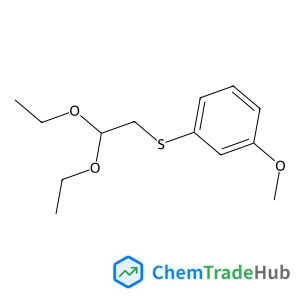
![(3S,4aS,8aS)-2-[(2R,3S)-3-Amino-2-hydroxy-4-phenylbutyl]-N-(2-methyl-2-propanyl)decahydro-3-isoquinolinecarboxamide structure](https://cnstatic.chemtradehub.com/structs/136/136522-17-3-4d77.webp "(3S,4aS,8aS)-2-[(2R,3S)-3-Amino-2-hydroxy-4-phenylbutyl]-N-(2-methyl-2-propanyl)decahydro-3-isoquinolinecarboxamide structure")
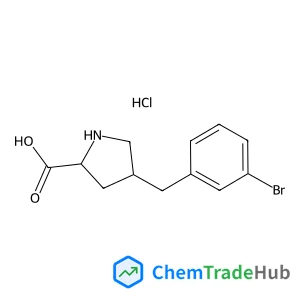
(2S,4R)-4-(3-Bromobenzyl)pyrrolidine-2-carboxylic acid hydrochloride
CAS号:
1049734-10-2
分子式:
C12H15BrClNO2
推荐供应商



免责声明
本页面提供的学术期刊信息仅供参考和研究使用。我们与任何期刊出版商均无关联,也不处理投稿事宜。如有投稿相关咨询,请直接联系相关期刊出版商。
如发现页面信息有误,请发送邮件至 support@chemtradehub.com 联系我们。我们将及时核实并处理您的问题。