


![4-Fluoro-2-(4-{[(3S,4R)-4-(2-hydroxy-2-propanyl)-3-pyrrolidinyl]amino}-6,7-dimethoxy-2-quinazolinyl)phenol hydrochloride (1:1) structure](https://cnstatic.chemtradehub.com/structs/143/1431697-96-9-619c.webp "4-Fluoro-2-(4-{[(3S,4R)-4-(2-hydroxy-2-propanyl)-3-pyrrolidinyl]amino}-6,7-dimethoxy-2-quinazolinyl)phenol hydrochloride (1:1) structure")
Single amino acid chelates (SAAC): a strategy for the design of technetium and rhenium radiopharmaceuticals
文献信息
发布日期
2008-12-01
DOI
10.1039/B814903H
影响因子
6.222
作者
Mark Bartholomä, John Valliant, Kevin P. Maresca, John Babich, Jon Zubieta
查看原文
摘要
Radiolabeled biomolecules can be used to visualize a variety of diseases through interaction with specific cell receptors. A key step is the introduction of a molecular entity that allows facile labeling with the medically useful radionuclide 99mTc without significant alteration of the structure and function of the biomolecule. One strategy focuses on the design of single amino acid chelates (SAACs), novel bifunctional chelators constructed from derivatized amino acids or amino acid analogues. The chelating terminus of the SAAC has been designed for effective coordination to the {99mTc(CO)3}+ core, while the other terminus allows incorporation into any position along a peptide sequence or into a variety of biomolecules. In applications to peptidic materials, the approach affords significant flexibility in the choice of donors for 99mTc coordination combined with the considerable advantages of routine solid phase synthetic techniques. The methodology allows libraries of peptide-based 99mTc(I) and 186,188Re(I) radiopharmaceuticals to prepared using conventional automated peptides synthesis. Other biomolecules, including nucleosides, carbohydrates, folic acid and vitamin B12 are also readily modified using analogous methods. The approach also allows the preparation of isostructural 99mTc and Re complexes for the correlation of in vivo and in vitro imaging studies.
期刊推荐
Russian Journal of General Chemistry
Russian Journal of Applied Chemistry
Current Opinion in Colloid & Interface Science
Russian Chemical Bulletin
Russian Journal of Bioorganic Chemistry
Saudi Pharmaceutical Journal
Organic Process Research & Development
Drug Discovery Today
Nature Medicine
New Journal of Chemistry
相关文献
Precursor control over the self-assembly of [2]catenanes via hydrazone condensation in water
Cai-Yun Wang, Guangcheng Wu, Tianyu Jiao, Libo Shen, Ge Ma, Yuanjiang Pan, Hao Li
2018-04-23
Communication
DOI: 10.1039/C8CC02599A
Selective hydrogenation of furfural to tetrahydrofurfuryl alcohol over a Rh-loaded carbon catalyst in aqueous solution under mild conditions
Babasaheb M. Matsagar, Chang-Yen Hsu, Season S. Chen, Tansir Ahamad, Saad M. Alshehri, Daniel C. W. Tsang
2019-11-04
Paper
DOI: 10.1039/C9SE00681H
An iron foam acts as a substrate and iron source for the in situ construction of a robust transition metal phytate electrocatalyst for overall water splitting
Xiaojuan Chen, Yan Meng, Taotao Gao, Jinmei Zhang, Xiaoqin Li, Hongyan Yuan
2019-10-18
Paper
DOI: 10.1039/C9SE00348G
Boosting the visible-light photoactivities of BiVO4 nanoplates by Eu doping and coupling CeOx nanoparticles for CO2 reduction and organic oxidation
Bingyu Xu, Amir Zada, Guofeng Wang, Yang Qu
2019-09-25
Paper
DOI: 10.1039/C9SE00409B
Recognition of shorter and longer trimethyllysine analogues by epigenetic reader proteins
Abbas H. K. Al Temimi, Roman Belle, Kiran Kumar, Peter Betlem, Bas J. G. E. Pieters, Robert S. Paton, Jasmin Mecinović
2018-02-09
Communication
DOI: 10.1039/C8CC01009A
Electrochemical hydrogen production on a metal-free polymer
Roudabeh Valiollahi, Mikhail Vagin, Viktor Gueskine, Amritpal Singh, Sergey A. Grigoriev, Xianjie Liu, Ziyauddin Khan
2019-10-21
Paper
DOI: 10.1039/C9SE00687G
Network-controlled unique reactivities of carbonyl groups in hollow and microporous organic polymer
Myung Hyun Kim, Jaewon Choi, Kyoung Chul Ko, Kyoungil Cho, Ji Hoon Park, Sang Moon Lee, Hae Jin Kim, Yoon-Joo Ko, Jin Yong Lee, Seung Uk Son
2018-04-23
Communication
DOI: 10.1039/C8CC02788A
3D-Printed electrodes for membraneless water electrolysis
Justin C. Bui, Jonathan T. Davis, Daniel V. Esposito
2019-10-29
Paper
DOI: 10.1039/C9SE00710E
您可能还喜欢
化合物问答
P11(CAS号:848644-86-0)安全吗?
P11作为一种化学化合物,需要谨慎处理。一般来说,该化合物无毒,但在操作过程中仍需遵循实验室安全规定,避免皮肤接触和吸入。建议在通风良好的环境中操作,并佩戴适当...
848644-86-0L-Histidyl-L-seryl-L...
化合物问答
氨甲环酸杂质C(CAS号:330838-52-3)通常如何合成?
氨甲环酸杂质C通常通过氨甲环酸的衍生物与环己烯进行缩合反应合成。常见的合成方法包括一步合成法和多步合成法,其中多步合成法可以提高产物的选择性和产率。反应通常在无...
330838-52-34-(Aminomethyl)-1-cy...
化合物问答
(±)-茉莉酸(CAS号:221682-41-3)通常如何合成?
(±)-茉莉酸的合成通常采用生物合成或者化学合成的方法。化学合成方法中,可以通过2-戊烯-1-醇与环戊酮的缩合反应,再经过氧化反应得到目标产物。该反应需要温和的...
221682-41-3{3-Oxo-2-[(2E)-2-pen...
化合物问答
(4S,4'S)-2,2'-(1,1-环己烷二基)双(4-异丙基-4,5-二氢-1,3-噁唑)(CAS号:1373357-00-6)安全吗?
(4S,4'S)-2,2'-(1,1-环己烷二基)双(4-异丙基-4,5-二氢-1,3-噁唑)属于有机化合物,应遵循实验室安全规范。在操作时应佩戴适当的个人防护...
1373357-00-6(4S,4'S)-2,2'-(1,1-C...
化合物问答
什么是6-苄氧基-5-甲氧基-2-羧基吲哚(CAS号:2495-92-3)?
6-苄氧基-5-甲氧基-2-羧基吲哚是一种有机化合物,分子式为C16H15NO3。它是一种含有苄氧基、甲氧基和羧基官能团的吲哚衍生物。
2495-92-36-(Benzyloxy)-5-meth...
化合物问答
丙二酸丁酯乙酯(CAS号:17373-84-1)安全吗?
丙二酸丁酯乙酯属于易燃物质,具有一定的毒性。在操作时应佩戴防护眼镜和手套,避免接触皮肤和眼睛。储存时应远离热源和火源,避免阳光直射,以减少火灾和爆炸的风险。
17373-84-1Butyl ethyl malonate
化合物问答
2-碘-3-甲基吡嗪(CAS号:58139-08-5)的市场或研究趋势如何?
2-碘-3-甲基吡嗪作为一种特殊结构的化合物,目前在工业和学术研究中的应用相对有限。然而,随着对特定化学结构及其潜在应用的深入研究,预计未来可能在农药、医药等领...
58139-08-52-Iodo-3-methylpyraz...
化合物问答
千层纸素A-7-0-β-D-葡萄糖醛酸苷甲酯(CAS号:82475-01-2)的物理化学性质是什么?
千层纸素A-7-0-β-D-葡萄糖醛酸苷甲酯是一种白色结晶固体,分子量为616.27 g/mol。该化合物在水中溶解度较低,在有机溶剂中溶解度较高。其反应活性主...
82475-01-25-Hydroxy-8-methoxy-...
化合物问答
什么是7-苄基-4,7-二氮杂螺[2.5]辛烷(CAS号:1222106-45-7)?
7-苄基-4,7-二氮杂螺[2.5]辛烷是一种有机化合物,其结构由一个环状的7-苄基-4,7-二氮杂螺环和一个苯基组成。该化合物的分子式为C14H16N2。它具...
1222106-45-77-Benzyl-4,7-diazasp...
化合物问答
在合成中是否有丁酰胺酸甲酯(CAS号:53171-39-4)的替代品?
丁酰胺酸甲酯的合成中可能的替代品包括其他氨基酸衍生物,如乙酰胺酸甲酯或丙酰胺酸甲酯。这些替代品在某些合成路线中可能更为便利或成本更低。
53171-39-4Methyl 4-amino-4-oxo...
来源期刊
Chemical Communications

CiteScore:
8.6
自引率:
4.7%
年发文量:
2458
ChemComm publishes urgent research which is of outstanding significance and interest to experts in the field, while also appealing to the journal’s broad chemistry readership. Our communication format is ideally suited to short, urgent studies that are of such importance that they require accelerated publication. Our scope covers all topics in chemistry, and research at the interface of chemistry and other disciplines (such as materials science, nanoscience, physics, engineering and biology) where there is a significant novelty in the chemistry aspects. Major topic areas covered include: Analytical Chemistry Catalysis Chemical Biology and medicinal chemistry Computational Chemistry and Machine Learning Energy and sustainable chemistry Environmental Chemistry Green Chemistry Inorganic Chemistry Materials Chemistry Nanoscience Organic Chemistry Physical Chemistry Polymer Chemistry Supramolecular Chemistry
推荐化合物
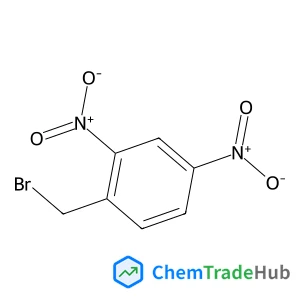
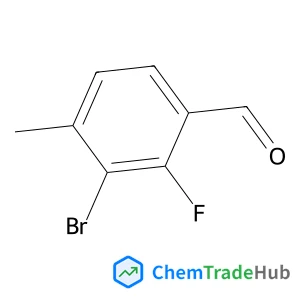
推荐供应商




免责声明
本页面提供的学术期刊信息仅供参考和研究使用。我们与任何期刊出版商均无关联,也不处理投稿事宜。如有投稿相关咨询,请直接联系相关期刊出版商。
如发现页面信息有误,请发送邮件至 support@chemtradehub.com 联系我们。我们将及时核实并处理您的问题。