


![6,6-Dimethylbicyclo[3.1.1]hept-2-ene-2-carbaldehyde structure](https://cnstatic.chemtradehub.com/structs/564/564-94-3-e746.webp "6,6-Dimethylbicyclo[3.1.1]hept-2-ene-2-carbaldehyde structure")
Fast polymer fingerprinting using flowing afterglow atmospheric pressure glow discharge mass spectrometry
文献信息
发布日期
2009-05-12
DOI
10.1039/B819560A
影响因子
4.616
作者
Matthias C. Jecklin, Gerardo Gamez, Renato Zenobi
查看原文
摘要
Flowing afterglow atmospheric pressure glow discharge mass spectrometry (FA-APGD-MS) was used to interrogate different polymer species such as biopolymers, synthetic homo- and co-polymers. The main advantages of FA-APGD-MS for polymer samples include speed (<30 s per sample) and analysis at atmospheric pressures. Moreover, there are essentially no restrictions as to the kind of polymer sample that can be analyzed because FA-APGD-MS can deal with liquid and solid (soluble or insoluble) bulk polymers and granulates, irrespective of their conductivity, without requiring any sample preparation prior to analysis. We will discuss the mechanism of ion formation as well as the limitation of the accessible mass range (m/z < 500) in view of what type of information can be gained from the mass spectra obtained. Monomer units and some fragments were detected for homopolymers, e.g.cis-polyisoprene (IR), poly(ethylene glycol) (PEG), poly(ethylene terephthalate) (PET), which allowed identification of the polymer composition. The mass spectra obtained were further processed using principal component analysis (PCA) for a better visualization and assessing of mass-spectral reproducibility. Combination with PCA even allowed differentiation of pectin, amylopectin, and cellulose, chemically very similar polysaccharides whose characteristic differences lie in the nature of the glycosidic linkage. Finally, we were able to detect and identify phthalate plasticizers, bis(2-ethylhexyl) phthalate (BEHP) and dibutyl phthalate (DBP), present in poly(vinyl chloride)-based food wraps.
期刊推荐
Medicinal Chemistry Research

Journal of Chemical Sciences
Polycyclic Aromatic Compounds

Biocatalysis and Biotransformation

Acta Metallurgica Sinica-English Letters

Bioorganic & Medicinal Chemistry
Chinese Journal of Chemistry

Journal of Asian Natural Products Research

Main Group Chemistry

NDT & E International
相关文献
Self-assembly of aluminium–salen coupled nanostructures from encoded modules with cleavable disulfide DNA-linkers
Raymond S. Brown, Morten Nielsen, Kurt V. Gothelf
2004-05-27
Communication
DOI: 10.1039/B403956D
An unprecedented rhodium-catalysed self-conjugate reduction, cross-coupling tandem reaction of cinnamaldehydes with arylboronic acids
Zhiyong Wang, Gang Zou, Jie Tang
2004-04-14
Communication
DOI: 10.1039/B401511H
Synthesis of monodisperse iron oxidenanocrystals by thermal decomposition of iron carboxylate salts
William W. Yu, Joshua C. Falkner, Cafer T. Yavuz, Vicki L. Colvin
2004-09-02
Communication
DOI: 10.1039/B409601K
High-efficiency and minimum-waste continuous kinetic resolution of racemic alcohols by using lipase in supercritical carbon dioxide
Tomoko Matsuda, Kazunori Watanabe, Tadao Harada, Kaoru Nakamura, Yoshitaka Arita, Yukihiro Misumi, Shinichiro Ichikawa, Takao Ikariya
2004-08-26
Communication
DOI: 10.1039/B406882C
Silicon-assisted propargylic transfer to aldehydes
Kiew-Ching Lee, Man-Jing Lin, Teck-Peng Loh
2004-09-21
Communication
DOI: 10.1039/B411653D
Ferromagnetic NiII–GdIII interactions in complexes with NiGd, NiGdNi, and NiGdGdNi cores supported by tripodal ligands
Tomoka Yamaguchi, Yukinari Sunatsuki, Masaaki Kojima, Haruo Akashi, Masanobu Tsuchimoto, Nazzareno Re, Shutaro Osa, Naohide Matsumoto
2004-04-05
Communication
DOI: 10.1039/B401033G
Ring-closing metathesis in biphasic BMI·PF6ionic liquid/toluene medium: a powerful recyclable and environmentally friendly process
Hervé Clavier, Nicolas Audic, Marc Mauduit, Jean-Claude Guillemin
2004-08-25
Communication
DOI: 10.1039/B407964G
Poly(vinyl alcohol) star polymers prepared via MADIX/RAFT polymerisation
Martina H. Stenzel, Thomas P. Davis, Christopher Barner-Kowollik
2004-06-02
Communication
DOI: 10.1039/B404763J
Double asymmetric induction as a mechanistic probe: conjugate addition for the asymmetric synthesis of a pseudotripeptide
Stephen G. Davies, Gesine J. Hermann, Miles J. Sweet, Andrew D. Smith
2004-04-08
Communication
DOI: 10.1039/B401293C
Superhydrophobic silica aerogels by fluorination at the gel stage
Anna Roig, Elies Molins, Elisenda Rodríguez, Sandra Martínez, Marcial Moreno-Mañas, Adelina Vallribera
2004-09-06
Communication
DOI: 10.1039/B407987F
您可能还喜欢
化合物问答
什么是2,6-二溴-4,8-双[(2-乙基己基)氧基]苯并[1,2-b:4,5-b']二噻吩(CAS号:1226782-13-3)?
2,6-二溴-4,8-双[(2-乙基己基)氧基]苯并[1,2-b:4,5-b']二噻吩是一种有机化合物,分子式为C23H32Br2O2S2。该化合物具有芳香性和...
1226782-13-32,6-Dibromo-4,8-bis[...
化合物问答
木聚硫钠(CAS号:37319-17-8)的物理化学性质是什么?
木聚硫钠通常为无色或白色结晶性粉末,具有吸湿性。其分子量约为121.11 g/mol。木聚硫钠易溶于水,不溶于醇类和其他非极性溶剂。在酸性或碱性溶液中,木聚硫钠...
37319-17-8Pentosan
化合物问答
2-甲氧基-4-(三氟甲基)苄溴, JRD(CAS号:886500-59-0)适用哪些法规指南?
该化合物在合成、储存和运输过程中需遵循《全球化学品统一分类和标签制度》(GHS)的健康、环境和物理危险分类。在欧洲还需符合《化学品注册、评估、授权和限制》(RE...
886500-59-02-Methoxy-4-(trifluo...
化合物问答
1,4-Diazoniabicyclo[2.2.2]octane-1,4-disulfinate(CAS号:119752-83-9)的主要用途是什么?
1,4-二氮杂双环[2.2.2]辛烷-1,4-二硫酸二酯主要用于有机合成中的保护基团,特别是在保护胺基和硫醇基方面具有广泛应用。此外,它还用于一些特殊化学反应的...
119752-83-91,4-Diazabicyclo[2.2...
化合物问答
如何处理含有4-(Bromomethyl)-2-fluorobenzenesulphonamide(CAS号:1645275-47-3)的废料?
含有4-(Bromomethyl)-2-fluorobenzenesulphonamide的废液应首先进行中和处理,以降低pH值,避免对环境造成腐蚀性影响。随后...
1645275-47-34-(Bromomethyl)-2-fl...
化合物问答
Loureiriol(CAS号:479195-44-3)的物理化学性质是什么?
Loureiriol是一种天然化合物,其分子式为C15H22O4。Loureiriol为无色结晶性粉末,具有较高的熔点和良好的热稳定性。其相对分子质量为262....
479195-44-3Loureiriol
化合物问答
在合成中是否有3-氨基苯甲酰苯胺(CAS号:14315-16-3)的替代品?
在合成过程中,可以考虑使用类似结构的化合物作为3-氨基苯甲酰苯胺的替代品,例如N-苯基-3-氰基苯胺或N-苯基-3-硝基苯胺等,这些化合物具有相似的化学性质,可...
14315-16-33-Amino-N-phenylbenz...
化合物问答
4-异氰酰苯基硼酸频哪醇酯(CAS号:380430-64-8)的市场或研究趋势如何?
4-异氰酰苯基硼酸频哪醇酯主要应用于有机合成、药物化学和材料科学领域。随着绿色化学的发展,该化合物因其高效的官能团转化能力和环境友好性而受到越来越多的关注。近年...
380430-64-82-(4-Isocyanatopheny...
化合物问答
如何储存3β-乙酰氧基-7,25-甘遂二烯-24(R)-醇(CAS号:1352001-09-2)?
3β-乙酰氧基-7,25-甘遂二烯-24(R)-醇应储存在阴凉、干燥、通风良好的地方,避免直接光照。储存容器应密封,防止空气中的水分和氧气影响化合物的稳定性。建...
1352001-09-23β-acetoxy-eupha- 7,...
化合物问答
如何储存4-氟-2-甲基-1H-吲哚(CAS号:1260383-51-4)?
应将4-氟-2-甲基-1H-吲哚存放在阴凉、干燥、通风良好的地方,避免直接暴露在光照下。容器应密封,避免与空气中的水蒸气接触。建议在避光、温度不超过25℃的环境...
1260383-51-44-Fluoro-2-methyl-1H...
来源期刊
Analyst

CiteScore:
7.8
自引率:
5.6%
年发文量:
653
Analyst publishes analytical and bioanalytical research that reports premier fundamental discoveries and inventions, and the applications of those discoveries, unconfined by traditional discipline barriers.
推荐化合物
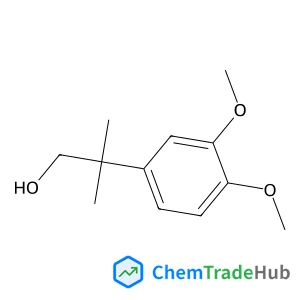
![1-[4-(4-Methyl-1H-imidazol-1-yl)phenyl]ethanone structure](https://cnstatic.chemtradehub.com/structs/142/142161-53-3-7f55.webp "1-[4-(4-Methyl-1H-imidazol-1-yl)phenyl]ethanone structure")
![(1R,5R)-3-{[(2-Methyl-2-propanyl)oxy]carbonyl}-3-azabicyclo[3.1.0]hexane-1-carboxylic acid structure](https://cnstatic.chemtradehub.com/structs/116/1165450-63-4-bfe1.webp "(1R,5R)-3-{[(2-Methyl-2-propanyl)oxy]carbonyl}-3-azabicyclo[3.1.0]hexane-1-carboxylic acid structure")
推荐供应商





免责声明
本页面提供的学术期刊信息仅供参考和研究使用。我们与任何期刊出版商均无关联,也不处理投稿事宜。如有投稿相关咨询,请直接联系相关期刊出版商。
如发现页面信息有误,请发送邮件至 support@chemtradehub.com 联系我们。我们将及时核实并处理您的问题。