


Impact of fixation on in vitro cell culture lines monitored with Raman spectroscopy
文献信息
发布日期
2009-04-28
DOI
10.1039/B822408K
影响因子
4.616
作者
Melissa M. Mariani, Peter Lampen, Bayden R. Wood
查看原文
摘要
Raman spectroscopy provides chemical-rich information about the composition of analytes and is a powerful tool for biological studies. With the ability to investigate specific cellular components or image whole cells, compatible methods of sample preservation must be implemented for accurate spectra to be collected. Unfortunately, the effects of many commonly used sample preservation methods have not been explored with cultured cells. In this study, two human cell lineages of varying phenotypes were used to investigate the effects of sample preservation methods. Cells were cultured directly onto quartz substrates and either formalin-fixed, desiccated or air dried. The results indicate that the methodology applied to cell cultures for Raman analysis significantly influences the quality and reproducibility of the resulting spectral data. Formalin fixation was not found to be as universally efficient as anticipated for a commonly used fixative. This was due largely to the inconsistency in sample preservation between cell lines and loss of signal intensity. Sample air-drying was found to be largely inconsistent in terms of spectral reproducibility. Our study shows that sample desiccation displayed good spectral reproducibility and resulted in a good signal-to-noise ratio. Lipid and protein content in both activated and inactivated cells were maintained and provided a more controlled method compared with air-drying, revealing that the speed of drying is important for sample preservation
期刊推荐

Biocatalysis and Biotransformation

Bioorganic & Medicinal Chemistry

Main Group Chemistry

Journal of Asian Natural Products Research
Electroanalysis

Bioorganic & Medicinal Chemistry Letters

Herald of the Russian Academy of Sciences
Acta Metallurgica Sinica-English Letters
Colloid Journal
Journal of the Indian Institute of Science
相关文献
New high-nuclearity Ni–Pt carbonyl clusters: synthesis and X-ray structure of the ordered [HNi24Pt17(CO)46]5− and the substitutionally Ni/Pt disordered [Ni32Pt24(CO)56]6− cluster anions
Cristina Femoni, M. Carmela Iapalucci, Giuliano Longoni, Per H. Svensson
2004-09-07
Communication
DOI: 10.1039/B409522G
Crystal engineering of urea α-network via I⋯O2N synthon and design of SHG active crystal N-4-iodophenyl-N′-4′-nitrophenylurea
Sumod George, Ashwini Nangia, Chi-Keung Lam, Thomas C. W. Mak, Jean-François Nicoud
2004-04-20
Communication
DOI: 10.1039/B402050B
Phenylthiolate as a σ- and π- donor ligand: synthesis of a 3-D organometallic coordination polymer [K2Fe(SPh)4]n
Xiao-Yan Yu, Lin-Hong Weng
2004-05-24
Communication
DOI: 10.1039/B404443F
Halide anion directed assembly of luminescent pseudorotaxanes
David Curiel, Paul D. Beer, Rowena L. Paul, Andrew Cowley, Mark R. Sambrook, Fridrich Szemes
2004-04-22
Communication
DOI: 10.1039/B401900H
An enantioselective imprinted receptor for Z-glutamate exhibiting a binding induced color change
Panagiotis Manesiotis, Andrew J. Hall, Marco Emgenbroich, Milena Quaglia, Ersilia De Lorenzi, Börje Sellergren
2004-09-09
Communication
DOI: 10.1039/B407870E
Recognition of concanavalin A at the interface between a solvent polymeric membrane and an aqueous sample monitored by electric impedance spectroscopy
Liya Muslinkina, Ernö Pretsch
2004-04-23
Communication
DOI: 10.1039/B401864H
Construction of building-blocks for polyether synthesis using sequential catalytic ring-closing enyne and cross metathesis
J. Stephen Clark, Frédéric Elustondo, Marc C. Kimber
2004-09-24
Communication
DOI: 10.1039/B409067E
Y-shaped two-photon absorbing molecules with an imidazole–thiazole core
Ke Feng, Leonardo De Boni, Lino Misoguti, C. R. Mendonça, Michael Meador, Fu-Lian Hsu, Xiu R. Bu
2004-04-21
Communication
DOI: 10.1039/B402019G
Superhydrophobic silica aerogels by fluorination at the gel stage
Anna Roig, Elies Molins, Elisenda Rodríguez, Sandra Martínez, Marcial Moreno-Mañas, Adelina Vallribera
2004-09-06
Communication
DOI: 10.1039/B407987F
Solid-state caging of 1,10-phenanthroline π–π stacked dimers by calix[4]arene dihydroxyphosphonic acid
Adina N. Lazar, Alda Navaza, Anthony W. Coleman
2004-03-30
Communication
DOI: 10.1039/B315600C
您可能还喜欢
化合物问答
什么是2,6-二溴-4,8-双[(2-乙基己基)氧基]苯并[1,2-b:4,5-b']二噻吩(CAS号:1226782-13-3)?
2,6-二溴-4,8-双[(2-乙基己基)氧基]苯并[1,2-b:4,5-b']二噻吩是一种有机化合物,分子式为C23H32Br2O2S2。该化合物具有芳香性和...
1226782-13-32,6-Dibromo-4,8-bis[...
化合物问答
木聚硫钠(CAS号:37319-17-8)的物理化学性质是什么?
木聚硫钠通常为无色或白色结晶性粉末,具有吸湿性。其分子量约为121.11 g/mol。木聚硫钠易溶于水,不溶于醇类和其他非极性溶剂。在酸性或碱性溶液中,木聚硫钠...
37319-17-8Pentosan
化合物问答
2-甲氧基-4-(三氟甲基)苄溴, JRD(CAS号:886500-59-0)适用哪些法规指南?
该化合物在合成、储存和运输过程中需遵循《全球化学品统一分类和标签制度》(GHS)的健康、环境和物理危险分类。在欧洲还需符合《化学品注册、评估、授权和限制》(RE...
886500-59-02-Methoxy-4-(trifluo...
化合物问答
1,4-Diazoniabicyclo[2.2.2]octane-1,4-disulfinate(CAS号:119752-83-9)的主要用途是什么?
1,4-二氮杂双环[2.2.2]辛烷-1,4-二硫酸二酯主要用于有机合成中的保护基团,特别是在保护胺基和硫醇基方面具有广泛应用。此外,它还用于一些特殊化学反应的...
119752-83-91,4-Diazabicyclo[2.2...
化合物问答
如何处理含有4-(Bromomethyl)-2-fluorobenzenesulphonamide(CAS号:1645275-47-3)的废料?
含有4-(Bromomethyl)-2-fluorobenzenesulphonamide的废液应首先进行中和处理,以降低pH值,避免对环境造成腐蚀性影响。随后...
1645275-47-34-(Bromomethyl)-2-fl...
化合物问答
Loureiriol(CAS号:479195-44-3)的物理化学性质是什么?
Loureiriol是一种天然化合物,其分子式为C15H22O4。Loureiriol为无色结晶性粉末,具有较高的熔点和良好的热稳定性。其相对分子质量为262....
479195-44-3Loureiriol
化合物问答
在合成中是否有3-氨基苯甲酰苯胺(CAS号:14315-16-3)的替代品?
在合成过程中,可以考虑使用类似结构的化合物作为3-氨基苯甲酰苯胺的替代品,例如N-苯基-3-氰基苯胺或N-苯基-3-硝基苯胺等,这些化合物具有相似的化学性质,可...
14315-16-33-Amino-N-phenylbenz...
化合物问答
4-异氰酰苯基硼酸频哪醇酯(CAS号:380430-64-8)的市场或研究趋势如何?
4-异氰酰苯基硼酸频哪醇酯主要应用于有机合成、药物化学和材料科学领域。随着绿色化学的发展,该化合物因其高效的官能团转化能力和环境友好性而受到越来越多的关注。近年...
380430-64-82-(4-Isocyanatopheny...
化合物问答
如何储存3β-乙酰氧基-7,25-甘遂二烯-24(R)-醇(CAS号:1352001-09-2)?
3β-乙酰氧基-7,25-甘遂二烯-24(R)-醇应储存在阴凉、干燥、通风良好的地方,避免直接光照。储存容器应密封,防止空气中的水分和氧气影响化合物的稳定性。建...
1352001-09-23β-acetoxy-eupha- 7,...
化合物问答
如何储存4-氟-2-甲基-1H-吲哚(CAS号:1260383-51-4)?
应将4-氟-2-甲基-1H-吲哚存放在阴凉、干燥、通风良好的地方,避免直接暴露在光照下。容器应密封,避免与空气中的水蒸气接触。建议在避光、温度不超过25℃的环境...
1260383-51-44-Fluoro-2-methyl-1H...
来源期刊
Analyst

CiteScore:
7.8
自引率:
5.6%
年发文量:
653
Analyst publishes analytical and bioanalytical research that reports premier fundamental discoveries and inventions, and the applications of those discoveries, unconfined by traditional discipline barriers.
推荐化合物
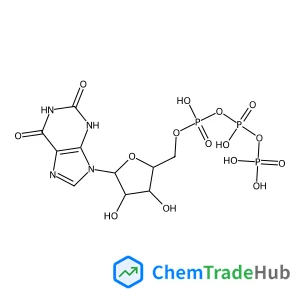
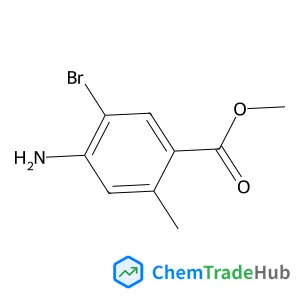
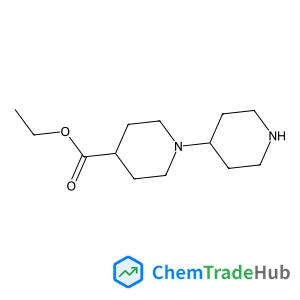
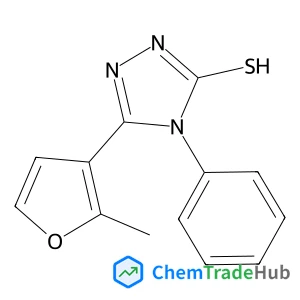
5-(2-Methyl-3-furyl)-4-phenyl-2,4-dihydro-3H-1,2,4-triazole-3-thione
CAS号:
346464-59-3
分子式:
C13H11N3OS
推荐供应商


免责声明
本页面提供的学术期刊信息仅供参考和研究使用。我们与任何期刊出版商均无关联,也不处理投稿事宜。如有投稿相关咨询,请直接联系相关期刊出版商。
如发现页面信息有误,请发送邮件至 support@chemtradehub.com 联系我们。我们将及时核实并处理您的问题。