


The photoelectron spectrum of CCl2−: the convergence of theory and experiment after a decade of debate
文献信息
发布日期
2009-04-20
DOI
10.1039/B822690C
影响因子
3.676
作者
Scott W. Wren, Kristen M. Vogelhuber, Kent M. Ervin, W. Carl Lineberger
查看原文
摘要
We report new 351 nm negative ion photoelectron spectra of CCl2−, CBr2−, and CI2−. This study was undertaken in an attempt to understand the major discrepancy between dihalocarbene (CX2, X = Cl, Br, I) singlet–triplet splittings reported by our laboratory (R. L. Schwartz, G. E. Davico, T. M. Ramond, W. C. Lineberger, J. Phys. Chem. A., 1999, 103, 8213) and new theoretical values. Our recent experiments show that a dihalomethyl anion (CHX2−) contaminant in the dihalocarbene anion beam, previously considered insignificant, made a major contribution to the reported CX2− photoelectron spectra. Thus, the interpretations of the earlier CX2− spectra and the reported singlet–triplet splittings were incorrect. Replacing O− with OH− in the anion formation process yields a pure dihalomethyl anion, whose highly structured photoelectron spectrum can be subtracted from the contaminated spectrum, yielding a clean CX2− photoelectron spectrum. The new CCl2− photoelectron spectrum displays resolved vibronic transitions to the two lowest electronic states of CCl2: X1A1 and a3B1. The electron affinity of X1A1 CCl2 is 1.593(6) eV. A large change in geometry between the anion and the neutral triplet state precludes the direct observation of the triplet origin. The energy difference between the X1A1 and a3B1 states of CCl2 is estimated to be ∼0.9(2) eV, consistent with high-level theoretical studies. While we confirm similar dihalomethyl anion contaminants in the earlier photoelectron spectra of CBr2− and CI2− and report new photoelectron spectra for these ions, the paucity of resolved features in the spectra provides limited additional thermochemical information.
期刊推荐
Russian Journal of Bioorganic Chemistry
Drug Discovery Today
Current Opinion in Solid State & Materials Science

Journal of Peptide Science
Organic Process Research & Development
Chemistry Education Research and Practice
Russian Journal of Organic Chemistry
New Journal of Chemistry
Russian Journal of Applied Chemistry

Acta Materialia
相关文献
Conversion of glucose and cellulose into value-added products in water and ionic liquids
Jinliang Song, Honglei Fan, Jun Ma, Buxing Han
2013-07-31
Tutorial Review
DOI: 10.1039/C3GC41141A
Structural relationship between a host included chain of spirocyclic water hexamers and bulk water – the role of water clusters in self assembly and crystallization processes
Rolando Luna-García, Berenice M. Damián-Murillo, Victor Barba, Herbert Höpfl, Hiram I. Beltrán, Luis S. Zamudio-Rivera
2005-10-11
Communication
DOI: 10.1039/B509787H
Solvent-dependent self-assembly of N-annulated perylene diimides. From dimers to supramolecular polymers
Cristina Naranjo, Azahara Doncel-Giménez, Rafael Gómez, Juan Aragó, Enrique Ortí, Luis Sánchez
2023-08-29
Edge Article
DOI: 10.1039/D3SC03372D
An alloy small molecule acceptor for green printing organic solar cells overcoming the scaling lag of efficiency
Ji Wan, Yao Wu, Rui Sun, Jiawei Qiao, Xiaotao Hao, Jie Min
2022-10-26
Paper
DOI: 10.1039/D2EE03134E
Single crystal growth and intrinsic anomalous Hall effect of Cr2.70Se0.60Te3.40 ferromagnetic crystals
Muhammad Younis, Hao Wu, Li Yang, Luji Li, Gaojie Zhang, Wen Jin, Hasan Raza, Shahid Atiq, Wenfeng Zhang
2023-06-01
Paper
DOI: 10.1039/D3CE00203A
CNT-based bifacial perovskite solar cells toward highly efficient 4-terminal tandem photovoltaics
Min Chen, Fan Fu, Hongwei Zhu, Thomas Feurer, Wenming Tian, Chao Zhu, Ke Zhou, Shengye Jin, Shaik Mohammed Zakeeruddin, Ayodhya N. Tiwari, Nitin P. Padture, Michael Grätzel, Yantao Shi
2022-02-08
Paper
DOI: 10.1039/D1EE04008A
Characterization, synthesis and catalysis of hydrotalcite-related materials for highly efficient materials transformations
Shun Nishimura, Atsushi Takagaki, Kohki Ebitani
2013-06-18
Critical Review
DOI: 10.1039/C3GC40405F
Uranium extraction from seawater: material design, emerging technologies and marine engineering
Yi Xie, Zeyu Liu, Yiyun Geng, Ning Wang, Yanpei Song, Xiaolin Wang, Jing Chen, Jianchen Wang, Shengqian Ma, Gang Ye
2022-11-30
Review Article
DOI: 10.1039/D2CS00595F
您可能还喜欢
化合物问答
4-((4-甲基哌嗪-1-基)甲基)苯硼酸(CAS号:763120-62-3)的市场或研究趋势如何?
随着有机硼化学的发展,该化合物在催化、药物合成、材料科学等领域展现出潜在的应用价值。近年来,其在药物前体合成中的应用越来越受到关注。市场趋势显示,随着科研投入的...
763120-62-3{4-[(4-Methyl-1-pipe...
化合物问答
如何储存2,4,5-三甲基-1-硝基苯(CAS号:610-91-3)?
2,4,5-三甲基-1-硝基苯应储存在阴凉、干燥且通风良好的地方,避免阳光直射。储存在密封的金属容器中,远离火源和热源。储存温度应控制在25°C以下,湿度不宜过...
610-91-31,2,4-Trimethyl-5-ni...
化合物问答
处理2,5-二碘噻吩(CAS号:625-88-7)时应注意哪些实验室安全事项?
在处理2,5-二碘噻吩时,应穿戴适当的个人防护装备(PPE),包括实验室外套、手套和防护眼镜。在通风橱中进行操作以避免吸入蒸气。如果发生泄漏,应立即疏散人员并使...
625-88-72,5-Diiodothiophene
化合物问答
在合成中是否有6-bromo-3-chloro-1H-indole(CAS号:57916-08-2)的替代品?
在合成6-溴-3-氯-1H-吲哚(CAS号:57916-08-2)时,可以考虑使用一些类似的化合物作为替代品,如6-氯-3-氯-1H-吲哚或3-氯-1H-吲哚,...
57916-08-26-bromo-3-chloro-1H-...
化合物问答
在合成中是否有(R)-(-)-1-(1-萘基)乙基异氰酸酯(CAS号:42340-98-7)的替代品?
可以考虑使用类似结构的化合物,如1-[(1R)-1-(2-氨基乙基)萘-1-基]乙基异氰酸酯作为替代品。此外,还可以寻找其他类型的异氰酸酯衍生物,如苯基异氰酸酯...
42340-98-71-[(1R)-1-Isocyanato...
化合物问答
3-氨基苯甲酰苯胺(CAS号:14315-16-3)适用哪些法规指南?
3-氨基苯甲酰苯胺适用于多项法规指南,包括但不限于GHS(全球化学品统一分类和标签制度)分类为皮肤腐蚀/刺激类别2,以及潜在的皮肤过敏性类别1。在欧盟地区,它受...
14315-16-33-Amino-N-phenylbenz...
化合物问答
β-环柠檬醛-D5(CAS号:26309-95-5)通常如何合成?
β-环柠檬醛-D5可通过不对称合成方法获得。常见的合成路线包括以环己酮为原料,经过选择性氧化、还原、保护基引入等步骤,最终得到目标化合物。该合成过程中通常使用多...
26309-95-5[(2,2-Dimethylpropan...
34915-68-9Bunitrolol
化合物问答
如何处理含有BIO-1211(CAS号:187735-94-0)的废料?
对于含有BIO-1211(CAS号:187735-94-0)的废料,首先应进行分类收集,确保符合环保要求。然后,可以考虑通过焚烧或其他专业处理方法进行处置。在处...
187735-94-0BIO-1211
化合物问答
如何处理含有4-氯-2-氟-3-甲基苯酚(CAS号:1351668-24-0)的废料?
含有该化合物的废液应收集至专用容器中,避免与其他化学品混合。可采用焚烧或送交专业废弃物处理公司处理。处理过程中需遵守当地环保法规,确保不产生二次污染。处理前应进...
1351668-24-04-Chloro-2-fluoro-3-...
来源期刊
Physical Chemistry Chemical Physics

CiteScore:
5.5
自引率:
10.3%
年发文量:
3036
Physical Chemistry Chemical Physics (PCCP) is an international journal co-owned by 19 physical chemistry and physics societies from around the world. This journal publishes original, cutting-edge research in physical chemistry, chemical physics and biophysical chemistry. To be suitable for publication in PCCP, articles must include significant innovation and/or insight into physical chemistry; this is the most important criterion that reviewers and Editors will judge against when evaluating submissions. The journal has a broad scope and welcomes contributions spanning experiment, theory, computation and data science. Topical coverage includes spectroscopy, dynamics, kinetics, statistical mechanics, thermodynamics, electrochemistry, catalysis, surface science, quantum mechanics, quantum computing and machine learning. Interdisciplinary research areas such as polymers and soft matter, materials, nanoscience, energy, surfaces/interfaces, and biophysical chemistry are welcomed if they demonstrate significant innovation and/or insight into physical chemistry. Joined experimental/theoretical studies are particularly appreciated when complementary and based on up-to-date approaches.
推荐化合物
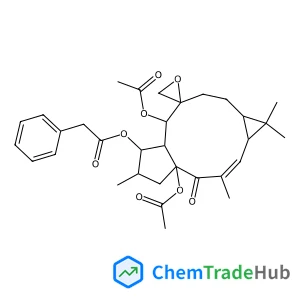
![Bis(1,2,2,6,6-pentamethyl-4-piperidinyl) butyl[4-hydroxy-3,5-bis(2-methyl-2-propanyl)benzyl]malonate structure](https://cnstatic.chemtradehub.com/structs/638/63843-89-0-665e.webp "Bis(1,2,2,6,6-pentamethyl-4-piperidinyl) butyl[4-hydroxy-3,5-bis(2-methyl-2-propanyl)benzyl]malonate structure")
推荐供应商





免责声明
本页面提供的学术期刊信息仅供参考和研究使用。我们与任何期刊出版商均无关联,也不处理投稿事宜。如有投稿相关咨询,请直接联系相关期刊出版商。
如发现页面信息有误,请发送邮件至 support@chemtradehub.com 联系我们。我们将及时核实并处理您的问题。