







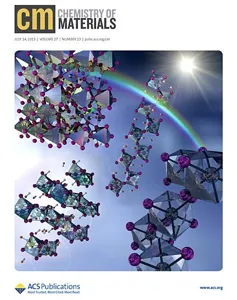

Fe(ii) complex with the octadentate btpa ligand: a DFT study on a spin-crossover system that reveals two distinct high-spin states
文献信息
发布日期
2009-06-25
DOI
10.1039/B905328J
影响因子
3.676
作者
Hauke Paulsen, John J. McGarvey, Rolf Diller, Volker Schünemann, Hans Toftlund
查看原文
摘要
Density functional theory calculations (DFT) were performed for the spin-crossover system [Fe(btpa)]2+ (btpa = N,N,N′,N′-tetrakis(2-pyridylmethyl)-6,6′-bis(aminomethyl)-2,2′-bipyridine), and for the predominantly low-spin [Fe(b(bdpa))]2+ complex (in the solid state) (b(bdpa) = N,N′-bis(benzyl)-N,N′-bis(2-pyridylmethyl)-6,6′-bis(aminomethyl)-2,2′-bipyridine). The calculations confirmed that the former complex exhibits two high-spin isomers of the complexes, i.e. with C1 quasi hepta-coordinated (long-lived isomer) and C2 hexa-coordinated (short-lived isomer) structures that have been suggested previously based on time-resolved Raman and flash photolysis experiments. Application of B3LYP and B3LYP* functionals together with the CEP-31G basis yielded reasonable estimates of electronic energies (Eel = Eel(HS) −Eel(LS)) for both isomers (calculated Eel of ca. 24 and 31 kJ mol−1 for long- and short-lived HS isomers, respectively, vs. the experimentally determined value of 27.5 kJ mol−1). Further calculations yielded the electronic structure of the low-spin isomer together with lowest lying singlet and triplet excited states of the [Fe(btpa)]2+ as well as the energy profile of the C2↔C1isomerisation pathway for the high-spin [Fe(btpa)]2+ within the framework of the QST (quadratic synchronous transit) approach. The data obtained are discussed in relation to the observed ultrafast intersystem crossing in Fe(II) polypyridine complexes. The importance of ligand strain in relation to the destabilisation of the low-spin isomers is also discussed. In that context, calculations for a further 15 Fe(II) spin-crossover complexes of hexa-coordinating nitrogen-donor ligands have shown that the LS–HS conversion is associated with a release of ligand stress of 95 ±16 kJ mol−1, on average. On the basis of the calculations presented in this paper we propose that octahedral high-spin d-6 isomers are far more elastic regarding the angular distortions (equatorial and meridional strain, i.e. the declination of cis- and trans-L–M–L angle from the regular values of 90 and 180°, respectively) than their low-spin counterparts.
相关文献
Broadband reflection in polymer stabilized cholesteric liquid crystal films with stepwise photo-polymerization
Man-yu Duan, Hui Cao, Yong Wu, Er-li Li, Hui-hui Wang, Dong Wang, Zhou Yang, Wan-li He, Huai Yang
2016-12-12
Paper
DOI: 10.1039/C6CP07066C
Role of ligands in the stability of BnXn and CBn−1Xn (n = 5–10; X = H, F, CN) and their potential as building blocks of electrolytes in lithium ion batteries
Jian Zhou, Hong Fang, Puru Jena
2017-06-16
Paper
DOI: 10.1039/C7CP02642K
Probing single-molecule electron–hole transfer dynamics at a molecule–NiO semiconductor nanocrystalline interface
Bharat Dhital, Vishal Govind Rao, H. Peter Lu
2017-05-30
Paper
DOI: 10.1039/C7CP01476G
Extremely permeable porous graphene with high H2/CO2 separation ability achieved by graphene surface rejection
K. Shimizu, T. Ohba
2017-07-04
Paper
DOI: 10.1039/C7CP03270F
Multi-functionalized herringbone carbon nanofiber for anodes of lithium ion batteries
Min-Young Cho, Kwang-Bum Kim, Han Gi Jeong, Joong Tark Han, Kwang Chul Roh
2017-06-28
Paper
DOI: 10.1039/C7CP03246C
In search of invariants for viscous liquids in the density scaling regime: investigations of dynamic and thermodynamic moduli
2017-06-26
Paper
DOI: 10.1039/C7CP01144J
Modeling of movement of liquid metal droplets driven by an electric field
M. F. Wang, M. J. Jin, X. J. Jin, S. G. Zuo
2017-06-20
Paper
DOI: 10.1039/C7CP02798B
Anisotropic longitudinal electronic relaxation affects DNP at cryogenic temperatures
H. Vezin, J. G. Kempf
2017-06-09
Paper
DOI: 10.1039/C7CP03242K
Can time-dependent density functional theory predict intersystem crossing in organic chromophores? A case study on benzo(bis)-X-diazole based donor–acceptor–donor type molecules
Teck Lip Dexter Tam, Ting Ting Lin
2017-05-25
Communication
DOI: 10.1039/C7CP03121A
您可能还喜欢
化合物问答
4-[4-三氟甲基苯基]恶唑(CAS号:1126636-40-5)通常如何合成?
4-[4-三氟甲基苯基]恶唑通常通过将4-三氟甲基苯酚与异硫氰酸苯酯在有机溶剂中进行酯化反应合成。该反应可在无水条件下,使用适当的催化剂,如四丁基氢氧化铵,以提...
1126636-40-54-(4-(Trifluoromethy...
59729-32-71-[3-(Dimethylamino)...
化合物问答
RockPhos Pd G3(CAS号:2009020-38-4)通常如何合成?
RockPhos Pd G3 通常通过钯催化偶联反应合成,使用配体 (2'-Amino-2-biphenylyl)(methanesulfonato-kappa...
2009020-38-4(2'-Amino-2-biphenyl...
化合物问答
1-哌啶甲酰胺(CAS号:2158-03-4)的市场或研究趋势如何?
1-哌啶甲酰胺作为有机合成中的重要中间体,其市场需求主要受医药、农药、染料等行业推动。近年来,随着新药开发和绿色化学的发展,该化合物的研究趋势集中在开发更高效、...
2158-03-41-Piperidinecarboxam...
化合物问答
2-(二苯基膦基)乙胺(CAS号:4848-43-5)适用哪些法规指南?
2-(二苯基膦基)乙胺适用于多种法规指南,包括但不限于《全球化学品统一分类和标签制度》(GHS),欧盟《化学品注册、评估、授权和限制》法规(REACH),以及美...
4848-43-52-(Diphenylphosphino...
化合物问答
如何储存间苯二甲酸二烯丙酯(CAS号:1087-21-4)?
间苯二甲酸二烯丙酯应储存在阴凉、干燥、通风良好的地方,远离火源和热源。储存容器应密封,避免光照和高温。储存温度应控制在25℃以下,相对湿度应低于80%。避免与其...
1087-21-4Diallyl isophthalate
化合物问答
什么是间甲苯异硫代异氰酸酯(CAS号:621-30-7)?
间甲苯异硫代异氰酸酯是一种有机化合物,分子式为C7H7NO2S,具有刺激性气味。它是一种重要的有机合成中间体,在合成其他化合物时广泛应用。
621-30-71-Isothiocyanato-3-m...
化合物问答
在合成中是否有N-Boc-D-苯丙氨醇(CAS号:106454-69-7)的替代品?
在合成中,可以考虑使用N-Cbz-D-苯丙氨醇或N-Fmoc-D-苯丙氨醇作为替代品。这些化合物同样具有保护氨基的功能,且在合成过程中表现出良好的反应性能。
106454-69-72-Methyl-2-propanyl ...
化合物问答
3-羟甲基-2-氧异丙基吡啶(CAS号:954240-50-7)的主要用途是什么?
3-羟甲基-2-氧异丙基吡啶主要用于有机合成领域,可以作为合成其他药物、农药或精细化学品的中间体。此外,它还可能在实验室研究中作为特定反应的前体或溶剂。
954240-50-7(2-Isopropoxy-3-pyri...
化合物问答
6-氨基-9-甲基嘌呤(CAS号:700-00-5)应用于哪些行业?
6-氨基-9-甲基嘌呤目前主要应用于医药行业,作为某些药物的中间体。此外,它还可能用于聚合物、传感器和半导体的某些领域,作为功能性单体或掺杂剂。
700-00-59-Methyl-9H-purin-6-...
来源期刊
Physical Chemistry Chemical Physics

CiteScore:
5.5
自引率:
10.3%
年发文量:
3036
Physical Chemistry Chemical Physics (PCCP) is an international journal co-owned by 19 physical chemistry and physics societies from around the world. This journal publishes original, cutting-edge research in physical chemistry, chemical physics and biophysical chemistry. To be suitable for publication in PCCP, articles must include significant innovation and/or insight into physical chemistry; this is the most important criterion that reviewers and Editors will judge against when evaluating submissions. The journal has a broad scope and welcomes contributions spanning experiment, theory, computation and data science. Topical coverage includes spectroscopy, dynamics, kinetics, statistical mechanics, thermodynamics, electrochemistry, catalysis, surface science, quantum mechanics, quantum computing and machine learning. Interdisciplinary research areas such as polymers and soft matter, materials, nanoscience, energy, surfaces/interfaces, and biophysical chemistry are welcomed if they demonstrate significant innovation and/or insight into physical chemistry. Joined experimental/theoretical studies are particularly appreciated when complementary and based on up-to-date approaches.
推荐化合物


推荐供应商




免责声明
本页面提供的学术期刊信息仅供参考和研究使用。我们与任何期刊出版商均无关联,也不处理投稿事宜。如有投稿相关咨询,请直接联系相关期刊出版商。
如发现页面信息有误,请发送邮件至 support@chemtradehub.com 联系我们。我们将及时核实并处理您的问题。