


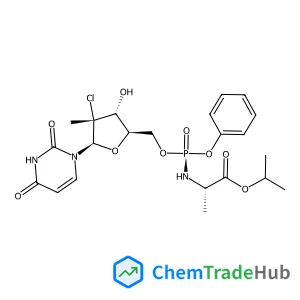
Quantum chemistry of macromolecules and solids
文献信息
发布日期
2009-07-27
DOI
10.1039/B905812P
影响因子
3.676
作者
查看原文
摘要
Two classes of electronic structure methods for macromolecules and nonmetallic solids are reviewed, showcasing their applications to hydrocarbon polymers and organic molecular crystals. One is the crystalline orbital theory for periodic extended systems and the other is a localized-orbital, embedding-field approach for periodic or nonperiodic systems consisting of weakly-interacting subsystems. Both implement rigorous electron-correlation theories such as coupled-cluster and perturbation theories as well as density-functional approximations and can treat not just ground-state energies but also equilibrium structures, phonons (in the harmonic approximation and beyond), excitons, and quasiparticle energy bands (by the crystalline orbital theory only). Three key concepts underlying macromolecular and solid-state electronic structure theories—decay of effective inter-particle interactions, size extensivity, and periodicity—are identified and analyzed in the context of these two closely related approaches.
期刊推荐
Journal of Enzyme inhibition and Medicinal Chemistry
Photochemical & Photobiological Sciences
Molecules
Contact Lens & Anterior Eye
Lab on a Chip
Nature Reviews Drug Discovery
Angewandte Chemie International Edition
Environmental Toxicology and Pharmacology
Journal of Medical Biochemistry
Current Pharmaceutical Biotechnology
相关文献
Exploring wavepacket dynamics behind strong-field momentum-dependent photodissociation in CH2BrI+
Jesús González-Vázquez, Leticia González, Sarah R. Nichols, Thomas C. Weinacht, Tamás Rozgonyi
2010-09-29
Paper
DOI: 10.1039/C0CP00303D
Electrodeposition of Zn and Au–Zn alloys at low temperature in an ionic liquid
Dimitar Borissov, Aparna Pareek, Frank Uwe Renner, Michael Rohwerder
2010-01-11
Communication
DOI: 10.1039/B919669B
Adsorption-induced structural changes of gold cations from two- to three-dimensions
Yi-Lei Wang, Ya-Fan Zhao, Ai-Qin Wang, Tao Zhang, Jun Li
2010-02-04
Paper
DOI: 10.1039/B921367H
Dispersion dominated halogen–π interactions: energies and locations of minima
Thomas Fox, Klaus R. Liedl, Christofer S. Tautermann
2010-10-15
Paper
DOI: 10.1039/C0CP00607F
Ionic liquids and reactions at the electrochemical interface
2010-01-14
Perspective
DOI: 10.1039/B923053J
Boundary effects on the electrical conductivity of pure and doped cerium oxide thin films
Marcus C. Göbel, Giuliano Gregori, Joachim Maier
2010-10-04
Paper
DOI: 10.1039/C0CP00385A
Double layer, diluent and anode effects upon the electrodeposition of aluminium from chloroaluminate based ionic liquids
Andrew P. Abbott, Fulian Qiu, Karl S. Ryder
2009-11-18
Paper
DOI: 10.1039/B917351J
New nearly constant loss feature detected in glass at low temperatures
David M. Laughman, Radha D. Banhatti, Klaus Funke
2010-09-22
Paper
DOI: 10.1039/C0CP00765J
Stochastic approach to laser-induced ultrafast dynamics: the desorption of H2/D2 from Ru(0001)
Gernot Füchsel, Tillmann Klamroth, Jean Christophe Tremblay, Peter Saalfrank
2010-09-21
Paper
DOI: 10.1039/C0CP00895H
您可能还喜欢
化合物问答
(3-氨苯基)环丙基甲酮(CAS号:162174-75-6)的主要用途是什么?
(3-氨苯基)环丙基甲酮主要用于合成化学中间体,特别是在药物化学领域作为原料。它还可以用于有机合成反应中,作为催化剂或反应物。
162174-75-6(3-Aminophenyl)(cycl...
化合物问答
如何储存亚胺菌(CAS号:136470-79-6)?
亚胺菌应储存在干燥、阴凉处,避免直接暴露于光线下。建议使用密封容器储存,防止吸潮和污染。具体的储存条件应参考产品的安全数据表(MSDS)或药品说明书。
136470-79-6Abacavir EP Impurity...
化合物问答
2-氯-2,2-二氟乙酰胺(CAS号:354-28-9)应用于哪些行业?
2-氯-2,2-二氟乙酰胺在医药、聚合物、传感器、半导体等领域有广泛应用。在医药领域,它作为中间体用于合成其他药物;在聚合物领域,用作聚合引发剂或稳定剂;在传感...
354-28-92-Chloro-2,2-difluor...
化合物问答
处理4-甲基-3-硝基-1,1-联苯(CAS号:53812-68-3)时应注意哪些实验室安全事项?
在处理4-甲基-3-硝基-1,1-联苯时,应佩戴手套、护目镜和实验室外套等个人防护装备(PPE),确保在通风橱中操作以减少吸入风险。若发生泄露,应立即使用沙子或...
53812-68-34'-Methyl-3-nitro-1,...
化合物问答
(2S)-羟基(苯基)乙酸 (2R)-N-苄基-1-(4-甲氧基苯基)丙-2-胺盐(CAS号:188690-84-8)应用于哪些行业?
该化合物广泛应用于医药、聚合物和半导体行业。在医药领域,它是某些药物中间体的重要组成部分;在聚合物领域,可用作增塑剂;在半导体行业,可用于制造光刻胶。
188690-84-8Benzeneacetic acid, ...
化合物问答
在合成中是否有芬苯哒唑砜-D3标准品(CAS号:1228182-49-7)的替代品?
芬苯哒唑砜-D3标准品的替代品可能包括类似的苯并咪唑类化合物,如芬苯哒唑本身或其非同位素标记版本。这些替代品在结构上与芬苯哒唑砜-D3相似,但在具体应用中需进行...
1228182-49-7(~2~H_3_)Methyl [5-(...
化合物问答
2-氟-4-硝基苯乙酸(CAS号:315228-19-4)通常如何合成?
2-氟-4-硝基苯乙酸可以通过一系列化学反应合成,通常是从4-氟苯胺开始,首先进行硝化反应生成4-氟-2-硝基苯胺,然后进行乙酰化反应得到目标产物。具体的合成步...
315228-19-42-(2-fluoro-4-nitrop...
化合物问答
2-氟-4-甲氧基苯乙酸(CAS号:883531-28-0)通常如何合成?
2-氟-4-甲氧基苯乙酸通常通过将4-甲氧基苯乙酸与氟化试剂(如氟化氰)反应来合成。反应通常在无水条件下进行,使用催化剂如六氟磷酸锂或四氟硼酸锂以提高选择性和产...
883531-28-02-Fluoro-4-methoxyph...
化合物问答
什么是4SC 202;4SC202(CAS号:1186222-89-8)?
4SC 202;4SC202是一种化学化合物,其化学名称为(2E)-N-(2-氨基苯基)-3-(1-{[4-(1-甲基-1H-吡唑-4-基)苯基]磺酰基}-1H...
1186222-89-8(2E)-N-(2-Aminopheny...
132980-99-53,5-Difluorobenzamid...
来源期刊
Physical Chemistry Chemical Physics

CiteScore:
5.5
自引率:
10.3%
年发文量:
3036
Physical Chemistry Chemical Physics (PCCP) is an international journal co-owned by 19 physical chemistry and physics societies from around the world. This journal publishes original, cutting-edge research in physical chemistry, chemical physics and biophysical chemistry. To be suitable for publication in PCCP, articles must include significant innovation and/or insight into physical chemistry; this is the most important criterion that reviewers and Editors will judge against when evaluating submissions. The journal has a broad scope and welcomes contributions spanning experiment, theory, computation and data science. Topical coverage includes spectroscopy, dynamics, kinetics, statistical mechanics, thermodynamics, electrochemistry, catalysis, surface science, quantum mechanics, quantum computing and machine learning. Interdisciplinary research areas such as polymers and soft matter, materials, nanoscience, energy, surfaces/interfaces, and biophysical chemistry are welcomed if they demonstrate significant innovation and/or insight into physical chemistry. Joined experimental/theoretical studies are particularly appreciated when complementary and based on up-to-date approaches.
推荐化合物
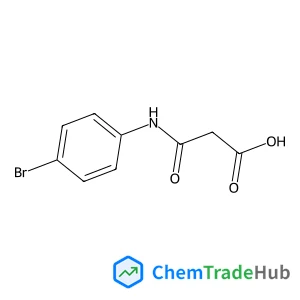
推荐供应商






免责声明
本页面提供的学术期刊信息仅供参考和研究使用。我们与任何期刊出版商均无关联,也不处理投稿事宜。如有投稿相关咨询,请直接联系相关期刊出版商。
如发现页面信息有误,请发送邮件至 support@chemtradehub.com 联系我们。我们将及时核实并处理您的问题。