



![[2',6'-bis(propan-2-yloxy)-[1,1'-biphenyl]-3-yl]dicyclohexylphosphane structure](https://cnstatic.chemtradehub.com/structs/787/787618-22-8-dda2.webp "[2',6'-bis(propan-2-yloxy)-[1,1'-biphenyl]-3-yl]dicyclohexylphosphane structure")
[2',6'-bis(propan-2-yloxy)-[1,1'-biphenyl]-3-yl]dicyclohexylphosphane
CAS号:
787618-22-8
分子式:
C30H43O2P
Tianfang Wang, John H. Bowie
The rearrangement reactions of energized CCCB and CCCAl have been studied by means of quantum mechanical electronic structure calculations. Potential barriers were determined at UCCSD(T)/aug-cc-pVTZ with optimized molecular geometries and harmonic vibrational frequencies determined at the UB3LYP/6-311+G(3df) level. Two planar fully cyclized isomers are key intermediates in both systems. One of these is the “rhombic” structure, (analogous to rhombic C4) which is called the “kite” isomer. The other fully cyclized structure is called the “fan” structure. The quartets of CCCB and CCBC are the ground states of these structures [by 49.8 and 7.9 kJ mol−1 (E values), respectively], whereas the ground state of kite C3B is the doublet (by 131.8 kJ mol−1). The rearrangement of doublet CCCB is more energetically favourable than that of the quartet, with a maximum barrier of +68.6 kJ mol−1 together with the formation of fan C3B (−60.7 kJ mol−1), and then CCBC (+40.6 kJ mol−1). Quartet CCCB rearranges through fan C3B (+31.4 kJ mol−1) to give CCBC (+82.8 kJ mol−1) over a maximum barrier of +184.9 kJ mol−1. The C3Al system is different from C3B in a number of ways. Doublet CCCAl is the ground state (by 116.3 kJ mol−1) and rearrangement to fan C3Al requires only 21.8 kJ mol−1 of excess energy. Fan C3Al (+18.8 kJ mol−1) then converts to the kite isomer (−12.1 kJ mol−1) over a barrier of 50.2 kJ mol−1. Conversion to CCAlC is energetically unfavourable requiring some 371 kJ mol−1 of excess energy [at the UCCSD(T)/aug-cc-pVTZ//UB3LYP/6-311+G(3df) level of theory]. Rearrangement of quartet CCCAl is more complex, but again, the cyclic kite and fan forms are in equilibrium and ring opening to CCAlC is unfavourable.
Corentin Lefebvre, Jean-Charles Boisson, Eric Hénon
DOI: 10.1039/C7CP02110K
A. M. M. Rosa, D. M. F. Prazeres, P. M. R. Paulo
DOI: 10.1039/C7CP00662D
Esteban D. Cantero, Lara M. Solis, Javier D. Fuhr, María Luz Martiarena, Oscar Grizzi, Esteban A. Sánchez
DOI: 10.1039/C7CP02949G
Jian Zhou, Hong Fang, Puru Jena
DOI: 10.1039/C7CP02642K
B. M. Soares, A. M. Aguilar, E. R. Silva, M. D. Coutinho-Neto, I. W. Hamley, M. Reza, J. Ruokolainen, W. A. Alves
DOI: 10.1039/C6CP08135E
Hongwei Liu, Junpeng Lu
DOI: 10.1039/C7CP02510F
Fernando Rodríguez-Díaz, Aly Castellanos-Suárez, Aileen Lozsán
DOI: 10.1039/C7CP02567J
Hongxin Zhang, Tianqing Jia, Long Chen, Yuchan Zhang, Shian Zhang, Donghai Feng, Zhenrong Sun, Jianrong Qiu
DOI: 10.1039/C7CP00099E
DOI: 10.1039/C7CP02884A
K. Shimizu, T. Ohba
DOI: 10.1039/C7CP03270F
4-[4-三氟甲基苯基]恶唑通常通过将4-三氟甲基苯酚与异硫氰酸苯酯在有机溶剂中进行酯化反应合成。该反应可在无水条件下,使用适当的催化剂,如四丁基氢氧化铵,以提...
RockPhos Pd G3 通常通过钯催化偶联反应合成,使用配体 (2'-Amino-2-biphenylyl)(methanesulfonato-kappa...
1-哌啶甲酰胺作为有机合成中的重要中间体,其市场需求主要受医药、农药、染料等行业推动。近年来,随着新药开发和绿色化学的发展,该化合物的研究趋势集中在开发更高效、...
2-(二苯基膦基)乙胺适用于多种法规指南,包括但不限于《全球化学品统一分类和标签制度》(GHS),欧盟《化学品注册、评估、授权和限制》法规(REACH),以及美...
间苯二甲酸二烯丙酯应储存在阴凉、干燥、通风良好的地方,远离火源和热源。储存容器应密封,避免光照和高温。储存温度应控制在25℃以下,相对湿度应低于80%。避免与其...
间甲苯异硫代异氰酸酯是一种有机化合物,分子式为C7H7NO2S,具有刺激性气味。它是一种重要的有机合成中间体,在合成其他化合物时广泛应用。
在合成中,可以考虑使用N-Cbz-D-苯丙氨醇或N-Fmoc-D-苯丙氨醇作为替代品。这些化合物同样具有保护氨基的功能,且在合成过程中表现出良好的反应性能。
3-羟甲基-2-氧异丙基吡啶主要用于有机合成领域,可以作为合成其他药物、农药或精细化学品的中间体。此外,它还可能在实验室研究中作为特定反应的前体或溶剂。
6-氨基-9-甲基嘌呤目前主要应用于医药行业,作为某些药物的中间体。此外,它还可能用于聚合物、传感器和半导体的某些领域,作为功能性单体或掺杂剂。

Physical Chemistry Chemical Physics (PCCP) is an international journal co-owned by 19 physical chemistry and physics societies from around the world. This journal publishes original, cutting-edge research in physical chemistry, chemical physics and biophysical chemistry. To be suitable for publication in PCCP, articles must include significant innovation and/or insight into physical chemistry; this is the most important criterion that reviewers and Editors will judge against when evaluating submissions. The journal has a broad scope and welcomes contributions spanning experiment, theory, computation and data science. Topical coverage includes spectroscopy, dynamics, kinetics, statistical mechanics, thermodynamics, electrochemistry, catalysis, surface science, quantum mechanics, quantum computing and machine learning. Interdisciplinary research areas such as polymers and soft matter, materials, nanoscience, energy, surfaces/interfaces, and biophysical chemistry are welcomed if they demonstrate significant innovation and/or insight into physical chemistry. Joined experimental/theoretical studies are particularly appreciated when complementary and based on up-to-date approaches.
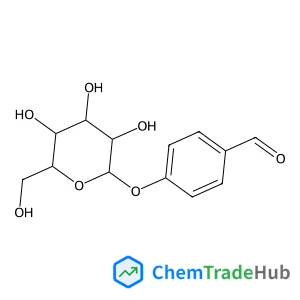
![3-[(4-Nitrobenzyl)oxy]-3-oxopropanoic Acid structure](https://cnstatic.chemtradehub.com/structs/773/77359-11-6-0d04.webp "3-[(4-Nitrobenzyl)oxy]-3-oxopropanoic Acid structure")