


Reactions at surfaces in the atmosphere: integration of experiments and theory as necessary (but not necessarily sufficient) for predicting the physical chemistry of aerosols
文献信息
发布日期
2009-07-27
DOI
10.1039/B906540G
影响因子
3.676
作者
Barbara J. Finlayson-Pitts
查看原文
摘要
While particles have significant deleterious impacts on human health, visibility and climate, quantitative understanding of their formation, composition and fates remains problematic. Indeed, in many cases, even qualitative understanding is lacking. One area of particular uncertainty is the nature of particle surfaces and how this determines interactions with gases in the atmosphere, including water, which is important for cloud formation and properties. The focus in this Perspective article is on some chemistry relevant to airborne particles and especially to reactions occurring on their surfaces. The intent is not to provide a comprehensive review, but rather to highlight a few selected examples of interface chemistry involving inorganic and organic species that may be important in the lower atmosphere. This includes sea salt chemistry, nitrate and nitrite ion photochemistry, organics on surfaces and heterogeneous reactions of oxides of nitrogen on proxies for airborne mineral dust and boundary layer surfaces. Emphasis is on the molecular level understanding that can only be gained by fully integrating experiment and theory to elucidate these complex systems.
相关文献
Modelling aqueous solubility of sodium chloride in clays at thermodynamic conditions of hydraulic fracturing by molecular simulations
2017-06-08
Paper
DOI: 10.1039/C7CP02121F
Collision-induced dissociation of sodiated glucose and identification of anomeric configuration
Jien-Lian Chen, Hock Seng Nguan, Po-Jen Hsu, Shang-Ting Tsai, Chia Yen Liew, Jer-Lai Kuo, Wei-Ping Hu
2017-05-30
Paper
DOI: 10.1039/C7CP02393F
Photoelectrical properties of CdS/CdSe core/shell QDs modified anatase TiO2 nanowires and their application for solar cells
Qingqing Qiu, Ping Wang, Lingling Xu, Yanhong Lin, Tengfeng Xie
2017-05-23
Paper
DOI: 10.1039/C7CP02358H
A DFT study of the adsorption of glycine in the interlayer space of montmorillonite
Elizabeth Escamilla-Roa, F. Javier Huertas, Alfonso Hernández-Laguna, C. Ignacio Sainz-Díaz
2017-05-17
Paper
DOI: 10.1039/C7CP02300F
Observing the real time formation of phosphine-ligated gold clusters by electrospray ionization mass spectrometry
Marshall R. Ligare, Grant E. Johnson, Julia Laskin
2017-06-15
Paper
DOI: 10.1039/C7CP01402C
Substrate influence on the interlayer electron–phonon couplings in fullerene films probed with doubly-resonant SFG spectroscopy
Dennis Elsenbeck, Sushanta K. Das, Luis Velarde
2017-06-30
Paper
DOI: 10.1039/C7CP03115G
Depleted upconversion luminescence in NaYF4:Yb3+,Tm3+ nanoparticles via simultaneous two-wavelength excitation
Hongxin Zhang, Tianqing Jia, Long Chen, Yuchan Zhang, Shian Zhang, Donghai Feng, Zhenrong Sun, Jianrong Qiu
2017-06-14
Paper
DOI: 10.1039/C7CP00099E
Potential energy construction in the diabatic picture for quantum mechanical rate constants of intermolecular proton transfer
Yuta Hori, Tomonori Ida, Motohiro Mizuno
2017-05-31
Paper
DOI: 10.1039/C7CP03024J
Highly efficient hydrogen evolution reaction by strain and phase engineering in composites of Pt and MoS2 nano-scrolls
Da Young Hwang, Kyoung Hwan Choi, Jeong Eon Park, Dong Hack Suh
2017-06-26
Paper
DOI: 10.1039/C7CP03495D
Metallomicelle templated transition metal nanostructures: synthesis, characterization, DFT study and catalytic activity
Ravneet Kaur, S. K. Mehta
2017-06-26
Paper
DOI: 10.1039/C7CP02079A
您可能还喜欢
化合物问答
4-[4-三氟甲基苯基]恶唑(CAS号:1126636-40-5)通常如何合成?
4-[4-三氟甲基苯基]恶唑通常通过将4-三氟甲基苯酚与异硫氰酸苯酯在有机溶剂中进行酯化反应合成。该反应可在无水条件下,使用适当的催化剂,如四丁基氢氧化铵,以提...
1126636-40-54-(4-(Trifluoromethy...
59729-32-71-[3-(Dimethylamino)...
化合物问答
RockPhos Pd G3(CAS号:2009020-38-4)通常如何合成?
RockPhos Pd G3 通常通过钯催化偶联反应合成,使用配体 (2'-Amino-2-biphenylyl)(methanesulfonato-kappa...
2009020-38-4(2'-Amino-2-biphenyl...
化合物问答
1-哌啶甲酰胺(CAS号:2158-03-4)的市场或研究趋势如何?
1-哌啶甲酰胺作为有机合成中的重要中间体,其市场需求主要受医药、农药、染料等行业推动。近年来,随着新药开发和绿色化学的发展,该化合物的研究趋势集中在开发更高效、...
2158-03-41-Piperidinecarboxam...
化合物问答
2-(二苯基膦基)乙胺(CAS号:4848-43-5)适用哪些法规指南?
2-(二苯基膦基)乙胺适用于多种法规指南,包括但不限于《全球化学品统一分类和标签制度》(GHS),欧盟《化学品注册、评估、授权和限制》法规(REACH),以及美...
4848-43-52-(Diphenylphosphino...
化合物问答
如何储存间苯二甲酸二烯丙酯(CAS号:1087-21-4)?
间苯二甲酸二烯丙酯应储存在阴凉、干燥、通风良好的地方,远离火源和热源。储存容器应密封,避免光照和高温。储存温度应控制在25℃以下,相对湿度应低于80%。避免与其...
1087-21-4Diallyl isophthalate
化合物问答
什么是间甲苯异硫代异氰酸酯(CAS号:621-30-7)?
间甲苯异硫代异氰酸酯是一种有机化合物,分子式为C7H7NO2S,具有刺激性气味。它是一种重要的有机合成中间体,在合成其他化合物时广泛应用。
621-30-71-Isothiocyanato-3-m...
化合物问答
在合成中是否有N-Boc-D-苯丙氨醇(CAS号:106454-69-7)的替代品?
在合成中,可以考虑使用N-Cbz-D-苯丙氨醇或N-Fmoc-D-苯丙氨醇作为替代品。这些化合物同样具有保护氨基的功能,且在合成过程中表现出良好的反应性能。
106454-69-72-Methyl-2-propanyl ...
化合物问答
3-羟甲基-2-氧异丙基吡啶(CAS号:954240-50-7)的主要用途是什么?
3-羟甲基-2-氧异丙基吡啶主要用于有机合成领域,可以作为合成其他药物、农药或精细化学品的中间体。此外,它还可能在实验室研究中作为特定反应的前体或溶剂。
954240-50-7(2-Isopropoxy-3-pyri...
化合物问答
6-氨基-9-甲基嘌呤(CAS号:700-00-5)应用于哪些行业?
6-氨基-9-甲基嘌呤目前主要应用于医药行业,作为某些药物的中间体。此外,它还可能用于聚合物、传感器和半导体的某些领域,作为功能性单体或掺杂剂。
700-00-59-Methyl-9H-purin-6-...
来源期刊
Physical Chemistry Chemical Physics

CiteScore:
5.5
自引率:
10.3%
年发文量:
3036
Physical Chemistry Chemical Physics (PCCP) is an international journal co-owned by 19 physical chemistry and physics societies from around the world. This journal publishes original, cutting-edge research in physical chemistry, chemical physics and biophysical chemistry. To be suitable for publication in PCCP, articles must include significant innovation and/or insight into physical chemistry; this is the most important criterion that reviewers and Editors will judge against when evaluating submissions. The journal has a broad scope and welcomes contributions spanning experiment, theory, computation and data science. Topical coverage includes spectroscopy, dynamics, kinetics, statistical mechanics, thermodynamics, electrochemistry, catalysis, surface science, quantum mechanics, quantum computing and machine learning. Interdisciplinary research areas such as polymers and soft matter, materials, nanoscience, energy, surfaces/interfaces, and biophysical chemistry are welcomed if they demonstrate significant innovation and/or insight into physical chemistry. Joined experimental/theoretical studies are particularly appreciated when complementary and based on up-to-date approaches.
推荐化合物
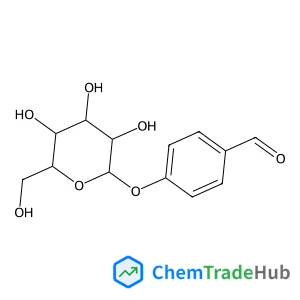
![1-(Hexopyranosyloxy)-4a,5-dihydroxy-7-methyl-1,4a,5,6,7,7a-hexahydrocyclopenta[c]pyran-7-yl 3-phenylacrylate structure](https://cnstatic.chemtradehub.com/structs/192/19210-12-9-ecae.webp "1-(Hexopyranosyloxy)-4a,5-dihydroxy-7-methyl-1,4a,5,6,7,7a-hexahydrocyclopenta[c]pyran-7-yl 3-phenylacrylate structure")
推荐供应商






免责声明
本页面提供的学术期刊信息仅供参考和研究使用。我们与任何期刊出版商均无关联,也不处理投稿事宜。如有投稿相关咨询,请直接联系相关期刊出版商。
如发现页面信息有误,请发送邮件至 support@chemtradehub.com 联系我们。我们将及时核实并处理您的问题。