










Cooperativity in noncovalent interactions of biologically relevant molecules
文献信息
发布日期
2009-07-27
DOI
10.1039/B907260H
影响因子
3.676
作者
Jens Antony, Björn Brüske, Stefan Grimme
查看原文
摘要
Using a recently published benchmark MP2 database of nucleic acid base trimers, the three-body contribution to the interaction energy (TBE, also termed (non)cooperativity) as a function of base composition and complex geometry is studied. In 28 out of 141 cases (or 20%), the counterpoise-corrected MP2/TZV(2df,2pd) TBE exceeds 1 kcal mol−1. The TBE is below 1 kcal mol−1 for all trimers in the benchmark set consisting of U, T, and A, irrespective of the geometrical arrangement in the database. The largest MP2/TZV(2df,2pd) cooperativity of −9 kcal mol−1 is obtained for a hydrogen-bonded guanine trimer. The largest anti-cooperativity occurs for a protonated cytosine–guanine–cytosine trimer (6 kcal mol−1). Generally, the many-body non-additivity term is an order of magnitude smaller than the interaction energies (on average −33 kcal mol−1). Employing various density functionals (GGA, meta-GGA, and hybrid) and wave function methods up to third order perturbation theory, and using atomic-orbital basis sets of double-, triple-, and quadruple-ζ quality, we find that the non-additivity effects are almost independent of one particle basis set and method. To enable an interpretation of the TBE, the intermolecular interaction energy is subjected to an energy decomposition analysis (EDA) with a similar definition of the energy terms as the Morokuma decomposition scheme. We find that nonadditive effects are mainly due to the induction, while exchange repulsion, electrostatic, and dispersion contributions are essentially additive, the latter also beyond second order at the MP3/SV(d,p) level. The performance of dispersion-corrected density functional theory for the prediction of structures and binding energies is assessed. While an accurate reproduction of the MP2-optimized reference structures of the trimers can already be accomplished with modern density functionals, only the inclusion of the long-range (London) dispersion interaction provides a consistent picture for both structures and binding energies.
相关文献
Erythrocyte-like hollow carboncapsules and their application in proton exchange membranefuelcells‡
Jung Ho Kim, Jong-Sung Yu
2010-10-11
Paper
DOI: 10.1039/C0CP00698J
Kinetics of phase separation in polymer blends revealed by resonance light scattering spectroscopy
Jin Yang, Xudong Chen, Ruowen Fu, Wei-ang Luo, Yunbo Li, Mingqiu Zhang
2010-01-19
Paper
DOI: 10.1039/B918069A
Ionicity in ionic liquids: correlation with ionic structure and physicochemical properties
Kazuhide Ueno, Hiroyuki Tokuda, Masayoshi Watanabe
2010-01-12
Perspective
DOI: 10.1039/B921462N
Viscosity sensing in heated alkaline zeolite synthesis media
Lana R. A. Follens, Erwin K. Reichel, Christian Riesch, Jan Vermant, Johan A. Martens, Christine E. A. Kirschhock, Bernhard Jakoby
2008-12-24
Communication
DOI: 10.1039/B816040F
Oxidation states of Co and Fe in Ba1−xSrxCo1−yFeyO3−δ (x, y = 0.2–0.8) and oxygen desorption in the temperature range 300–1273 K
Ashley S. Harvey, F. Jochen Litterst, Zhen Yang, Jennifer L. M. Rupp, Anna Infortuna, Ludwig J. Gauckler
2009-02-11
Paper
DOI: 10.1039/B819414A
Amphiphilic and magnetic behavior of Fe3O4nanocrystals
Wladimir Thiessen, Aliaksei Dubavik, Vladimir Lesnyak, Nikolai Gaponik, Alexander Eychmüller, Thomas Wolff
2010-01-12
Communication
DOI: 10.1039/B917276A
J-aggregation of ionic liquid solutions of meso-tetrakis(4-sulfonatophenyl)porphyrin
Maroof Ali, Vinod Kumar, Sheila N. Baker, Gary A. Baker, Siddharth Pandey
2009-12-21
Paper
DOI: 10.1039/B920500D
The origin of the conformational preference of N,N′-diaryl-N,N′-dimethyl ureas
Jonathan Clayden, Ulrich Hennecke, Mark A. Vincent, Ian H. Hillier, Madeleine Helliwell
2010-10-18
Paper
DOI: 10.1039/C0CP00571A
Evolution of self-diffusion and local structure in some amines over a wide temperature range at high pressures: a molecular dynamics simulation study
Huajie Feng, Xin Liu, Wei Gao, Xiaojuan Chen, Jing Wang, Liuping Chen, Hans-Dietrich Lüdemann
2010-10-18
Paper
DOI: 10.1039/C0CP00337A
Duschinsky mixing between four non-totally symmetric normal coordinates in the S1–S0 vibronic structure of (E)-phenylvinylacetylene: a quantitative analysis
Christian W. Müller, Josh J. Newby, Ching-Ping Liu, Chirantha P. Rodrigo, Timothy S. Zwier
2010-01-20
Paper
DOI: 10.1039/B919912H
您可能还喜欢
化合物问答
(3-氨苯基)环丙基甲酮(CAS号:162174-75-6)的主要用途是什么?
(3-氨苯基)环丙基甲酮主要用于合成化学中间体,特别是在药物化学领域作为原料。它还可以用于有机合成反应中,作为催化剂或反应物。
162174-75-6(3-Aminophenyl)(cycl...
化合物问答
如何储存亚胺菌(CAS号:136470-79-6)?
亚胺菌应储存在干燥、阴凉处,避免直接暴露于光线下。建议使用密封容器储存,防止吸潮和污染。具体的储存条件应参考产品的安全数据表(MSDS)或药品说明书。
136470-79-6Abacavir EP Impurity...
化合物问答
2-氯-2,2-二氟乙酰胺(CAS号:354-28-9)应用于哪些行业?
2-氯-2,2-二氟乙酰胺在医药、聚合物、传感器、半导体等领域有广泛应用。在医药领域,它作为中间体用于合成其他药物;在聚合物领域,用作聚合引发剂或稳定剂;在传感...
354-28-92-Chloro-2,2-difluor...
化合物问答
处理4-甲基-3-硝基-1,1-联苯(CAS号:53812-68-3)时应注意哪些实验室安全事项?
在处理4-甲基-3-硝基-1,1-联苯时,应佩戴手套、护目镜和实验室外套等个人防护装备(PPE),确保在通风橱中操作以减少吸入风险。若发生泄露,应立即使用沙子或...
53812-68-34'-Methyl-3-nitro-1,...
化合物问答
(2S)-羟基(苯基)乙酸 (2R)-N-苄基-1-(4-甲氧基苯基)丙-2-胺盐(CAS号:188690-84-8)应用于哪些行业?
该化合物广泛应用于医药、聚合物和半导体行业。在医药领域,它是某些药物中间体的重要组成部分;在聚合物领域,可用作增塑剂;在半导体行业,可用于制造光刻胶。
188690-84-8Benzeneacetic acid, ...
化合物问答
在合成中是否有芬苯哒唑砜-D3标准品(CAS号:1228182-49-7)的替代品?
芬苯哒唑砜-D3标准品的替代品可能包括类似的苯并咪唑类化合物,如芬苯哒唑本身或其非同位素标记版本。这些替代品在结构上与芬苯哒唑砜-D3相似,但在具体应用中需进行...
1228182-49-7(~2~H_3_)Methyl [5-(...
化合物问答
2-氟-4-硝基苯乙酸(CAS号:315228-19-4)通常如何合成?
2-氟-4-硝基苯乙酸可以通过一系列化学反应合成,通常是从4-氟苯胺开始,首先进行硝化反应生成4-氟-2-硝基苯胺,然后进行乙酰化反应得到目标产物。具体的合成步...
315228-19-42-(2-fluoro-4-nitrop...
化合物问答
2-氟-4-甲氧基苯乙酸(CAS号:883531-28-0)通常如何合成?
2-氟-4-甲氧基苯乙酸通常通过将4-甲氧基苯乙酸与氟化试剂(如氟化氰)反应来合成。反应通常在无水条件下进行,使用催化剂如六氟磷酸锂或四氟硼酸锂以提高选择性和产...
883531-28-02-Fluoro-4-methoxyph...
化合物问答
什么是4SC 202;4SC202(CAS号:1186222-89-8)?
4SC 202;4SC202是一种化学化合物,其化学名称为(2E)-N-(2-氨基苯基)-3-(1-{[4-(1-甲基-1H-吡唑-4-基)苯基]磺酰基}-1H...
1186222-89-8(2E)-N-(2-Aminopheny...
132980-99-53,5-Difluorobenzamid...
来源期刊
Physical Chemistry Chemical Physics

CiteScore:
5.5
自引率:
10.3%
年发文量:
3036
Physical Chemistry Chemical Physics (PCCP) is an international journal co-owned by 19 physical chemistry and physics societies from around the world. This journal publishes original, cutting-edge research in physical chemistry, chemical physics and biophysical chemistry. To be suitable for publication in PCCP, articles must include significant innovation and/or insight into physical chemistry; this is the most important criterion that reviewers and Editors will judge against when evaluating submissions. The journal has a broad scope and welcomes contributions spanning experiment, theory, computation and data science. Topical coverage includes spectroscopy, dynamics, kinetics, statistical mechanics, thermodynamics, electrochemistry, catalysis, surface science, quantum mechanics, quantum computing and machine learning. Interdisciplinary research areas such as polymers and soft matter, materials, nanoscience, energy, surfaces/interfaces, and biophysical chemistry are welcomed if they demonstrate significant innovation and/or insight into physical chemistry. Joined experimental/theoretical studies are particularly appreciated when complementary and based on up-to-date approaches.
推荐化合物
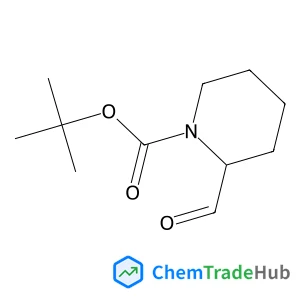
![Benzyl spiro[indole-3,4'-piperidine]-1(2H)-carboxylate hydrochloride (1:1) structure](https://cnstatic.chemtradehub.com/structs/159/159635-46-8-8de0.webp "Benzyl spiro[indole-3,4'-piperidine]-1(2H)-carboxylate hydrochloride (1:1) structure")
Benzyl spiro[indole-3,4'-piperidine]-1(2H)-carboxylate hydrochloride (1:1)
CAS号:
159635-46-8
分子式:
C20H23ClN2O2

推荐供应商






免责声明
本页面提供的学术期刊信息仅供参考和研究使用。我们与任何期刊出版商均无关联,也不处理投稿事宜。如有投稿相关咨询,请直接联系相关期刊出版商。
如发现页面信息有误,请发送邮件至 support@chemtradehub.com 联系我们。我们将及时核实并处理您的问题。