


Activation of transport and local dynamics in polysiloxane-based salt-in-polymer electrolytes: a multinuclear NMR study
文献信息
发布日期
2010-04-30
DOI
10.1039/B925840J
影响因子
3.676
作者
Miriam Kunze, Yunus Karatas, Hans-Dieter Wiemhöfer, Hellmut Eckert, Monika Schönhoff
查看原文
摘要
We have investigated a new improved lithium ion conducting salt-in-polymer electrolyte system consisting of a polysiloxane backbone with oligoether side chains and added LiCF3SO3 (LiTf), which has a conductivity at 30 °C of up to 1.3 × 10⁻⁴ S cm−1 and up to 6.9 × 10⁻⁵ S cm−1 after cross-linking, which is employed to enhance mechanical stability. The mechanisms governing local dynamics and mass transport have been studied on the basis of temperature dependent spin–lattice relaxation time and pulsed field gradient diffusion measurements for 7Li, 19F and 1H, respectively. The correlation times characterizing the local ion dynamics reflect the complexation of the cations by the polyether side chains of the polymer and show the anion as the more mobile species. In contrast, 7Li and 19F diffusion coefficients and their activation energies are rather similar, suggesting the formation of ion pairs with similar activation barriers for cation and/or anion long-range transport. In general, the activation energies describing local reorientation are significantly smaller than those characterizing long range diffusion, suggesting that the long-range transport of both cations and anions is a much more complex process than a simple succession of free ion jumps, and involves (1) the coupling of conformational side-chain reorientations to the cation movement, and (2) the correlated diffusion of cations and anions within dimers or clusters. An important practical conclusion from our results is that the relatively high ionic conductivity in polysiloxane-based polymer electrolytes could even be increased if salt dissociation could be enhanced further.
期刊推荐

Critical Reviews in Solid State and Materials Sciences
Electroanalysis

Heteroatom Chemistry
Biocatalysis and Biotransformation

Journal of the Indian Institute of Science
Herald of the Russian Academy of Sciences
Polycyclic Aromatic Compounds

Acta Metallurgica Sinica-English Letters
Journal of Chemical Sciences
Topics in Catalysis
相关文献
Unravelling the enigma of ultrafast excited state relaxation in non-emissive aggregating conjugated polymers
Benjamin D. Datko, Maksim Y. Livshits, Zhen Zhang, Dana Portlock, Yang Qin, Jeffrey J. Rack, John K. Grey
2018-08-09
Paper
DOI: 10.1039/C8CP04061C
The quest for determining one-electron redox potentials of azulene-1-carbonitriles by calculation
Nicolai Ree, Cecilie Lindholm Andersen, Martin Drøhse Kilde, Ole Hammerich, Mogens Brøndsted Nielsen, Kurt V. Mikkelsen
2018-02-19
Paper
DOI: 10.1039/C7CP08687C
Resonance signatures in the body-frame valence photoionization of CF4
C. S. Trevisan, R. R. Lucchese, W. Iskandar, R. Moshammer, R. Strom, T. Severt, B. Jochim, D. Reedy, M. Weller, A. L. Landers, J. B. Williams, I. Ben-Itzhak, R. Dörner, D. Slaughter, Th. Weber, T. N. Rescigno
2018-07-25
Paper
DOI: 10.1039/C8CP03637C
Singlet and triplet energy transfer dynamics in self-assembled axial porphyrin–anthracene complexes: towards supra-molecular structures for photon upconversion
Victor Gray, Betül Küçüköz, Fredrik Edhborg, Maria Abrahamsson, Kasper Moth-Poulsen, Bo Albinsson
2018-02-12
Paper
DOI: 10.1039/C8CP00884A
Improved fill factor in inverted planar perovskite solar cells with zirconium acetate as the hole-and-ion-blocking layer
Xuewen Zhang, Chunjun Liang, Mengjie Sun, Huimin Zhang, Chao Ji, Zebang Guo, Yajun Xu, Fulin Sun, Qi Song, Zhiqun He
2018-02-23
Communication
DOI: 10.1039/C8CP00563J
Improving the activity of gold nanoparticles for the water-gas shift reaction using TiO2–Y2O3: an example of catalyst design
Jose J. Plata, Francisca Romero-Sarria, Javier Amaya Suárez, Antonio M. Márquez, Óscar H. Laguna, José A. Odriozola, Javier Fdez Sanz
2018-08-03
Paper
DOI: 10.1039/C8CP03706J
Structures of FEC-containing electrolytes and the stabilization mechanism at high voltage and elevated temperature
Yamin Wang, Debing Li, Xiaoying Yu, Chao Shang, Yingchun Liu, Qi Wang
2018-07-09
Paper
DOI: 10.1039/C7CP08362A
Optical spectroscopy of isolated flavins: photodissociation of protonated lumichrome
Alexander Sheldrick, David Müller, Alan Günther, Pablo Nieto, Otto Dopfer
2018-02-21
Communication
DOI: 10.1039/C8CP00590G
Electrochemical nanoarchitectonics through polyaminobenzylamine–dodecyl phosphate complexes: redox activity and mesoscopic organization in self-assembled nanofilms
Agustín Lorenzo, Waldemar A. Marmisollé, Marcelo Ceolín, Omar Azzaroni
2018-02-14
Paper
DOI: 10.1039/C7CP08139A
Fe3+ chelating quinoline–hydrazone hybrids with proven cytotoxicity, leishmanicidal, and trypanocidal activities
Juan Carlos Coa, Wilson Cardona-Galeano, Albeiro Restrepo
2018-07-17
Paper
DOI: 10.1039/C8CP04174A
您可能还喜欢
化合物问答
4-[[6-(3-苯基苯基)-7H-嘌呤-2-基]氨基]苯磺酰胺(CAS号:2079895-42-2)适用哪些法规指南?
该化合物需遵循REACH法规以确保其安全使用和管理。同时,根据其潜在的生物降解性和毒性,也需要符合GHS分类中的相应要求。此外,若用于医药或食品相关领域,则还需...
2079895-42-24-{[6-(3-Biphenylyl)...
化合物问答
反式-度骨化醇(CAS号:74007-20-8)的物理化学性质是什么?
反式-度骨化醇是一种脂溶性维生素D3的衍生物,呈无色或白色结晶性粉末,不溶于水,溶于乙醇、丙酮、氯仿等有机溶剂。其分子式为C28H44O,分子量为404.65。...
74007-20-8trans-Doxercalcifero...
化合物问答
莲花掌苷(CAS号:59282-56-3)的市场或研究趋势如何?
莲花掌苷作为一种天然产物,近年来在抗炎、抗癌等生物活性研究方面显示出一定的潜力,因此市场需求逐渐增长。市场动态方面,随着天然产物开发的深入,预计该化合物的研究会...
59282-56-3Lindleyin
化合物问答
2-溴-6-(吡咯烷-1-基)吡啶-4-硼酸频那醇酯(CAS号:1150271-64-9)应用于哪些行业?
2-溴-6-(吡咯烷-1-基)吡啶-4-硼酸频那醇酯在医药领域有着广泛的应用,它可以用作药物合成中的中间体。此外,它还可以用于有机合成,特别是在构建复杂杂环化合...
1150271-64-92-Bromo-6-(1-pyrroli...
化合物问答
什么是methyl 2-(4-bromophenyl)-3-methylbutanoate(CAS号:1061284-70-5)?
methyl 2-(4-溴苯基)-3-甲基丁酸甲酯是一种化学物质,分子式为C12H13BrO2。它是一种有机化合物,具有一定的挥发性和易燃性。
1061284-70-52-(4-Bromo-phenyl)-3...
化合物问答
CJC1-295(CAS号:863288-34-0)的物理化学性质是什么?
CJC1-295是一种具有复杂肽链结构的化合物,其分子量约为1875 Da。该化合物在水中具有一定的溶解性,但在有机溶剂中的溶解性不佳。它是一种反应活性化合物,...
863288-34-0L-tyrosyl-D-alanyl-L...
化合物问答
三正丁基锍碘(CAS号:18146-62-8)的市场或研究趋势如何?
三正丁基锍碘作为一种重要的有机硫化合物,主要用于有机合成中作为亲电试剂。近年来,由于其在合成中的广泛应用,市场对其需求持续增长。此外,随着绿色化学的发展,对其替...
18146-62-8Tributylsulfonium io...
化合物问答
雌二醇-[13C3]同位素内标(CAS号:1261254-48-1)通常如何合成?
雌二醇-[13C3]同位素内标通常通过在雌二醇分子中引入[13C3]同位素来合成。常见的方法是通过化学标记反应,如与[13C3]标记的甲基溴化物进行亲核取代反应...
1261254-48-117beta-Estradiol-2,3...
化合物问答
N1-(2-吡啶甲基)-N2-(2-甲基-1-萘基)草酰胺(CAS号:2611225-93-3)的物理化学性质是什么?
N1-(2-吡啶甲基)-N2-(2-甲基-1-萘基)草酰胺为固体化合物,具有良好的结晶形态,分子量为340.34 g/mol。该化合物在水中的溶解度较低,但在有...
2611225-93-3N-(2-Methyl-1-naphth...
化合物问答
如何处理含有十五碳烯酸甲酯(顺-10)(C15:1)标准品(CAS号:90176-52-6)的废料?
含有十五碳烯酸甲酯(顺-10)(C15:1)标准品的废料应首先进行适当收集和储存,避免与其他化学品混合。然后,可采用焚烧或交由专业废物处理公司进行处理。处理过程...
90176-52-6(Z)-10-Pentadecenoic...
来源期刊
Physical Chemistry Chemical Physics

CiteScore:
5.5
自引率:
10.3%
年发文量:
3036
Physical Chemistry Chemical Physics (PCCP) is an international journal co-owned by 19 physical chemistry and physics societies from around the world. This journal publishes original, cutting-edge research in physical chemistry, chemical physics and biophysical chemistry. To be suitable for publication in PCCP, articles must include significant innovation and/or insight into physical chemistry; this is the most important criterion that reviewers and Editors will judge against when evaluating submissions. The journal has a broad scope and welcomes contributions spanning experiment, theory, computation and data science. Topical coverage includes spectroscopy, dynamics, kinetics, statistical mechanics, thermodynamics, electrochemistry, catalysis, surface science, quantum mechanics, quantum computing and machine learning. Interdisciplinary research areas such as polymers and soft matter, materials, nanoscience, energy, surfaces/interfaces, and biophysical chemistry are welcomed if they demonstrate significant innovation and/or insight into physical chemistry. Joined experimental/theoretical studies are particularly appreciated when complementary and based on up-to-date approaches.
推荐化合物
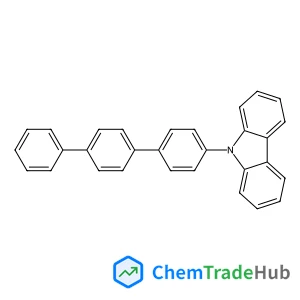
![2-Methylbenzo[h]quinoline structure](https://cnstatic.chemtradehub.com/structs/605/605-88-9-ac43.webp "2-Methylbenzo[h]quinoline structure")
推荐供应商





免责声明
本页面提供的学术期刊信息仅供参考和研究使用。我们与任何期刊出版商均无关联,也不处理投稿事宜。如有投稿相关咨询,请直接联系相关期刊出版商。
如发现页面信息有误,请发送邮件至 support@chemtradehub.com 联系我们。我们将及时核实并处理您的问题。