


Intrinsic acidity and electrophilicity of gaseous propargyl/allenyl carbocations
文献信息
发布日期
2010-03-29
DOI
10.1039/C001985B
影响因子
3.876
作者
Priscila M. Lalli, Yuri E. Corilo, Patrícia V. Abdelnur, Marcos N. Eberlin
查看原文
摘要
The ion/molecule chemistry of four representative propagyl/allenyl cations 1–4 of the general formula R1CH+-CC-R (a) ↔ R1CHCC+-R (b), that is, the reactive C3H3+ ions of m/z 39 from EI of propargyl chloride (H2C+-CC–H, 1a), isomeric C4H5+ ions of m/z 53 from EI of 3-butyne-2-ol (2a, H2C+-CC-CH3) and 2-butyne-1-ol (CH3-CH+-CC–H, 3a), and Ph-C3H2+ ions of m/z 115 from 3-phenyl-2-propyn-1-ol (H2C+-CC-Ph, 4a) was studied via pentaquadrupole mass spectrometry. With pyridine, proton transfer was observed as the predominant process for 1 and the sole reaction channel for the isomeric 2 and 3, whereas 4 reacted preferentially by adduct formation. These outcomes were rationalized using DFT calculations from isodesmic proton transfer reactions. Similar reaction tendencies were observed with acetonitrile and acrylonitrile, with adduct formation appearing again as a minor pathway for 1, 2 and 3, and as a major reaction channel for 4. With 1,3-dioxolane, hydride abstraction was a dominant reaction, with proton transfer and adduct formation competing as side reactions. With 2,2-dimethyl-1,3-dioxolane, an interplay of reactions including methyl anion abstraction, proton transfer, hydride abstraction and adduct formation were observed depending on the ion structure, with 4 reacting again mainly by adduct formation. Proton transfer was also observed as a dominant process in reactions with ethanol for 1, 2 and 3, with 4 being nearly unreactive whereas no adduct formation was observed for any of the carbocations studied. Limited reactivity was exhibited by these ions in cycloaddition reaction with isoprene.
期刊推荐
Proceedings of the National Academy of Sciences of the United States of America

Molecular Pharmacology

Journal of Physics and Chemistry of Solids
Pure and Applied Chemistry

Science Progress
Journal of Heterocyclic Chemistry
Pharmacological Reviews

Israel Journal of Chemistry

Journal of Catalysis

Fibre Chemistry
相关文献
Mesoscopic analyses of the impact of morphology and operating conditions on the transport resistances in a proton-exchange-membrane fuel-cell catalyst layer
Yu-Tong Mu, Adam Z. Weber, Zhao-Lin Gu, Tobias Schuler, Wen-Quan Tao
2020-05-01
Paper
DOI: 10.1039/D0SE00560F
An acoustic field-based conformal transfection system for improving the gene delivery efficiency
Jieqiong Wang, Shuai Zhao, Man Lin Lai, Tianan Jiang, Fei Yan
2021-04-14
Paper
DOI: 10.1039/D1BM00251A
Recent progress in self-supported two-dimensional transition metal oxides and (oxy)hydroxides as oxygen evolution reaction catalysts
Jie Zhang, Conghui Si, Tianyi Kou, Jianfeng Wang, Zhonghua Zhang
2020-03-23
Review Article
DOI: 10.1039/C9SE01312A
Influence of high-pressure torsion deformation on the corrosion behaviour of a bioresorbable Mg-based alloy studied by positron annihilation
Philipp Brunner, Florian Brumbauer, Eva-Maria Steyskal, Oliver Renk, Annelie-Martina Weinberg, Hartmuth Schroettner, Roland Würschum
2021-04-30
Paper
DOI: 10.1039/D1BM00166C
Cobalt(ii) ions and cobalt nanoparticle embedded porous organic polymers: an efficient electrocatalyst for water-splitting reactions
Krishnan Giribabu, Murugavel Kathiresan, Kyusik Yun
2020-05-11
Paper
DOI: 10.1039/D0SE00580K
A facile route for preparing nickel(ii) oxide thin films for high-performance inverted perovskite solar cells
Guibin Shen, Hongye Dong, Qingbin Cai, Xiaoning Wen, Xiangning Xu, Cheng Mu
2020-04-28
Paper
DOI: 10.1039/D0SE00200C
Boosting cell performance with self-supported PtCu nanotube arrays serving as the cathode in a proton exchange membrane fuel cell
Hongmei Yu, Wei Song, Zhigang Shao
2020-05-05
Paper
DOI: 10.1039/D0SE00103A
您可能还喜欢
化合物问答
如何处理含有8-氯咪唑并[1,2-A]吡嗪(CAS号:69214-33-1)的废料?
处理含有8-氯咪唑并[1,2-A]吡嗪的废料时,应首先将其收集并进行化学回收或降解。如果无法回收,需采用安全的化学处理方法,如中和、氧化还原或沉淀。处理过程中需...
69214-33-18-chloroimidazo[1,2-...
化合物问答
Calhex 231 hydrochloride(CAS号:2387505-78-2)适用哪些法规指南?
Calhex 231 hydrochloride 需要遵循《全球化学品统一分类和标签制度》(GHS)的分类和标签要求,以及欧盟的《化学品注册、评估、授权和限制条...
2387505-78-24-Chloro-N-[(1S,2S)-...
化合物问答
11-Beta,17-alpha,21-三羟基-5-beta-孕烯-3,20-二酮(CAS号:1482-50-4)的物理化学性质是什么?
11-Beta,17-alpha,21-三羟基-5-beta-孕烯-3,20-二酮是一种无色结晶性粉末,分子量为372.45 g/mol。该化合物在水中的溶解度...
1482-50-45β-Dihydrocortisol
化合物问答
处理5-异丙基-1,3,4-恶二唑-2-羧酸(CAS号:944907-13-5)时应注意哪些实验室安全事项?
处理5-异丙基-1,3,4-恶二唑-2-羧酸时应注意以下安全事项:穿戴适当的个人防护装备,包括实验室外套、手套和护目镜;操作应在通风橱中进行,以减少吸入或接触有...
944907-13-55-Isopropyl-1,3,4-ox...
化合物问答
benzyl 3-bromopropanoate(CAS号:90841-55-7)安全吗?
Benzyl 3-bromopropanoate属于有毒物质,吸入、摄入或皮肤接触均可能对人体造成伤害。操作时应佩戴防护眼镜、口罩和手套,避免吸入蒸汽和直接接触...
90841-55-7Benzyl 3-bromopropan...
化合物问答
什么是(R)-N-苄氧羰基-3,4-二氢-1H-异喹啉羧酸(CAS号:151004-88-5)?
(R)-N-苄氧羰基-3,4-二氢-1H-异喹啉羧酸是一种含有苄氧羰基和异喹啉环结构的化合物,分子式为C17H15NO3。它是一种有机化合物,具有一定的生物活性...
151004-88-5(1R)-2-[(Benzyloxy)c...
化合物问答
在合成中是否有1-苄基吡啶嗡-3-羧酸盐(CAS号:15990-43-9)的替代品?
可以考虑使用1-苄基吡啶-3-羧酸盐作为1-苄基吡啶嗡-3-羧酸盐的替代品。此外,还可以探索其他类似物,如1-苄基吡啶-3-氨基甲酸酯等。具体的替代品选择需根据...
15990-43-91-Benzyl-3-pyridiniu...
化合物问答
(2,6-二甲基吡啶-3-基)甲醇(CAS号:582303-10-4)安全吗?
(2,6-二甲基吡啶-3-基)甲醇在使用时需注意安全,应避免吸入其蒸汽,接触皮肤和眼睛。操作应在通风良好的环境中进行,佩戴适当的个人防护装备。
582303-10-4(2,6-Dimethyl-3-pyri...
化合物问答
5-溴-2-乙烯基吡啶(CAS号:226883-52-9)的物理化学性质是什么?
5-溴-2-乙烯基吡啶是一种有机化合物,外观为白色固体,具有良好的结晶性。分子量约为190.03 g/mol。它的溶解性在水中较差,但在有机溶剂如二氯甲烷、甲醇...
226883-52-95-Bromo-2-vinylpyrid...
化合物问答
2-羟基-3-硝基-5-甲基吡啶(CAS号:7464-14-4)应用于哪些行业?
2-羟基-3-硝基-5-甲基吡啶主要应用于医药、聚合物和半导体行业。在医药领域,它可以用作合成其他药物的中间体。在聚合物领域,它可以作为功能性单体参与聚合反应,...
7464-14-45-Methyl-3-nitro-2(1...
来源期刊
Organic & Biomolecular Chemistry

CiteScore:
3.4
自引率:
10.3%
年发文量:
1041
Organic & Biomolecular Chemistry (OBC) publishes original and high impact research and reviews in organic chemistry. We welcome research that shows new or significantly improved protocols or methodologies in total synthesis, synthetic methodology or physical and theoretical organic chemistry as well as research that shows a significant advance in the organic chemistry or molecular design aspects of chemical biology, catalysis, supramolecular and macromolecular chemistry, theoretical chemistry, mechanism-oriented physical organic chemistry, medicinal chemistry or natural products. Articles published in the journal should report new work which makes a highly-significant impact in the field. Routine and incremental work is generally not suitable for publication in the journal. More details about key areas of our scope are below. In all cases authors should include in their article clear rationale for why their research has been carried out.
推荐化合物
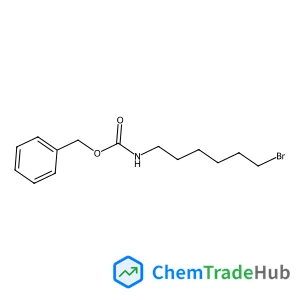
![4-[(3-Chloro-2-fluorophenyl)amino]-7-methoxy-6-quinazolinyl acetate structure](https://cnstatic.chemtradehub.com/structs/740/740081-22-5-f58f.webp "4-[(3-Chloro-2-fluorophenyl)amino]-7-methoxy-6-quinazolinyl acetate structure")
4-[(3-Chloro-2-fluorophenyl)amino]-7-methoxy-6-quinazolinyl acetate
CAS号:
740081-22-5
分子式:
C17H13ClFN3O3
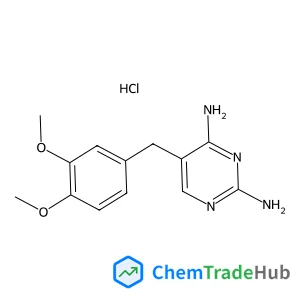
![(2S)-2-{[(9H-Fluoren-9-ylmethoxy)carbonyl]amino}-4-(methylselanyl)butanoic acid structure](https://cnstatic.chemtradehub.com/structs/121/1217852-49-7-f252.webp "(2S)-2-{[(9H-Fluoren-9-ylmethoxy)carbonyl]amino}-4-(methylselanyl)butanoic acid structure")
推荐供应商



免责声明
本页面提供的学术期刊信息仅供参考和研究使用。我们与任何期刊出版商均无关联,也不处理投稿事宜。如有投稿相关咨询,请直接联系相关期刊出版商。
如发现页面信息有误,请发送邮件至 support@chemtradehub.com 联系我们。我们将及时核实并处理您的问题。