






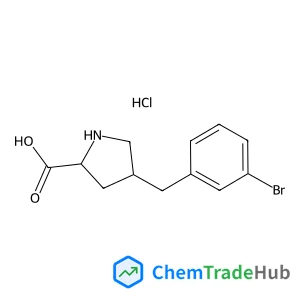
(2S,4R)-4-(3-Bromobenzyl)pyrrolidine-2-carboxylic acid hydrochloride
CAS号:
1049734-10-2
分子式:
C12H15BrClNO2
David N. LeBard, Dmitry V. Matyushov
Despite its diversity, life universally relies on a simple basic mechanism of energy transfer in its energy chains—hopping electron transport between centers of electron localization on hydrated proteins and redox cofactors. Since many such hops connect the point of energy input with a catalytic site where energy is stored in chemical bonds, the question of energy losses in (nearly activationless) electron hops, i.e., energetic efficiency, becomes central for the understanding of the energetics of life. We show here that standard considerations based on rules of Gibbs thermodynamics are not sufficient, and the dynamics of the protein and the protein–water interface need to be involved. The rate of electronic transitions is primarily sensitive to the electrostatic potential at the center of electron localization. Numerical simulations show that the statistics of the electrostatic potential produced by hydration water are strongly non-Gaussian, with the breadth of the electrostatic noise far exceeding the expectations of the linear response. This phenomenon, which dramatically alters the energetic balance of a charge-transfer chain, is attributed to the formation of ferroelectric domains in the protein's hydration shell. These dynamically emerging and dissipating domains make the shell enveloping the protein highly polar, as gauged by the variance of the shell dipole which correlates with the variance of the protein dipole. The Stokes-shift dynamics of redox-active proteins are dominated by a slow component with the relaxation time of 100–500 ps. This slow relaxation mode is frozen on the time-scale of fast reactions, such as bacterial charge separation, resulting in a dramatically reduced reorganization free energy of fast electronic transitions. The electron transfer activation barrier becomes a function of the corresponding rate, self-consistently calculated from a non-ergodic version of the transition-state theory. The peculiar structure of the protein–water interface thus provides natural systems with two “non's”—non-Gaussian statistics and non-ergodic kinetics—to tune the efficiency of the redox energy transfer. Both act to reduce the amount of free energy released as heat in electronic transitions. These mechanisms are shown to increase the energetic efficiency of protein electron transfer by up to an order of magnitude compared to the “standard picture” based on canonical free energies and the linear response approximation. In other words, the protein–water tandem allows both the formation of a ferroelectric mesophase in the hydration shell and an efficient control of the energetics by manipulating the relaxation times.
Mohamed Ben Hassine
DOI: 10.1039/C6CP01581F
R. R. Wu, C. C. He, L. A. Hamlow, Y.-w. Nei, G. Berden, M. T. Rodgers
DOI: 10.1039/C6CP01354F
Zhiqi Li, Xinyuan Zhang, Zhihui Zhang, Shujun Li, Chunyu Liu, Wenbin Guo, Shengping Ruan
DOI: 10.1039/C6CP02722A
P. J. Carvalho, K. A. Kurnia, J. A. P. Coutinho
DOI: 10.1039/C6CP01896C
Qiushi Zhu, Alexander Generalov, Dörthe Haase, Stefan Carlson, Yuran Niu, Jimmy Heimdal, Anders Engdahl, Maria E. Messing, Tonu Pullerits
DOI: 10.1039/C6CP01843B
Vitaly Gurylev, Chung-Yi Su, Tsong-Pyng Perng
DOI: 10.1039/C6CP01768A
Jadwiga Konarska, Wojciech Gadomski, Bożena Ratajska-Gadomska, Kamil Polok, Grzegorz Pudłowski, Tomasz M. Kardaś
DOI: 10.1039/C6CP00270F
Neha Agnihotri, Ronald P. Steer
DOI: 10.1039/C6CP00300A
Katsuyoshi Aoki, Kentaro Shiraki, Toshiaki Hattori
DOI: 10.1039/C5CP06324H
3-表南美楝属二醇是一种具有特定立体化学结构的化合物,其分子式为C31H52O2,属于甾醇类化合物。它具有光学活性,是一种复杂的有机分子,主要存在于一些植物中。
3-羧基-5-碘苯甲酸甲酯主要应用于医药行业,作为合成某些药物中间体的重要原料。此外,它还可能用于聚合物的改性、传感器的制备以及半导体材料的制备等领域。
3-Bromoindolin-2-one是一种含有溴代基团的吲哚酮衍生物,分子式为C9H7BrNO。它是一种无色固体,具有一定的挥发性,熔点为158-159°C...
对于含有该化合物的废液,应先进行中和处理,然后根据其毒性和活性选择合适的处置方法。可以考虑焚烧处理或由专业的化学品废物处理公司进行无害化处理。处理过程中需注意环...
ANGIOTENSIN 1/2 + A (2 - 8)是一种蛋白质类化合物,具有典型的蛋白质性质。它的分子量约为5900 Da。该化合物在水中具有一定的溶解性,...
应将该化合物存放在阴凉干燥、通风良好的地方,避免阳光直射。建议将化合物密封保存在避光的、干燥的容器中,远离火源和高温环境。
苏丹红IV氘代物 标准品是一种含有氘代标记的苏丹红IV化合物,是一种用于化合物分析、结构确证以及代谢研究的标准物质。
该化合物需要遵循《全球化学品统一分类和标签制度》(GHS)中的分类和标签要求,具体分类需依据其毒性和物理化学性质。此外,还需要符合《欧盟化学品注册、评估、授权和...
2-氨基-2-(2-吡啶)乙酸乙酯应储存于阴凉、干燥、通风良好的环境中,避免高温和光照。应使用密封容器储存,并远离易燃物、氧化剂和其他危险化学品。
3-羟基-4-甲氧基吡啶-2-羧酸主要用于合成其他有机化合物,如药物合成、农药合成和染料合成等。此外,它还可用作中间体和试剂,在化学研究领域也有一定的应用。

Physical Chemistry Chemical Physics (PCCP) is an international journal co-owned by 19 physical chemistry and physics societies from around the world. This journal publishes original, cutting-edge research in physical chemistry, chemical physics and biophysical chemistry. To be suitable for publication in PCCP, articles must include significant innovation and/or insight into physical chemistry; this is the most important criterion that reviewers and Editors will judge against when evaluating submissions. The journal has a broad scope and welcomes contributions spanning experiment, theory, computation and data science. Topical coverage includes spectroscopy, dynamics, kinetics, statistical mechanics, thermodynamics, electrochemistry, catalysis, surface science, quantum mechanics, quantum computing and machine learning. Interdisciplinary research areas such as polymers and soft matter, materials, nanoscience, energy, surfaces/interfaces, and biophysical chemistry are welcomed if they demonstrate significant innovation and/or insight into physical chemistry. Joined experimental/theoretical studies are particularly appreciated when complementary and based on up-to-date approaches.
![2-[(E)-(2-Methoxyphenyl)diazenyl]-3-oxo-N-(2-oxo-2,3-dihydro-1H-benzimidazol-5-yl)butanamide structure](https://cnstatic.chemtradehub.com/structs/821/82199-12-0-f1d0.webp "2-[(E)-(2-Methoxyphenyl)diazenyl]-3-oxo-N-(2-oxo-2,3-dihydro-1H-benzimidazol-5-yl)butanamide structure")
![(3S,4aS,8aS)-2-[(2R,3S)-3-Amino-2-hydroxy-4-phenylbutyl]-N-(2-methyl-2-propanyl)decahydro-3-isoquinolinecarboxamide structure](https://cnstatic.chemtradehub.com/structs/136/136522-17-3-4d77.webp "(3S,4aS,8aS)-2-[(2R,3S)-3-Amino-2-hydroxy-4-phenylbutyl]-N-(2-methyl-2-propanyl)decahydro-3-isoquinolinecarboxamide structure")





