


Effect of substituents on redox, spectroscopic and structural properties of conjugated diaryltetrazines—a combined experimental and theoretical study
文献信息
发布日期
2010-12-09
DOI
10.1039/C0CP01553A
影响因子
3.676
作者
Ewa Kurach, David Djurado, Jan Rimarčik, Aleksandra Kornet, Marek Wlostowski, Vladimir Lukeš, Jacques Pécaut, Malgorzata Zagorska, Adam Pron
查看原文
摘要
Two series of new soluble conjugated compounds containing tetrazine central ring have been synthesized. The three-ring compounds have been synthesized by the reaction of aryl cyanide (where aryl = thienyl, alkylthienyl, phenyl or pyridyl) with hydrazine followed by oxidation of the intermediate product with diethyl azodicarboxylate. The five-ring compounds have been prepared using two pathways: (i) reaction of 5-cyano-2,2′-bithiophene (or its alkyl derivative) with hydrazine; (ii) via Suzuki or Stille coupling of 3,6-bis(5-bromo-2-thienyl)-1,2,4,5-tetrazine with a stannyl or boronate derivative of alkylthiophene. UV-vis spectroscopic properties of the synthesized compounds are strongly dependent on the nature of the aryl group, the position of the solubilizing substituent and the length of the molecule, showing the highest bathochromic shift (λmax > 440 nm) for five-ring compounds with alkyl groups attached to Cα carbon in the terminal thienyl ring. An excellent linear correlation has been found for spectroscopically determined and theoretically calculated (TD-B3LYP/6-31G*) excitation energies. With the exception of dipyridyl derivative, the calculated lowest unoccupied molecular orbital (LUMO) level of the investigated molecules changes within a narrow range (from −2.63 to −2.41 eV), in line with the electrochemical data, which show a reversible reduction process with the redox potential varying from −1.23 V to −1.33 V (vs. Fc/Fc+). The electrochemically determined positions of the LUMO levels are consistently lower by 0.9 to 1.2 eV with respect to the calculated ones. All molecules readily crystallize. Single crystal studies of 3,6-bis(2,2′-bithien-5-yl)-1,2,4,5-tetrazine show that it crystallizes in a P21/c space group whose structural arrangement is not very favorable to the charge carriers flow within the crystal. Powder diffraction studies of other derivatives have shown that their structural organization is sensitive to the position of the solubilizing substituent. In particular, the presence of alkyl groups attached to Cα carbon in the terminal thienyl ring promotes the formation of a lamellar-type supramolecular organization.
期刊推荐

Russian Chemical Bulletin
Russian Journal of Bioorganic Chemistry

Journal of Natural Medicines

Drug Discovery Today
Current Opinion in Colloid & Interface Science
Organic Process Research & Development
Russian Journal of Applied Chemistry

Journal of Peptide Science

Russian Journal of General Chemistry
Russian Journal of Organic Chemistry
相关文献
The Brønsted–Evans–Polanyi relationship in oxygen exchange of fuel cell cathode material SrCo0.9Ta0.1O3−δ with the gas phase
Sergey F. Bychkov, Mikhail P. Popov, Alexander P. Nemudry
2020-12-08
Paper
DOI: 10.1039/D0CP04856A
Free ions in kerosene-based ferrofluid detected by impedance spectroscopy
F. Batalioto, A. F. C. Campos, A. M. Figueiredo Neto
2021-01-14
Paper
DOI: 10.1039/D0CP05865C
Thermal decomposition and isomerization of furfural and 2-pyrone: a theoretical kinetic study
Saddam Al-Hammadi, Gabriel da Silva
2020-12-17
Paper
DOI: 10.1039/D0CP05523A
Predicting second virial coefficients of organic and inorganic compounds using Gaussian process regression
Jesús Pérez-Ríos
2021-01-11
Paper
DOI: 10.1039/D0CP05509C
Fragment dissolved molecular dynamics: a systematic and efficient method to locate binding sites‡
Cristian Privat, José M. Granadino-Roldán, Jordi Bonet, Maria Santos Tomas, Juan J. Perez, Jaime Rubio-Martinez
2020-12-28
Paper
DOI: 10.1039/D0CP05471B
A novel design of SiH/CeO2(111) van der Waals type-II heterojunction for water splitting
Jian Zeng, Bojun Peng, Zongle Ma, Ling-Ling Wang, Youwen Yang
2021-01-05
Paper
DOI: 10.1039/D0CP05238H
A reliable and efficient resonance theory based on analysis of DFT wave functions
2020-12-18
Paper
DOI: 10.1039/D0CP06207C
The anisotropy of the internal magnetic field on the central ion is capable of imposing great impact on the quantum tunneling of magnetization of Kramers single-ion magnets
Bing Yin, Lan Luo
2021-01-05
Paper
DOI: 10.1039/D0CP05470D
Electron transfers in graphitized HZSM-5 zeolites
Alain Moissette, Isabelle Batonneau-Gener, Matthieu Hureau, Ludovic Pinard, Hervé Vezin, Michel Perdicakis, Alain Walcarius
2020-12-21
Paper
DOI: 10.1039/D0CP06148D
Multiscale exploration of hydrocarbon adsorption and hopping through ZSM-5 channels – from Monte Carlo modelling to experiment
Maciej Strzempek, Karolina Tarach, Kinga Góra-Marek, Fernando Rey, Miguel Palomino, Susana Valencia, Witold Piskorz
2021-01-04
Paper
DOI: 10.1039/D0CP05128D
您可能还喜欢
化合物问答
什么是2-Bromo-1-(pyrimidin-2-yl)ethanone hydrobromide(CAS号:1588441-02-4)?
2-Bromo-1-(pyrimidin-2-yl)ethanone hydrobromide是一种有机化合物,分子式为C6H5Br2N2O2。它是一种溴代化合...
1588441-02-42-Bromo-1-(2-pyrimid...
化合物问答
在合成中是否有1-正-丁基-3-甲基咪唑鎓三氟甲烷磺酸盐(CAS号:174899-66-2)的替代品?
在合成中,可以考虑使用1-正-丁基-3-甲基咪唑鎓溴酸盐或1-正-丁基-3-甲基咪唑鎓氯酸盐作为替代品。这些化合物在性能上与1-正-丁基-3-甲基咪唑鎓三氟甲烷...
174899-66-21-Butyl-3-methyl-1H-...
化合物问答
2-methyl-5-thiophen-2-ylfuran-3-carboxylic acid(CAS号:651005-90-2)的市场或研究趋势如何?
目前,2-methyl-5-thiophen-2-ylfuran-3-carboxylic acid的研究主要集中在药物化学和新型材料领域。随着生物医药和有机合...
651005-90-22-Methyl-5-(thien-2-...
化合物问答
格列吡嗪杂质H(CAS号:13554-93-3)的主要用途是什么?
格列吡嗪杂质H主要作为药物中间体或副产物存在,并无特定的工业应用。在药物生产中,它可能需要被处理掉以保证最终药物的质量。
13554-93-3Ethyl (2-(4-((cycloh...
化合物问答
如何储存(9ci)-4-甲氧基-1H-苯并咪唑-2-乙腈(CAS号:317817-41-7)?
(9ci)-4-甲氧基-1H-苯并咪唑-2-乙腈应储存在阴凉、干燥、通风良好的地方,避免阳光直射。使用密封的玻璃或塑料容器储存,并确保容器的密封性良好,以防止挥...
317817-41-7(4-Methoxy-1H-benzim...
化合物问答
4,5,9,10-四氢苯芘(CAS号:781-17-9)应用于哪些行业?
4,5,9,10-四氢苯芘在医药行业用于作为某些药物的中间体,在聚合物行业用作添加剂提升材料的热稳定性,在传感器领域作为传感器的敏感材料,在半导体行业中用作掺杂...
781-17-94,5,9,10-Tetrahydrop...
化合物问答
处理叶酸-D4(CAS号:171777-72-3)时应注意哪些实验室安全事项?
处理叶酸-D4时应佩戴个人防护装备(PPE),如手套和实验服。操作应在通风橱内进行,以避免吸入蒸汽或粉尘。如果不慎泄露,应立即用大量清水冲洗,并通知安全人员。参...
171777-72-3Folic Acid-d4
化合物问答
如何处理含有6-溴-2-(三氟乙酰基)-1,2,3,4-四氢异喹啉(CAS号:252331-63-8)的废料?
含有该化合物的废料应收集到专用的容器中,并进行密封以防止挥发和泄漏。在处理前,需进行危险性评估,以确定是否需要进行化学处理。最终处置需遵循当地的危险废物管理规定...
252331-63-81-(6-bromo-3,4-dihyd...
化合物问答
4,5-二氟-2-甲氧基苯甲醛(CAS号:145742-34-3)的主要用途是什么?
4,5-二氟-2-甲氧基苯甲醛主要用作有机合成中的中间体,特别是在制药和农药领域。它可以作为合成其他有机化合物的原料。
145742-34-34,5-difluoro-2-metho...
化合物问答
5-溴-6-三氟甲基吲哚(CAS号:1198475-24-9)安全吗?
5-溴-6-三氟甲基吲哚作为一种化学试剂,具有一定的毒性,需要在通风橱中操作,并采取适当的安全措施以避免吸入、皮肤接触和眼睛刺激。应避免与皮肤和眼睛直接接触,并...
1198475-24-95-bromo-6-(trifluoro...
来源期刊
Physical Chemistry Chemical Physics

CiteScore:
5.5
自引率:
10.3%
年发文量:
3036
Physical Chemistry Chemical Physics (PCCP) is an international journal co-owned by 19 physical chemistry and physics societies from around the world. This journal publishes original, cutting-edge research in physical chemistry, chemical physics and biophysical chemistry. To be suitable for publication in PCCP, articles must include significant innovation and/or insight into physical chemistry; this is the most important criterion that reviewers and Editors will judge against when evaluating submissions. The journal has a broad scope and welcomes contributions spanning experiment, theory, computation and data science. Topical coverage includes spectroscopy, dynamics, kinetics, statistical mechanics, thermodynamics, electrochemistry, catalysis, surface science, quantum mechanics, quantum computing and machine learning. Interdisciplinary research areas such as polymers and soft matter, materials, nanoscience, energy, surfaces/interfaces, and biophysical chemistry are welcomed if they demonstrate significant innovation and/or insight into physical chemistry. Joined experimental/theoretical studies are particularly appreciated when complementary and based on up-to-date approaches.
推荐化合物
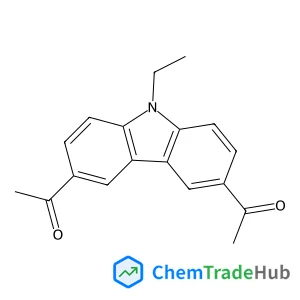
![2-Methyl-2-propanyl 1,6-diazaspiro[3.4]octane-6-carboxylate structure](https://cnstatic.chemtradehub.com/structs/115/1158749-79-1-81ee.webp "2-Methyl-2-propanyl 1,6-diazaspiro[3.4]octane-6-carboxylate structure")
推荐供应商


免责声明
本页面提供的学术期刊信息仅供参考和研究使用。我们与任何期刊出版商均无关联,也不处理投稿事宜。如有投稿相关咨询,请直接联系相关期刊出版商。
如发现页面信息有误,请发送邮件至 support@chemtradehub.com 联系我们。我们将及时核实并处理您的问题。