


A complete look at the multi-channel dissociation of propenal photoexcited at 193 nm: branching ratios and distributions of kinetic energy
文献信息
发布日期
2011-03-21
DOI
10.1039/C0CP01641A
影响因子
3.676
作者
Chanchal Chaudhuri, Shih-Huang Lee
查看原文
摘要
We observed fifteen photofragments upon photolysis of propenal (acrolein, CH2CHCHO) at 193 nm using photofragment translational spectroscopy and selective vacuum-ultraviolet (VUV) photoionization. All the photoproducts arise from nine primary and two secondary dissociation pathways. We measured distributions of kinetic energy of products and determined branching ratios of dissociation channels. Dissociation to CH2CHCO + H and CH2CH + HCO are two major primary channels with equivalent branching ratios of 33%. The CH2CHCO fragment spontaneously decomposes to CH2CH + CO. A proportion of primary products CH2CH from the fission of bond C–C of propenal further decompose to CHCH + H but secondary dissociation HCO → H + CO is negligibly small. Binary dissociation to CH2CH2 (or CH3CH) + CO and concerted three-body dissociation to C2H2 + CO + H2 have equivalent branching ratios of 14%–15%. The other channels have individual branching ratios of ∼1%. The production of HCCO + CH3 indicates the formation of intermediate methyl ketene (CH3CHCO) and the production of CH2CCH + OH and CH2CC + H2O indicate the formation of intermediate hydroxyl propadiene (CH2CCHOH) from isomerization of propenal. Distributions of kinetic energy release and dissociation mechanisms are discussed. This work provides a complete look and profound insight into the multi-channel dissociation mechanisms of propenal. The combination of a molecular beam apparatus and synchrotron VUV ionization allowed us to untangle the complex mechanisms of nine primary and two secondary dissociation channels.
期刊推荐

Science Progress

Journal of Heterocyclic Chemistry
Pure and Applied Chemistry
Pharmacological Reviews

Planta Medica

Israel Journal of Chemistry
Molecular Pharmacology

Proceedings of the National Academy of Sciences of the United States of America

Journal of Organometallic Chemistry
Journal of Physics and Chemistry of Solids
相关文献
Europium(ii)-activated oxonitridosilicate yellow phosphor with excellent quantum efficiency and thermal stability – a robust spectral conversion material for highly efficient and reliable white LEDs
Le Wang, Hong Zhang, Xiao-Jun Wang, Benjamin Dierre, Takayuki Suehiro, Takahashi Takeda, Naoto Hirosaki
2015-05-12
Paper
DOI: 10.1039/C5CP01860A
Origin of enhanced visible light driven water splitting by (Rh, Sb)-SrTiO3
Brindaban Modak, Swapan K. Ghosh
2015-05-06
Paper
DOI: 10.1039/C5CP01374G
Molecular diffusion and dc conductivity perfectly correlated with molecular rotational dynamics in a plastic crystalline electrolyte
M. Zachariah, M. Romanini, P. Tripathi, J. Ll. Tamarit, R. Macovez
2015-05-20
Paper
DOI: 10.1039/C5CP02345A
Phase inversion of ionomer-stabilized emulsions to form high internal phase emulsions (HIPEs)
Tao Zhang, Zhiguang Xu, Zengxiao Cai, Qipeng Guo
2015-05-18
Paper
DOI: 10.1039/C5CP01157D
Molecular functionalization of silicene/Ag(111) by covalent bonds: a DFT study
Régis Stephan, Marie-Christine Hanf, Philippe Sonnet
2015-03-25
Paper
DOI: 10.1039/C5CP00613A
Controlling the thermoelectric properties of polymers: application to PEDOT and polypyrrole
Mario Culebras, Belén Uriol, Clara M. Gómez, Andrés Cantarero
2015-04-28
Paper
DOI: 10.1039/C5CP01940K
S-doped Na2Ti6O13@TiO2 core–shell nanorods with enhanced visible light photocatalytic performance
Chao Liu, Ji-yuan Liang, Rui-rui Han, Yong-zheng Wang, Jin Zhao, Qian-jin Huang, Jing Chen, Wen-hua Hou
2015-05-13
Paper
DOI: 10.1039/C5CP01552A
Exploring the glass transition region: crowding effect, nonergodicity and thermorheological complexity
2015-05-26
Paper
DOI: 10.1039/C5CP00301F
Structural differences between the active sites of the Ni-A and Ni-B states of the [NiFe] hydrogenase: an approach by quantum chemistry and single crystal ENDOR spectroscopy
Jessica L. Barilone, Hideaki Ogata, Wolfgang Lubitz, Maurice van Gastel
2015-05-27
Paper
DOI: 10.1039/C5CP01322D
您可能还喜欢
化合物问答
N-2,2-丙烯基-2-丙烯酰胺(CAS号:2555-13-7)通常如何合成?
N-2,2-丙烯基-2-丙烯酰胺通常通过丙烯酰胺与丙烯基卤化物的缩合反应合成。该反应通常在温和的条件下进行,使用适量的碱如吡啶作为催化剂。反应的选择性良好,产率...
2555-13-7N-Allylacrylamide
化合物问答
什么是1,2-二碘四氟代乙烷(CAS号:354-65-4)?
1,2-二碘四氟代乙烷是一种有机化合物,化学式为C2F4I2,CAS号为354-65-4。它是一种无色透明液体,具有特殊的化学性质和物理性质,包括高沸点、低挥发...
354-65-41,1,2,2-Tetrafluoro-...
化合物问答
3-溴-1H-吡咯[3,2-c]吡啶-4-碳腈(CAS号:1000341-71-8)适用哪些法规指南?
根据GHS(全球化学品统一分类和标签制度),3-溴-1H-吡咯[3,2-c]吡啶-4-碳腈被归类为第2类易燃液体。在欧盟,该化合物需要符合REACH法规的要求,...
1000341-71-83-Bromo-1H-pyrrolo[3...
化合物问答
1-氯甲基萘磺酸(CAS号:87491-79-0)安全吗?
1-氯甲基萘磺酸在使用时需要谨慎,因为它具有一定的刺激性和腐蚀性。操作时应佩戴适当的防护装备,如防化服、手套、护目镜等,避免直接接触皮肤和吸入其蒸汽。
87491-79-01-((Chloromethyl)sul...
化合物问答
二氯(二环戊二烯)铂(CAS号:12083-92-0)的主要用途是什么?
该化合物主要用于催化剂领域,特别是在有机合成中的催化氧化反应以及作为某些药物合成的中间体。此外,它还被研究用于纳米材料的制备。
12083-92-0(1S,7R)-Tricyclo[5.2...
化合物问答
3-溴-7-氯噻吩并[3,2-b]吡啶-6-甲腈(CAS号:798574-82-0)安全吗?
3-溴-7-氯噻吩并[3,2-b]吡啶-6-甲腈在处理时需要谨慎,因其含有溴和氯等强卤素,可能具有一定的刺激性和腐蚀性。使用时应佩戴适当的个人防护装备,避免皮肤...
798574-82-03-Bromo-7-chlorothie...
化合物问答
(R)-1-((R)-2-(2’-二环己基膦苯基)三戊铁基]乙基(双-3,5-三氟甲基苯基)膦(CAS号:494227-32-6)的主要用途是什么?
该化合物主要用于有机合成领域,特别是作为催化剂或配体,在有机合成反应中发挥重要作用。此外,它还可能应用于催化加氢反应、偶联反应等。
494227-32-6Walphos SL-W008-1
化合物问答
3-[6-(Diphenylphosphoryl)-2-naphthyl]-1,10-phenanthroline(CAS号:1480371-38-7)安全吗?
3-[6-(Diphenylphosphoryl)-2-naphthyl]-1,10-phenanthroline在正常使用条件下相对安全,但在操作时应穿戴适当...
1480371-38-73-[6-(Diphenylphosph...
化合物问答
在合成中是否有ETHYL 2-(4-(4,4,5,5-TETRAMETHYL-1,3,2-DIOXABOROLAN-2-YL)CYCLOHEX-3-ENYL)ACETATE(CAS号:1166829-70-4)的替代品?
可以考虑使用类似结构的化合物作为替代品,如2-(4-环戊基环己烯基)乙酸酯,这种化合物在结构上相似,可能在某些合成路径中作为替代品。
1166829-70-4Ethyl [4-(4,4,5,5-te...
化合物问答
如何处理含有3-(3-氨基丙基)丙酮缩甘油(CAS号:131606-42-3)的废料?
处理含有3-(3-氨基丙基)丙酮缩甘油的废料时,首先应确保遵守当地的环保法规。对于危险废物,应进行分类收集,然后送至专业的废物处理设施进行焚烧或安全填埋。在处理...
131606-42-33-[(2,2-Dimethyl-1,3...
来源期刊
Physical Chemistry Chemical Physics

CiteScore:
5.5
自引率:
10.3%
年发文量:
3036
Physical Chemistry Chemical Physics (PCCP) is an international journal co-owned by 19 physical chemistry and physics societies from around the world. This journal publishes original, cutting-edge research in physical chemistry, chemical physics and biophysical chemistry. To be suitable for publication in PCCP, articles must include significant innovation and/or insight into physical chemistry; this is the most important criterion that reviewers and Editors will judge against when evaluating submissions. The journal has a broad scope and welcomes contributions spanning experiment, theory, computation and data science. Topical coverage includes spectroscopy, dynamics, kinetics, statistical mechanics, thermodynamics, electrochemistry, catalysis, surface science, quantum mechanics, quantum computing and machine learning. Interdisciplinary research areas such as polymers and soft matter, materials, nanoscience, energy, surfaces/interfaces, and biophysical chemistry are welcomed if they demonstrate significant innovation and/or insight into physical chemistry. Joined experimental/theoretical studies are particularly appreciated when complementary and based on up-to-date approaches.
推荐化合物
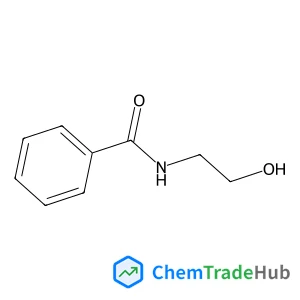
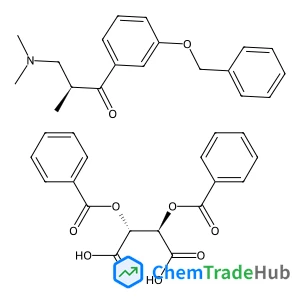
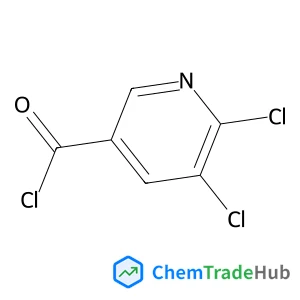
推荐供应商






免责声明
本页面提供的学术期刊信息仅供参考和研究使用。我们与任何期刊出版商均无关联,也不处理投稿事宜。如有投稿相关咨询,请直接联系相关期刊出版商。
如发现页面信息有误,请发送邮件至 support@chemtradehub.com 联系我们。我们将及时核实并处理您的问题。