

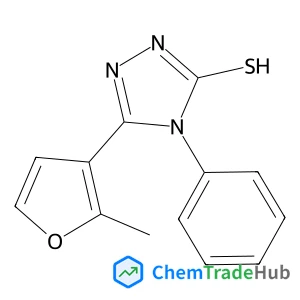
5-(2-Methyl-3-furyl)-4-phenyl-2,4-dihydro-3H-1,2,4-triazole-3-thione
CAS号:
346464-59-3
分子式:
C13H11N3OS
Lei Zhao, Tian Ming, Huanjun Chen, Li Gong, Jian Chen, Jianfang Wang
Room-temperature phosphorescence has been observed and studied on metal-activator-free mesoporous silica. The mesoporous silica was prepared using a nonionic triblock copolymer as the mesostructure-directing agent. The as-calcined products have a well-ordered porous structure and exhibit strong phosphorescence under ultraviolet light excitation. The luminescence spectra are featured with several peaks in the visible region. The luminescence intensity is found to vary as a function of the calcination temperature and reach a maximum around 500–600 °C, but the peak positions remain nearly unchanged. The average luminescence lifetime is several hundred microseconds, and the luminescence can persist for seconds after the excitation is switched off. In addition, due to the moderate calcination temperature, phosphorescent mesoporous silica monoliths with controllable sizes and shapes have been fabricated. Such mesoporous silica materials, including both powders and monoliths, with strong phosphorescence could find promising applications as low-density and eco-friendly phosphors and optically detectable drug carriers.
Lincan Yang, Hongwei Ma, Li Han, Xinyu Hao, Pibo Liu, Heyu Shen, Yang Li
DOI: 10.1039/C7PY01837A
Jiang Zhao, Boao Liu, Zhao Feng, Deyuan Jin, Wanping Dang, Xiaolong Yang, Guijiang Zhou, Zhaoxin Wu
DOI: 10.1039/C7PY01074E
Vasiliki Nikolaou, Fehaid Alsubaie, Alexandre Simula, David J. Fox, David M. Haddleton
DOI: 10.1039/C7PY90190A
Changxu Zhang, Zhiyong Liu, Xinhui Zhang, Zixing Shi, Hongjie Xu, Xiaodong Ma, Jie Yin, Ming Tian
DOI: 10.1039/C7PY01105A
Zhuoling Deng, Maria Zober, Manfred Wagner, Karen Lienkamp, Frederik R. Wurm
DOI: 10.1039/C7PY01777D
N. Guigo, M. Pożycka, M. Delgado, J. Soares, P. V. Mendonça, J. F. J. Coelho, N. Sbirrazzuoli, A. J. D. Silvestre
DOI: 10.1039/C7PY01627A
Sovan Lal Banerjee, Richard Hoskins, Thomas Swift, Stephen Rimmer, Nikhil K. Singha
DOI: 10.1039/C7PY01883E
Siming Chen, Haixin Wang, Zhenjiang Li, Fulan Wei, Hui Zhu, Songquan Xu, Jiaxi Xu, Jingjing Liu, Hailemariam Gebru, Kai Guo
DOI: 10.1039/C7PY02086D
Riccardo Mori, Giuseppe Iasilli, Marco Lessi, Ana Belén Muñoz-García, Michele Pavone, Fabio Bellina, Andrea Pucci
DOI: 10.1039/C7PY01933E
David Rayeroux, Vincent Lapinte, Jean-Jacques Robin, Cécile Bouilhac
DOI: 10.1039/C7PY00632B
2,6-二溴-4,8-双[(2-乙基己基)氧基]苯并[1,2-b:4,5-b']二噻吩是一种有机化合物,分子式为C23H32Br2O2S2。该化合物具有芳香性和...
木聚硫钠通常为无色或白色结晶性粉末,具有吸湿性。其分子量约为121.11 g/mol。木聚硫钠易溶于水,不溶于醇类和其他非极性溶剂。在酸性或碱性溶液中,木聚硫钠...
该化合物在合成、储存和运输过程中需遵循《全球化学品统一分类和标签制度》(GHS)的健康、环境和物理危险分类。在欧洲还需符合《化学品注册、评估、授权和限制》(RE...
1,4-二氮杂双环[2.2.2]辛烷-1,4-二硫酸二酯主要用于有机合成中的保护基团,特别是在保护胺基和硫醇基方面具有广泛应用。此外,它还用于一些特殊化学反应的...
含有4-(Bromomethyl)-2-fluorobenzenesulphonamide的废液应首先进行中和处理,以降低pH值,避免对环境造成腐蚀性影响。随后...
Loureiriol是一种天然化合物,其分子式为C15H22O4。Loureiriol为无色结晶性粉末,具有较高的熔点和良好的热稳定性。其相对分子质量为262....
在合成过程中,可以考虑使用类似结构的化合物作为3-氨基苯甲酰苯胺的替代品,例如N-苯基-3-氰基苯胺或N-苯基-3-硝基苯胺等,这些化合物具有相似的化学性质,可...
4-异氰酰苯基硼酸频哪醇酯主要应用于有机合成、药物化学和材料科学领域。随着绿色化学的发展,该化合物因其高效的官能团转化能力和环境友好性而受到越来越多的关注。近年...
3β-乙酰氧基-7,25-甘遂二烯-24(R)-醇应储存在阴凉、干燥、通风良好的地方,避免直接光照。储存容器应密封,防止空气中的水分和氧气影响化合物的稳定性。建...
应将4-氟-2-甲基-1H-吲哚存放在阴凉、干燥、通风良好的地方,避免直接暴露在光照下。容器应密封,避免与空气中的水蒸气接触。建议在避光、温度不超过25℃的环境...

Physical Chemistry Chemical Physics (PCCP) is an international journal co-owned by 19 physical chemistry and physics societies from around the world. This journal publishes original, cutting-edge research in physical chemistry, chemical physics and biophysical chemistry. To be suitable for publication in PCCP, articles must include significant innovation and/or insight into physical chemistry; this is the most important criterion that reviewers and Editors will judge against when evaluating submissions. The journal has a broad scope and welcomes contributions spanning experiment, theory, computation and data science. Topical coverage includes spectroscopy, dynamics, kinetics, statistical mechanics, thermodynamics, electrochemistry, catalysis, surface science, quantum mechanics, quantum computing and machine learning. Interdisciplinary research areas such as polymers and soft matter, materials, nanoscience, energy, surfaces/interfaces, and biophysical chemistry are welcomed if they demonstrate significant innovation and/or insight into physical chemistry. Joined experimental/theoretical studies are particularly appreciated when complementary and based on up-to-date approaches.
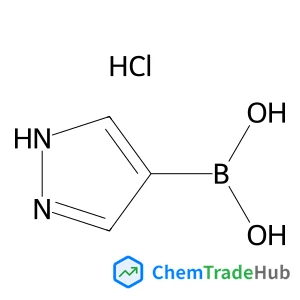
![5,10-Dihydroindeno[2,1-a]indene structure](https://cnstatic.chemtradehub.com/structs/654/6543-29-9-71ca.webp "5,10-Dihydroindeno[2,1-a]indene structure")