











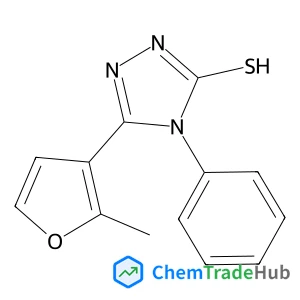
5-(2-Methyl-3-furyl)-4-phenyl-2,4-dihydro-3H-1,2,4-triazole-3-thione
CAS号:
346464-59-3
分子式:
C13H11N3OS
Lincan Yang, Hongwei Ma, Li Han, Xinyu Hao, Pibo Liu, Heyu Shen, Yang Li
The alkynyl-functionalized 1,1-diphenylethylene (DPE) derivative DPE-yne was incorporated into a polymer chain through living anionic polymerization (LAP). An unanticipated coupling reaction occurred and could be restrained by extra feeding of DPE derivatives. Investigating the mechanism of the side coupling indicated that excess P-SLi coupled with the DPE-yne units in the chain when the feed of DPE-yne was insufficient. Although the use of excess DPE-yne can effectively restrain the side coupling during the copolymerization, these conditions afford only an alternating polymer sequence. For the diversity of sequence structure and multi-functionalization, another DPE derivative, DPE-NMe2, was introduced into the polymerization, and the use of an appropriate amount of DPE-NMe2 effectively inhibited the side coupling. Additionally, two functional groups (alkynes and amines) can be incorporated into polymer chains, and their sequence distribution was investigated. The in situ1H NMR method was applied to monitor the chain propagation during the terpolymerization in real time. The in situ1H NMR results showed that the entire sequence is a gradient structure with compositional drift from a predominant St-(DPE-yne) fraction initially to a St-(DPE-NMe2) fraction finally, and the sequence between them is a gradual transition fraction. Consistent with the special sequence distribution in the polymer chain, the terpolymerization kinetic was investigated, and the apparent kinetic constants for each monomer were obtained. The corresponding reactivity ratios (rSt) were also calculated. The rSt-Dyne and rSt-Dnme were simulated as 0.08 and 5.8 during the terpolymerization, respectively. The terpolymerization investigated here not only inhibited the side coupling reaction but also allowed the introduction of a third functional monomer; moreover, its sequence structure shows potentially novel and intriguing properties that could further the applications of functionalized polymers.
R. Durand, D. A. Lerner, C. Charnay
DOI: 10.1039/B210927A
Johan Hoogboom, Joost Clerx, Matthijs B. J. Otten, Alan E. Rowan, Theo Rasing, Roeland J. M. Nolte
DOI: 10.1039/B310860K
Young-Kyu Hong, Jae Ho Bahng, Geunseop Lee, Hanchul Kim, Wondong Kim, Sekyung Lee, Ja-Yong Koo, Jong-Il Park, Woo-ram Lee, Jinwoo Cheon
DOI: 10.1039/B310098G
Jaime Ruiz, Maria Jesus Ruiz Medel, Marie-Christine Daniel, Jean-Claude Blais, Didier Astruc
DOI: 10.1039/B211772J
Jens Hillerich, Herbert Plenio
DOI: 10.1039/B310504K
Stéphane Vila, Isabelle Canet, Jacques Guyot, Georges Jeminet, Loïc Toupet
DOI: 10.1039/B210280N
Stuart T. Onions, Anthony M. Frankin, Peter N. Horton, Michael B. Hursthouse, Craig J. Matthews
DOI: 10.1039/B308512K
Dawn S. Y. Yeo, Rajavel Srinivasan, Mahesh Uttamchandani, Qing Zhu
DOI: 10.1039/B309196A
Carlos Olano, Barrie Wilkinson, Steven J. Moss, Alfredo F. Braña, Carmen Méndez, José A. Salas
DOI: 10.1039/B310648A
Frances T. Docherty, Paul B. Monaghan, Ruth Keir, Duncan Graham, W. Ewen Smith, J. M. Cooper
DOI: 10.1039/B311589E
2,6-二溴-4,8-双[(2-乙基己基)氧基]苯并[1,2-b:4,5-b']二噻吩是一种有机化合物,分子式为C23H32Br2O2S2。该化合物具有芳香性和...
木聚硫钠通常为无色或白色结晶性粉末,具有吸湿性。其分子量约为121.11 g/mol。木聚硫钠易溶于水,不溶于醇类和其他非极性溶剂。在酸性或碱性溶液中,木聚硫钠...
该化合物在合成、储存和运输过程中需遵循《全球化学品统一分类和标签制度》(GHS)的健康、环境和物理危险分类。在欧洲还需符合《化学品注册、评估、授权和限制》(RE...
1,4-二氮杂双环[2.2.2]辛烷-1,4-二硫酸二酯主要用于有机合成中的保护基团,特别是在保护胺基和硫醇基方面具有广泛应用。此外,它还用于一些特殊化学反应的...
含有4-(Bromomethyl)-2-fluorobenzenesulphonamide的废液应首先进行中和处理,以降低pH值,避免对环境造成腐蚀性影响。随后...
Loureiriol是一种天然化合物,其分子式为C15H22O4。Loureiriol为无色结晶性粉末,具有较高的熔点和良好的热稳定性。其相对分子质量为262....
在合成过程中,可以考虑使用类似结构的化合物作为3-氨基苯甲酰苯胺的替代品,例如N-苯基-3-氰基苯胺或N-苯基-3-硝基苯胺等,这些化合物具有相似的化学性质,可...
4-异氰酰苯基硼酸频哪醇酯主要应用于有机合成、药物化学和材料科学领域。随着绿色化学的发展,该化合物因其高效的官能团转化能力和环境友好性而受到越来越多的关注。近年...
3β-乙酰氧基-7,25-甘遂二烯-24(R)-醇应储存在阴凉、干燥、通风良好的地方,避免直接光照。储存容器应密封,防止空气中的水分和氧气影响化合物的稳定性。建...
应将4-氟-2-甲基-1H-吲哚存放在阴凉、干燥、通风良好的地方,避免直接暴露在光照下。容器应密封,避免与空气中的水蒸气接触。建议在避光、温度不超过25℃的环境...

Polymer Chemistry welcomes submissions in all areas of polymer science that have a strong focus on macromolecular chemistry. Manuscripts may cover a broad range of fields, yet no direct application focus is required.
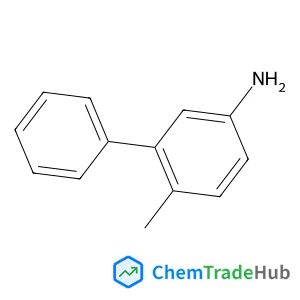
![Benzeneacetic acid, 2-bromo-α-[[(1,1-dimethylethoxy)carbonyl]amino]-, (αS)- structure](https://cnstatic.chemtradehub.com/structs/122/1228547-87-2-f296.webp "Benzeneacetic acid, 2-bromo-α-[[(1,1-dimethylethoxy)carbonyl]amino]-, (αS)- structure")



