


Magnetic and conduction properties in 1D organic radical materials: an ab initio inspection for a challenging quest
文献信息
发布日期
2011-03-07
DOI
10.1039/C0CP02124E
影响因子
3.676
作者
Martin Vérot, Jean-Baptiste Rota, Boris Le Guennic
查看原文
摘要
The chemical control of magnetic and conduction properties for organic radicals is mainly based on t, the resonance integral, and U, the on-site repulsion, used in the Hubbard model. A qualitative analysis based on the competition between the kinetic and the Coulomb contribution, and the expression of the magnetic exchange coupling suggests that U should be roughly 800 cm−1 while the resonance integral |t| should be 200 cm−1 to reach bifunctionality. Ab initio wavefunction-based calculations allowed us to quantitatively measure those quantities for several organic materials considered as 1D systems starting from their reported crystal structures. The extraction of t and U parameters from the exchange coupling constants between neighbouring radicals allowed us to anticipate a possible metallic behaviour. Finally, the impact of chemical changes in the constitutive units is measured to rationalize the macroscopic behaviour modifications. It is shown that the intriguing regime characterized by simultaneous itinerant and localized electrons might be achieved by molecular engineering.
相关文献
Modelling temperature-dependent properties of polymorphic organic molecular crystals
Jonas Nyman, Graeme M. Day
2016-10-31
Paper
DOI: 10.1039/C6CP05447A
Thermal transport properties of antimonene: an ab initio study
Shudong Wang, Wenhua Wang, Guojun Zhao
2016-10-20
Paper
DOI: 10.1039/C6CP06088A
Kinetic and thermodynamic determinants of trace metal partitioning at biointerphases: the role of intracellular speciation dynamics
2016-10-06
Paper
DOI: 10.1039/C6CP05717A
Light-induced charge separation in a P3HT/PC70BM composite as studied by out-of-phase electron spin echo spectroscopy
Mikhail N. Uvarov, Edward J. Reijerse
2016-09-20
Paper
DOI: 10.1039/C6CP05389K
Understanding the phase formation kinetics of nano-crystalline kesterite deposited on mesoscopic scaffolds via in situ multi-wavelength Raman-monitored annealing
Zhuoran Wang, Samir Elouatik, George P. Demopoulos
2016-09-30
Paper
DOI: 10.1039/C6CP05759D
Light-induced dipole moment modulation in diarylethenes: a fundamental study
Andrea Bianco, Giorgio Ferrari, Rossella Castagna, Andrea Rossi, Marco Carminati, Giorgio Pariani, Matteo Tommasini
2016-10-17
Paper
DOI: 10.1039/C6CP05609A
Exploring the mechanism of F282L mutation-caused constitutive activity of GPCR by a computational study
Nan Gao, Tao Liang, Yuan Yuan, Xiuchan Xiao, Yihuan Zhao, Yanzhi Guo, Menglong Li, Xuemei Pu
2016-09-16
Paper
DOI: 10.1039/C6CP03710K
Steric and electric field driven distortions in aromatic molecules: spontaneous and non-spontaneous symmetry breaking
Kalishankar Bhattacharyya, Ammu Surendran, Chandra Chowdhury, Ayan Datta
2016-10-21
Paper
DOI: 10.1039/C6CP05237A
Trapped in the coordination sphere: nitrate ion transfer driven by the cerium(iii/iv) redox couple
Ross J. Ellis, Mrinal K. Bera, Benjamin Reinhart, Mark R. Antonio
2016-11-07
Paper
DOI: 10.1039/C6CP06528G
Elucidation of the local dynamics of domain-III of human serum albumin over the ps–μs time regime using a new fluorescent label
Bhaswati Sengupta, Arusha Acharyya, Pratik Sen
2016-09-26
Paper
DOI: 10.1039/C6CP05743H
您可能还喜欢
化合物问答
什么是2-Bromo-1-(pyrimidin-2-yl)ethanone hydrobromide(CAS号:1588441-02-4)?
2-Bromo-1-(pyrimidin-2-yl)ethanone hydrobromide是一种有机化合物,分子式为C6H5Br2N2O2。它是一种溴代化合...
1588441-02-42-Bromo-1-(2-pyrimid...
化合物问答
在合成中是否有1-正-丁基-3-甲基咪唑鎓三氟甲烷磺酸盐(CAS号:174899-66-2)的替代品?
在合成中,可以考虑使用1-正-丁基-3-甲基咪唑鎓溴酸盐或1-正-丁基-3-甲基咪唑鎓氯酸盐作为替代品。这些化合物在性能上与1-正-丁基-3-甲基咪唑鎓三氟甲烷...
174899-66-21-Butyl-3-methyl-1H-...
化合物问答
2-methyl-5-thiophen-2-ylfuran-3-carboxylic acid(CAS号:651005-90-2)的市场或研究趋势如何?
目前,2-methyl-5-thiophen-2-ylfuran-3-carboxylic acid的研究主要集中在药物化学和新型材料领域。随着生物医药和有机合...
651005-90-22-Methyl-5-(thien-2-...
化合物问答
格列吡嗪杂质H(CAS号:13554-93-3)的主要用途是什么?
格列吡嗪杂质H主要作为药物中间体或副产物存在,并无特定的工业应用。在药物生产中,它可能需要被处理掉以保证最终药物的质量。
13554-93-3Ethyl (2-(4-((cycloh...
化合物问答
如何储存(9ci)-4-甲氧基-1H-苯并咪唑-2-乙腈(CAS号:317817-41-7)?
(9ci)-4-甲氧基-1H-苯并咪唑-2-乙腈应储存在阴凉、干燥、通风良好的地方,避免阳光直射。使用密封的玻璃或塑料容器储存,并确保容器的密封性良好,以防止挥...
317817-41-7(4-Methoxy-1H-benzim...
化合物问答
4,5,9,10-四氢苯芘(CAS号:781-17-9)应用于哪些行业?
4,5,9,10-四氢苯芘在医药行业用于作为某些药物的中间体,在聚合物行业用作添加剂提升材料的热稳定性,在传感器领域作为传感器的敏感材料,在半导体行业中用作掺杂...
781-17-94,5,9,10-Tetrahydrop...
化合物问答
处理叶酸-D4(CAS号:171777-72-3)时应注意哪些实验室安全事项?
处理叶酸-D4时应佩戴个人防护装备(PPE),如手套和实验服。操作应在通风橱内进行,以避免吸入蒸汽或粉尘。如果不慎泄露,应立即用大量清水冲洗,并通知安全人员。参...
171777-72-3Folic Acid-d4
化合物问答
如何处理含有6-溴-2-(三氟乙酰基)-1,2,3,4-四氢异喹啉(CAS号:252331-63-8)的废料?
含有该化合物的废料应收集到专用的容器中,并进行密封以防止挥发和泄漏。在处理前,需进行危险性评估,以确定是否需要进行化学处理。最终处置需遵循当地的危险废物管理规定...
252331-63-81-(6-bromo-3,4-dihyd...
化合物问答
4,5-二氟-2-甲氧基苯甲醛(CAS号:145742-34-3)的主要用途是什么?
4,5-二氟-2-甲氧基苯甲醛主要用作有机合成中的中间体,特别是在制药和农药领域。它可以作为合成其他有机化合物的原料。
145742-34-34,5-difluoro-2-metho...
化合物问答
5-溴-6-三氟甲基吲哚(CAS号:1198475-24-9)安全吗?
5-溴-6-三氟甲基吲哚作为一种化学试剂,具有一定的毒性,需要在通风橱中操作,并采取适当的安全措施以避免吸入、皮肤接触和眼睛刺激。应避免与皮肤和眼睛直接接触,并...
1198475-24-95-bromo-6-(trifluoro...
来源期刊
Physical Chemistry Chemical Physics

CiteScore:
5.5
自引率:
10.3%
年发文量:
3036
Physical Chemistry Chemical Physics (PCCP) is an international journal co-owned by 19 physical chemistry and physics societies from around the world. This journal publishes original, cutting-edge research in physical chemistry, chemical physics and biophysical chemistry. To be suitable for publication in PCCP, articles must include significant innovation and/or insight into physical chemistry; this is the most important criterion that reviewers and Editors will judge against when evaluating submissions. The journal has a broad scope and welcomes contributions spanning experiment, theory, computation and data science. Topical coverage includes spectroscopy, dynamics, kinetics, statistical mechanics, thermodynamics, electrochemistry, catalysis, surface science, quantum mechanics, quantum computing and machine learning. Interdisciplinary research areas such as polymers and soft matter, materials, nanoscience, energy, surfaces/interfaces, and biophysical chemistry are welcomed if they demonstrate significant innovation and/or insight into physical chemistry. Joined experimental/theoretical studies are particularly appreciated when complementary and based on up-to-date approaches.
推荐化合物
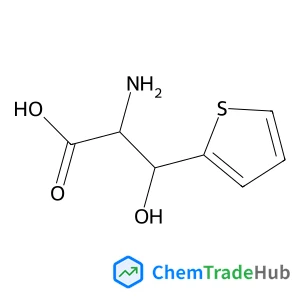
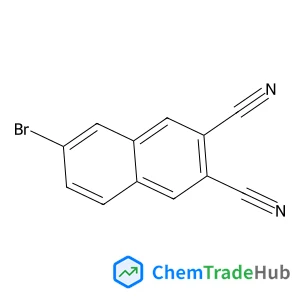
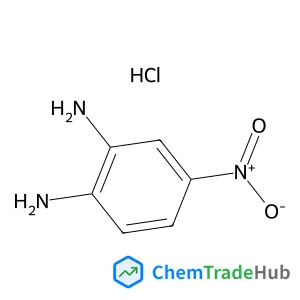
推荐供应商





免责声明
本页面提供的学术期刊信息仅供参考和研究使用。我们与任何期刊出版商均无关联,也不处理投稿事宜。如有投稿相关咨询,请直接联系相关期刊出版商。
如发现页面信息有误,请发送邮件至 support@chemtradehub.com 联系我们。我们将及时核实并处理您的问题。