









Electronic coherences and vibrational wave-packets in single molecules studied with femtosecond phase-controlled spectroscopy
文献信息
发布日期
2011-01-14
DOI
10.1039/C0CP02231D
影响因子
3.676
作者
Richard Hildner, Daan Brinks, Fernando D. Stefani
查看原文
摘要
Employing femtosecond pulse-shaping techniques we investigate ultrafast, coherent and incoherent dynamics in single molecules at room temperature. In first experiments single molecules are excited into their purely electronic 0–0 transition by phase-locked double-pulse sequences with pulse durations of 75 fs and 20 nm spectral band width. Their femtosecond kinetics can then be understood in terms of a 2-level system and modelled with the optical Bloch equations. We find that we observe the coherence decay in single molecules, and the purely electronic dephasing times can be retrieved directly in the time domain. In addition, the Rabi-frequencies and thus the transition dipole moments of single molecules are determined from these data. Upon excitation of single molecules into a vibrational level of the electronically excited state also incoherent intra-molecular vibrational relaxation is recorded. Increasing the spectral band width of the excitation pulses to up to 120 nm (resulting in a transform-limited pulse width of 15 fs) coherent superpositions of excited state vibrational modes, i.e. vibrational wave packets, are excited. The wave-packet oscillations in the excited state potential energy surface are followed in time by a phase-controlled pump–probe scheme, which permits to record wave packet interference, and to determine the energies of vibrational modes and their coupling strengths to the electronic transition.
相关文献
Nonstoichiometric polycondensation based on Friedel–Crafts acylation in superacids for the syntheses of aromatic polyketones
Kazuya Matsumoto, Takayuki Ogawa, Mitsutoshi Jikei
2017-10-12
Communication
DOI: 10.1039/C7PY01609C
A design strategy for the construction of 2D heteropore covalent organic frameworks based on the combination of C2v and D3h symmetric building blocks
En-Cheng Liu, Qiao-Yan Qi, Kaijia Xu, Guo-Fang Jiang, Xin Zhao
2017-12-18
Communication
DOI: 10.1039/C7PY01927K
A first study on copolymers of a methacrylate containing the 2-(hydroxyimino)aldehyde group and OEGMA. RAFT polymerization and assessment of thermal and photoresponsive polymer behavior
Francesca D'Acunzo, Mariangela Clemente, Giampiero Proietti
2017-06-23
Paper
DOI: 10.1039/C7PY00975E
Photosensitive poly(o-nitrobenzyloxycarbonyl-l-lysine)-b-PEO polypeptide copolymers: synthesis, multiple self-assembly behaviors, and the photo/pH-thermo-sensitive hydrogels
Pan Li, Jiacheng Zhang, Chang-Ming Dong
2017-11-02
Paper
DOI: 10.1039/C7PY01574G
Silyl-based initiators for two-photon polymerization: from facile synthesis to quantitative structure–activity relationship analysis
Zhiquan Li, Arnulf Rosspeintner, Peng Hu, Guigang Zhu, Yuansheng Hu, Xiang Xiong, Ruwen Peng, Mu Wang, Xiaoya Liu, Ren Liu
2017-10-23
Paper
DOI: 10.1039/C7PY01360D
Bio-inspired peptide decorated dendrimers for a robust antibacterial coating on hydroxyapatite
Xiao Yang, Libang He, Xinyuan Xu, Yanpeng Liu, Yuebo Liu, Yuan Gao, Qin Huang, Kunneng Liang, Chunmei Ding, Jiyao Li, Changsheng Zhao, Jianshu Li
2017-06-23
Paper
DOI: 10.1039/C7PY00811B
Self-stabilized, hydrophobic or PEGylated paclitaxel polymer prodrug nanoparticles for cancer therapy
Yinyin Bao, Elise Guégain, Julie Mougin, Julien Nicolas
2018-01-10
Paper
DOI: 10.1039/C7PY01918A
Coordination polymers based on bis-ZnII salphen complexes and functional ditopic ligands for efficient polymer light-emitting diodes (PLEDs)
Jiang Zhao, Boao Liu, Zhao Feng, Deyuan Jin, Wanping Dang, Xiaolong Yang, Guijiang Zhou, Zhaoxin Wu
2017-08-04
Paper
DOI: 10.1039/C7PY01074E
Nano-porous structures via self-assembly of amphiphilic triblock copolymers: influence of solvent and molecular weight
S. Nehache, M. Semsarilar, A. Deratani, M. In, P. Dieudonné-George, J. Lai Kee Him, P. Bron, D. Quémener
2017-12-01
Paper
DOI: 10.1039/C7PY01853C
Entry of nanoparticles into cells: the importance of nanoparticle properties
2017-12-18
Review Article
DOI: 10.1039/C7PY01603D
您可能还喜欢
化合物问答
什么是2,6-二溴-4,8-双[(2-乙基己基)氧基]苯并[1,2-b:4,5-b']二噻吩(CAS号:1226782-13-3)?
2,6-二溴-4,8-双[(2-乙基己基)氧基]苯并[1,2-b:4,5-b']二噻吩是一种有机化合物,分子式为C23H32Br2O2S2。该化合物具有芳香性和...
1226782-13-32,6-Dibromo-4,8-bis[...
化合物问答
木聚硫钠(CAS号:37319-17-8)的物理化学性质是什么?
木聚硫钠通常为无色或白色结晶性粉末,具有吸湿性。其分子量约为121.11 g/mol。木聚硫钠易溶于水,不溶于醇类和其他非极性溶剂。在酸性或碱性溶液中,木聚硫钠...
37319-17-8Pentosan
化合物问答
2-甲氧基-4-(三氟甲基)苄溴, JRD(CAS号:886500-59-0)适用哪些法规指南?
该化合物在合成、储存和运输过程中需遵循《全球化学品统一分类和标签制度》(GHS)的健康、环境和物理危险分类。在欧洲还需符合《化学品注册、评估、授权和限制》(RE...
886500-59-02-Methoxy-4-(trifluo...
化合物问答
1,4-Diazoniabicyclo[2.2.2]octane-1,4-disulfinate(CAS号:119752-83-9)的主要用途是什么?
1,4-二氮杂双环[2.2.2]辛烷-1,4-二硫酸二酯主要用于有机合成中的保护基团,特别是在保护胺基和硫醇基方面具有广泛应用。此外,它还用于一些特殊化学反应的...
119752-83-91,4-Diazabicyclo[2.2...
化合物问答
如何处理含有4-(Bromomethyl)-2-fluorobenzenesulphonamide(CAS号:1645275-47-3)的废料?
含有4-(Bromomethyl)-2-fluorobenzenesulphonamide的废液应首先进行中和处理,以降低pH值,避免对环境造成腐蚀性影响。随后...
1645275-47-34-(Bromomethyl)-2-fl...
化合物问答
Loureiriol(CAS号:479195-44-3)的物理化学性质是什么?
Loureiriol是一种天然化合物,其分子式为C15H22O4。Loureiriol为无色结晶性粉末,具有较高的熔点和良好的热稳定性。其相对分子质量为262....
479195-44-3Loureiriol
化合物问答
在合成中是否有3-氨基苯甲酰苯胺(CAS号:14315-16-3)的替代品?
在合成过程中,可以考虑使用类似结构的化合物作为3-氨基苯甲酰苯胺的替代品,例如N-苯基-3-氰基苯胺或N-苯基-3-硝基苯胺等,这些化合物具有相似的化学性质,可...
14315-16-33-Amino-N-phenylbenz...
化合物问答
4-异氰酰苯基硼酸频哪醇酯(CAS号:380430-64-8)的市场或研究趋势如何?
4-异氰酰苯基硼酸频哪醇酯主要应用于有机合成、药物化学和材料科学领域。随着绿色化学的发展,该化合物因其高效的官能团转化能力和环境友好性而受到越来越多的关注。近年...
380430-64-82-(4-Isocyanatopheny...
化合物问答
如何储存3β-乙酰氧基-7,25-甘遂二烯-24(R)-醇(CAS号:1352001-09-2)?
3β-乙酰氧基-7,25-甘遂二烯-24(R)-醇应储存在阴凉、干燥、通风良好的地方,避免直接光照。储存容器应密封,防止空气中的水分和氧气影响化合物的稳定性。建...
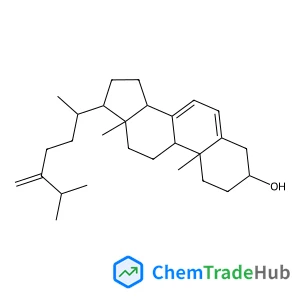
1352001-09-23β-acetoxy-eupha- 7,...
化合物问答
如何储存4-氟-2-甲基-1H-吲哚(CAS号:1260383-51-4)?
应将4-氟-2-甲基-1H-吲哚存放在阴凉、干燥、通风良好的地方,避免直接暴露在光照下。容器应密封,避免与空气中的水蒸气接触。建议在避光、温度不超过25℃的环境...
1260383-51-44-Fluoro-2-methyl-1H...
来源期刊
Physical Chemistry Chemical Physics

CiteScore:
5.5
自引率:
10.3%
年发文量:
3036
Physical Chemistry Chemical Physics (PCCP) is an international journal co-owned by 19 physical chemistry and physics societies from around the world. This journal publishes original, cutting-edge research in physical chemistry, chemical physics and biophysical chemistry. To be suitable for publication in PCCP, articles must include significant innovation and/or insight into physical chemistry; this is the most important criterion that reviewers and Editors will judge against when evaluating submissions. The journal has a broad scope and welcomes contributions spanning experiment, theory, computation and data science. Topical coverage includes spectroscopy, dynamics, kinetics, statistical mechanics, thermodynamics, electrochemistry, catalysis, surface science, quantum mechanics, quantum computing and machine learning. Interdisciplinary research areas such as polymers and soft matter, materials, nanoscience, energy, surfaces/interfaces, and biophysical chemistry are welcomed if they demonstrate significant innovation and/or insight into physical chemistry. Joined experimental/theoretical studies are particularly appreciated when complementary and based on up-to-date approaches.
推荐化合物
推荐供应商





免责声明
本页面提供的学术期刊信息仅供参考和研究使用。我们与任何期刊出版商均无关联,也不处理投稿事宜。如有投稿相关咨询,请直接联系相关期刊出版商。
如发现页面信息有误,请发送邮件至 support@chemtradehub.com 联系我们。我们将及时核实并处理您的问题。