



Model oxide supported MoS2 HDS catalysts: structure and surface properties
文献信息
发布日期
2011-01-31
DOI
10.1039/C0CY00050G
影响因子
6.119
作者
Federico Cesano, Serena Bertarione, Andrea Piovano, Giovanni Agostini, Mohammed Mastabur Rahman, Elena Groppo, Francesca Bonino, Domenica Scarano, Carlo Lamberti, Silvia Bordiga, Luciano Montanari, Lucia Bonoldi, Roberto Millini, Adriano Zecchina
查看原文
摘要
Supported hydrodesulfidation (HDS) MoS2/SiO2, MoS2/γ-Al2O3 and MoS2/MgO catalysts having a model character have been synthesized by using CS2 as the sulfiding agent and deeply investigated by means of several techniques. XRPD, HRTEM, Raman and UV-Vis methods have been applied to obtain information on the morphology and the structure of the catalysts as well as on the vibrational and spectroscopic properties. It is shown that, when compared with HRTEM results, XRPD, Raman and UV-Vis data give realistic information on the stacking degree, on the particle size distribution and on the heterogeneity of supported MoS2 particles on the various supports. (S K-, Mo L3- and K- edges) EXAFS and XANES spectroscopies have been also used to set up the best sulfidation procedure. UV-vis analysis under controlled atmosphere has been performed to understand the presence of sulfur vacancies and the valence state of Mo ions associated with them. To explore the structure of coordinatively unsaturated Mo sites after reducing or sulfiding treatments (with CS2 or, occasionally, with H2S), in situFTIR of adsorbed CO has been performed. It is demonstrated that CO is a sensitive probe for coordinatively unsaturated sites and that the formation of sulfur vacancies on the MoS2 surface upon reduction in pure H2 at 673 K is accompanied by an increase of the coordinative unsaturation and a decrease of the valence state of a fraction of surface Mo cations, mainly located on corner and edge sites. Furthermore, it is demonstrated that this process can be reversed upon interaction with the sulfiding agent and that this reversible behavior is really mimicking some of the elementary acts occurring in the HDS process. The complexity of the IR results suggests that the adopted reduction procedure in pure H2 at 673 K induces the formation of several types of sulfur vacancies, presumably located in different crystallographic positions. It is also concluded that the sulfiding steps are strongly involving the surface of the support and that reductive treatments at high T in H2 are causing sulfur depletion not only from supported MoS2 particles, but also from the supporting phase. The involvement of the support is particularly relevant for Al2O3 and MgO.
期刊推荐
Nature Medicine
Crystallography Reports
Russian Journal of Coordination Chemistry
Current Opinion in Colloid & Interface Science
Russian Journal of Organic Chemistry

Saudi Pharmaceutical Journal
Journal of Saudi Chemical Society
Organic Process Research & Development
Russian Journal of General Chemistry

Chemistry Education Research and Practice
相关文献
Stereochemistry of contiguous cyclopropane formation from cascade cyclization of a skipped dienyl homoallyl triflate
Christopher M. Lincoln, James D. White, Alexandre F. T. Yokochi
2004-10-28
Communication
DOI: 10.1039/B412811G
Carene terpenoids by gold-catalyzed cycloisomerization reactions
Alois Fürstner, Peter Hannen
2004-10-06
Communication
DOI: 10.1039/B412354A
Supramolecular control of complexation-induced fluorescence change of water-soluble, β-cyclodextrin-modified CdS quantum dots
Kumaranand Palaniappan, Stephen A. Hackney, Jian Liu
2004-10-11
Communication
DOI: 10.1039/B409075F
Block copolymer libraries: modular versatility of the macromolecular Lego® system
Bas G. G. Lohmeijer, Daan Wouters, Zhihui Yin, Ulrich S. Schubert
2004-10-25
Communication
DOI: 10.1039/B411777H
Concerning the relative importance of enantiomorphic site vs. chain end control in the stereoselective polymerization of lactides: reactions of (R,R-salen)- and (S,S-salen)–aluminium alkoxides LAlOCH2R complexes (R = CH3 and S-CHMeCl)
Malcolm H. Chisholm, Nathan J. Patmore, Zhiping Zhou
2004-11-25
Communication
DOI: 10.1039/B413266A
Reactivity of a N-heterocyclic carbene, 1,3-di-(1-adamantyl) imidazol-2-ylidene, with a pseudo-acid: structural characterization of Claisen condensation adduct
Gabriela A. Grasa, Rohit Singh, Natalie M. Scott, Edwin D. Stevens, Steven P. Nolan
2004-11-04
Communication
DOI: 10.1039/B410986D
Synthesis and characterization of multiferroic BiFeO3 nanotubes
Tae-Jin Park, Yuanbing Mao
2004-10-13
Communication
DOI: 10.1039/B409988E
Photoactive dimesogen having different pathways of light driven phase transitions at different temperatures
V. Ajay Mallia, Nobuyuki Tamaoki
2004-10-01
Communication
DOI: 10.1039/B410902C
Doubly N-fused meso-aryl substituted hexaphyrins(1.1.1.1.1.1)
Masaaki Suzuki, Ryuichiro Taniguchi
2004-10-06
Communication
DOI: 10.1039/B410011E
A novel clean catalytic method for waste-free modification of polysaccharides by oxidation
Svetlana L. Kachkarova-Sorokina, Pierre Gallezot, Alexander B. Sorokin
2004-11-04
Communication
DOI: 10.1039/B411694A
您可能还喜欢
化合物问答
如何处理含有8-氯咪唑并[1,2-A]吡嗪(CAS号:69214-33-1)的废料?
处理含有8-氯咪唑并[1,2-A]吡嗪的废料时,应首先将其收集并进行化学回收或降解。如果无法回收,需采用安全的化学处理方法,如中和、氧化还原或沉淀。处理过程中需...
69214-33-18-chloroimidazo[1,2-...
化合物问答
Calhex 231 hydrochloride(CAS号:2387505-78-2)适用哪些法规指南?
Calhex 231 hydrochloride 需要遵循《全球化学品统一分类和标签制度》(GHS)的分类和标签要求,以及欧盟的《化学品注册、评估、授权和限制条...
2387505-78-24-Chloro-N-[(1S,2S)-...
化合物问答
11-Beta,17-alpha,21-三羟基-5-beta-孕烯-3,20-二酮(CAS号:1482-50-4)的物理化学性质是什么?
11-Beta,17-alpha,21-三羟基-5-beta-孕烯-3,20-二酮是一种无色结晶性粉末,分子量为372.45 g/mol。该化合物在水中的溶解度...
1482-50-45β-Dihydrocortisol
化合物问答
处理5-异丙基-1,3,4-恶二唑-2-羧酸(CAS号:944907-13-5)时应注意哪些实验室安全事项?
处理5-异丙基-1,3,4-恶二唑-2-羧酸时应注意以下安全事项:穿戴适当的个人防护装备,包括实验室外套、手套和护目镜;操作应在通风橱中进行,以减少吸入或接触有...
944907-13-55-Isopropyl-1,3,4-ox...
化合物问答
benzyl 3-bromopropanoate(CAS号:90841-55-7)安全吗?
Benzyl 3-bromopropanoate属于有毒物质,吸入、摄入或皮肤接触均可能对人体造成伤害。操作时应佩戴防护眼镜、口罩和手套,避免吸入蒸汽和直接接触...
90841-55-7Benzyl 3-bromopropan...
化合物问答
什么是(R)-N-苄氧羰基-3,4-二氢-1H-异喹啉羧酸(CAS号:151004-88-5)?
(R)-N-苄氧羰基-3,4-二氢-1H-异喹啉羧酸是一种含有苄氧羰基和异喹啉环结构的化合物,分子式为C17H15NO3。它是一种有机化合物,具有一定的生物活性...
151004-88-5(1R)-2-[(Benzyloxy)c...
化合物问答
在合成中是否有1-苄基吡啶嗡-3-羧酸盐(CAS号:15990-43-9)的替代品?
可以考虑使用1-苄基吡啶-3-羧酸盐作为1-苄基吡啶嗡-3-羧酸盐的替代品。此外,还可以探索其他类似物,如1-苄基吡啶-3-氨基甲酸酯等。具体的替代品选择需根据...
15990-43-91-Benzyl-3-pyridiniu...
化合物问答
(2,6-二甲基吡啶-3-基)甲醇(CAS号:582303-10-4)安全吗?
(2,6-二甲基吡啶-3-基)甲醇在使用时需注意安全,应避免吸入其蒸汽,接触皮肤和眼睛。操作应在通风良好的环境中进行,佩戴适当的个人防护装备。
582303-10-4(2,6-Dimethyl-3-pyri...
化合物问答
5-溴-2-乙烯基吡啶(CAS号:226883-52-9)的物理化学性质是什么?
5-溴-2-乙烯基吡啶是一种有机化合物,外观为白色固体,具有良好的结晶性。分子量约为190.03 g/mol。它的溶解性在水中较差,但在有机溶剂如二氯甲烷、甲醇...
226883-52-95-Bromo-2-vinylpyrid...
化合物问答
2-羟基-3-硝基-5-甲基吡啶(CAS号:7464-14-4)应用于哪些行业?
2-羟基-3-硝基-5-甲基吡啶主要应用于医药、聚合物和半导体行业。在医药领域,它可以用作合成其他药物的中间体。在聚合物领域,它可以作为功能性单体参与聚合反应,...
7464-14-45-Methyl-3-nitro-2(1...
来源期刊
Catalysis Science & Technology

CiteScore:
5.91
自引率:
4.5%
年发文量:
600
Catalysis Science & Technology is committed to publishing research reporting high-quality, cutting-edge developments across the catalysis community at large. The journal places equal focus on publications from the heterogeneous, homogeneous, thermo-, electro-, photo-, organo- and biocatalysis communities. Works published in the journal feature a balanced mix of fundamental, technology-oriented, experimental, computational, digital and data-driven original research, thus appealing to catalysis practitioners in both academic and industrial environments. Original research articles published in the journal must demonstrate new catalytic discoveries and/or methodological advances that represent a significant advance on previously published work, from the molecular to the process scales. We welcome rigorous research in a wide range of timely or emerging applications related to the environment, health, energy and materials. Catalysis Science & Technology publishes Communications, Articles, Reviews and Perspectives. More details regarding manuscript types may be found in the Information for Authors section.
推荐化合物
![N-[(1S,2R,4S)-2-Amino-4-(dimethylcarbamoyl)cyclohexyl]-N'-(5-chloro-2-pyridinyl)ethanediamide structure](https://cnstatic.chemtradehub.com/structs/480/480452-37-7-0898.webp "N-[(1S,2R,4S)-2-Amino-4-(dimethylcarbamoyl)cyclohexyl]-N'-(5-chloro-2-pyridinyl)ethanediamide structure")
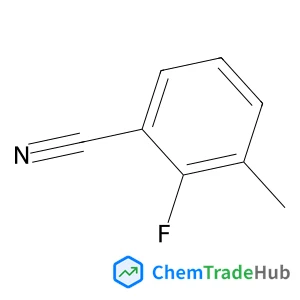
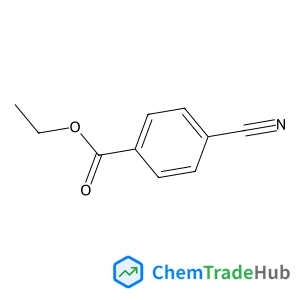
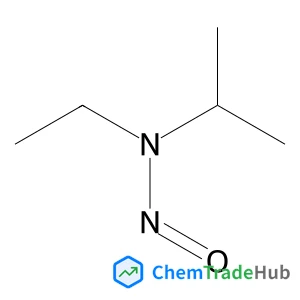
推荐供应商






免责声明
本页面提供的学术期刊信息仅供参考和研究使用。我们与任何期刊出版商均无关联,也不处理投稿事宜。如有投稿相关咨询,请直接联系相关期刊出版商。
如发现页面信息有误,请发送邮件至 support@chemtradehub.com 联系我们。我们将及时核实并处理您的问题。