![Benzyl spiro[indole-3,4'-piperidine]-1(2H)-carboxylate hydrochloride (1:1) structure](https://cnstatic.chemtradehub.com/structs/159/159635-46-8-8de0.webp "Benzyl spiro[indole-3,4'-piperidine]-1(2H)-carboxylate hydrochloride (1:1) structure")
Benzyl spiro[indole-3,4'-piperidine]-1(2H)-carboxylate hydrochloride (1:1)
CAS号:
159635-46-8
分子式:
C20H23ClN2O2
Anish Cyriac, Sang Hwan Lee, Bun Yeoul Lee
When a small amount of vinylcyclohexene dioxide ([diepoxide]/[cat] = 60, 0.14 w% propylene oxide) is additionally added in CO2/propylene oxide copolymerization catalyzed by a highly active catalyst, cobalt(III) complex of a Salen-type ligand tethered by four quaternary ammonium salts (2), some polymer chains are connected consequently resulting in an increased molecular weight of up to Mw = 606000 and broadened molecular weight distribution. The same chain-connecting process is also applicable in the presence of chain transfer agent, tricarballylic acid (C3H5(CO2H)3), 1,2,3,4-butanetetracarboxylic acid (C4H6(CO2H)4), or adipic acid (C4H8(CO2H)2), although a higher amount of diepoxide is needed. Gel permeation chromatography reveals multi-modal distributions along with a tail at a high molecular weight portion due to formation of the connected chains. The shape of the chain transfer agent varies the chain topology, but the rheological properties are not influenced by the topology change. The poly(propylene carbonate)-block-poly(ethylene glycol) copolymer, which is obtained by feeding poly(ethylene glycol)-OH as a chain transfer agent, becomes tough in the tensile properties and shows a high shear sensitivity in the rheological properties when some chains are connected using diepoxide.

Journal of Saudi Chemical Society

Russian Journal of General Chemistry
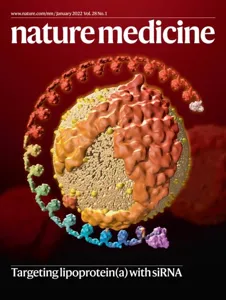
Nature Medicine

Current Opinion in Colloid & Interface Science

Russian Chemical Bulletin

Current Opinion in Solid State & Materials Science

Crystallography Reports

Chemical Communications

Chemistry Education Research and Practice

Journal of Peptide Science
Wang Guobao, Hongli Chen, Wen Zhong, Xiaozhong Qiu
DOI: 10.1039/C4PY00631C
Hui Yang, Yunhao Bai, Banglu Yu, Zhiqiang Wang, Xi Zhang
DOI: 10.1039/C4PY01003E
Shiyang Shao, Junqiao Ding, Lixiang Wang, Xiabin Jing, Fosong Wang
DOI: 10.1039/C4PY00698D
Ya-Xin Xue, Jia-Li Chen, Zhi-Qiang Jiang, Zhipeng Yu, Na Liu, Jun Yin, Yuan-Yuan Zhu, Zong-Quan Wu
DOI: 10.1039/C4PY01023J
Melis Kesik, Huseyin Akbulut, Saniye Söylemez, Şevki Can Cevher, Gönül Hızalan, Yasemin Arslan Udum, Takeshi Endo, Shuhei Yamada, Yusuf Yağcı
DOI: 10.1039/C4PY00850B
Qing Wan, Liucheng Mao, Meiying Liu, Ke Wang, Guangjian Zeng, Dazhuang Xu, Hongye Huang, Xiaoyong Zhang, Yen Wei
DOI: 10.1039/C5PY01238D
Yves Gnanou
DOI: 10.1039/C4PY00815D
Andreas Oesterreicher, Johannes Wiener, Meinhart Roth, Andreas Moser, Robert Gmeiner, Matthias Edler, Gerald Pinter, Thomas Griesser
DOI: 10.1039/C6PY01132B
Pu Xiao, Frédéric Dumur, Jing Zhang, Didier Gigmes, Jean Pierre Fouassier, Jacques Lalevée
DOI: 10.1039/C4PY00925H
(3-氨苯基)环丙基甲酮主要用于合成化学中间体,特别是在药物化学领域作为原料。它还可以用于有机合成反应中,作为催化剂或反应物。
亚胺菌应储存在干燥、阴凉处,避免直接暴露于光线下。建议使用密封容器储存,防止吸潮和污染。具体的储存条件应参考产品的安全数据表(MSDS)或药品说明书。
2-氯-2,2-二氟乙酰胺在医药、聚合物、传感器、半导体等领域有广泛应用。在医药领域,它作为中间体用于合成其他药物;在聚合物领域,用作聚合引发剂或稳定剂;在传感...
在处理4-甲基-3-硝基-1,1-联苯时,应佩戴手套、护目镜和实验室外套等个人防护装备(PPE),确保在通风橱中操作以减少吸入风险。若发生泄露,应立即使用沙子或...
该化合物广泛应用于医药、聚合物和半导体行业。在医药领域,它是某些药物中间体的重要组成部分;在聚合物领域,可用作增塑剂;在半导体行业,可用于制造光刻胶。
芬苯哒唑砜-D3标准品的替代品可能包括类似的苯并咪唑类化合物,如芬苯哒唑本身或其非同位素标记版本。这些替代品在结构上与芬苯哒唑砜-D3相似,但在具体应用中需进行...
2-氟-4-硝基苯乙酸可以通过一系列化学反应合成,通常是从4-氟苯胺开始,首先进行硝化反应生成4-氟-2-硝基苯胺,然后进行乙酰化反应得到目标产物。具体的合成步...
2-氟-4-甲氧基苯乙酸通常通过将4-甲氧基苯乙酸与氟化试剂(如氟化氰)反应来合成。反应通常在无水条件下进行,使用催化剂如六氟磷酸锂或四氟硼酸锂以提高选择性和产...
4SC 202;4SC202是一种化学化合物,其化学名称为(2E)-N-(2-氨基苯基)-3-(1-{[4-(1-甲基-1H-吡唑-4-基)苯基]磺酰基}-1H...

Polymer Chemistry welcomes submissions in all areas of polymer science that have a strong focus on macromolecular chemistry. Manuscripts may cover a broad range of fields, yet no direct application focus is required.
![4-[(2,4-Dihydroxyphenyl)diazenyl]-5-hydroxy-2,7-naphthalenedisulfonic acid structure](https://cnstatic.chemtradehub.com/structs/362/3627-01-8-79ac.webp "4-[(2,4-Dihydroxyphenyl)diazenyl]-5-hydroxy-2,7-naphthalenedisulfonic acid structure")