


Molecular motion and ion diffusion in choline chloride based deep eutectic solvents studied by 1H pulsed field gradient NMR spectroscopy
文献信息
发布日期
2011-10-28
DOI
10.1039/C1CP22554E
影响因子
3.676
作者
Carmine D'Agostino, Robert C. Harris, Andrew P. Abbott, Lynn F. Gladden, Mick D. Mantle
查看原文
摘要
Deep Eutectic Solvents (DESs) are a novel class of solvents with potential industrial applications in separation processes, chemical reactions, metal recovery and metal finishing processes such as electrodeposition and electropolishing. Macroscopic physical properties such as viscosity, conductivity, eutectic composition and surface tension are already available for several DESs, but the microscopic transport properties for this class of compounds are not well understood and the literature lacks experimental data that could give a better insight into the understanding of such properties. This paper presents the first pulsed field gradient nuclear magnetic resonance (PFG-NMR) study of DESs. Several choline chloride based DESs were chosen as experimental samples, each of them with a different associated hydrogen bond donor. The molecular equilibrium self-diffusion coefficient of both the choline cation and hydrogen bond donor was probed using a standard stimulated echo PFG-NMR pulse sequence. It is shown that the increasing temperature leads to a weaker interaction between the choline cation and the correspondent hydrogen bond donor. The self-diffusion coefficients of the samples obey an Arrhenius law temperature-dependence, with values of self-diffusivity in the range of [10−10–10−13 m2 s−1]. In addition, the results also highlight that the molecular structure of the hydrogen bond donor can greatly affect the mobility of the whole system. While for ethaline, glyceline and reline the choline cation diffuses slower than the associated hydrogen bond donor, reflecting the trend of molecular size and molecular weight, the opposite behaviour is observed for maline, in which the hydrogen bond donor, i.e. malonic acid, diffuses slower than the choline cation, with self-diffusion coefficients values of the order of 10−13 m2 s−1 at room temperature, which are remarkably low values for a liquid. This is believed to be due to the formation of extensive dimer chains between malonic acid molecules, which restricts the mobility of the whole system at low temperature (<30 °C), with malonic acid and choline chloride having almost identical diffusivity values. Diffusion and viscosity data were combined together to gain insights into the diffusion mechanism, which was found to be the same as for ionic liquids with discrete anions.
期刊推荐
Medicinal Chemistry Research
Journal of Asian Natural Products Research

Colloid Journal
Bioorganic & Medicinal Chemistry Letters

Herald of the Russian Academy of Sciences
Biocatalysis and Biotransformation
Bioorganic & Medicinal Chemistry
Main Group Chemistry

Polycyclic Aromatic Compounds

NDT & E International
相关文献
Intramolecularly enhanced molecular tweezers with unusually strong binding for aromatic guests in unfavorable solvents
Xiaoyu Xing, Yan Zhao
2018-05-07
Communication
DOI: 10.1039/C8OB00786A
Efficient enantioselective synthesis of CF2H-containing dispiro[benzo[b]thiophene-oxindole-pyrrolidine]s via organocatalytic cycloaddition
Yabo Deng, Yongzhen Li, Yalan Wang, Shuo Sun, Sichao Ma, Pengfei Jia, Wenguang Li, Kairong Wang, Wenjin Yan
2021-11-24
Research Article
DOI: 10.1039/D1QO01392K
Design of chiral ferrocenylphosphine-spiro phosphonamidite ligands for ruthenium-catalyzed highly enantioselective coupling of 1,2-diols with amines
Xiao Yi, Yirui Chen, An Huang, Dingguo Song, Jiaying He, Fei Ling, Weihui Zhong
2021-11-03
Research Article
DOI: 10.1039/D1QO01443A
Palladium-catalyzed direct construction of oxazoline-containing polycyclic scaffolds via tandem addition/cyclization of nitriles and arylboronic acids
Shu-Qiang Cui, Na Cheng, Qian-Qian Ma, Zhong-Lin Wei
2021-11-15
Research Article
DOI: 10.1039/D1QO01260F
Synthesis of amidines via iron-catalyzed dearomative amination of β-naphthols with oxadiazolones
Yan-Hui Fan, Xiao-Yu Guan, Wen-Pei Li, Cheng-Zhou Lin, De-Xian Bing, Mei-Zhi Sun, Guo Cheng, Jing Cao, Jun-Jie Chen, Qing-Hai Deng
2021-11-30
Research Article
DOI: 10.1039/D1QO01687C
Regioselective synthesis and biological evaluation of N-substituted 2-aminoquinazolin-4-ones
Zhen-Yuan Liao, Wen-Hsiung Yeh, Pen-Yuan Liao, Yu-Ting Liu, Ying-Cheng Chen, Yi-Hung Chen, Tsung-Han Hsieh, Chia-Chi Lin, Ming-Hsuan Lu, Yi-Song Chen, Ming-Chih Hsu, Tsai-Kun Li, Tun-Cheng Chien
2018-04-27
Paper
DOI: 10.1039/C8OB00624E
Electrophilic N-trifluoromethylthiophthalimide as a fluorinated reagent in the synthesis of acyl fluorides
Chen Zhu, Serik Zhumagazy, Huifeng Yue, Magnus Rueping
2021-11-25
Research Article
DOI: 10.1039/D1QO01633D
Acetylation of alcohols and amines under visible light irradiation: diacetyl as an acylation reagent and photosensitizer
Pengcheng Lian, Ruyi Li, Xiao Wan, Zixin Xiang, Hang Liu, Zhiyu Cao, Xiaobing Wan
2021-11-19
Research Article
DOI: 10.1039/D1QO01613J
Chelation-assisted C–N cross-coupling of phosphinamides and aryl boronic acids with copper powder at room temperature
Yao Peng, Jian Lei, Renhua Qiu, Lingteng Peng, Chak-Tong Au, Shuang-Feng Yin
2018-05-10
Communication
DOI: 10.1039/C8OB00907D
O-Phenylenediamine: a privileged pharmacophore of ferrostatins for radical-trapping reactivity in blocking ferroptosis
Xie-Huang Sheng, Cheng-Cheng Cui, Chao Shan, Yu-Zhen Li, Duo-Hong Sheng, Bin Sun, De-Zhan Chen
2018-05-03
Paper
DOI: 10.1039/C8OB00546J
您可能还喜欢
化合物问答
如何处理含有8-氯咪唑并[1,2-A]吡嗪(CAS号:69214-33-1)的废料?
处理含有8-氯咪唑并[1,2-A]吡嗪的废料时,应首先将其收集并进行化学回收或降解。如果无法回收,需采用安全的化学处理方法,如中和、氧化还原或沉淀。处理过程中需...
69214-33-18-chloroimidazo[1,2-...
化合物问答
Calhex 231 hydrochloride(CAS号:2387505-78-2)适用哪些法规指南?
Calhex 231 hydrochloride 需要遵循《全球化学品统一分类和标签制度》(GHS)的分类和标签要求,以及欧盟的《化学品注册、评估、授权和限制条...
2387505-78-24-Chloro-N-[(1S,2S)-...
化合物问答
11-Beta,17-alpha,21-三羟基-5-beta-孕烯-3,20-二酮(CAS号:1482-50-4)的物理化学性质是什么?
11-Beta,17-alpha,21-三羟基-5-beta-孕烯-3,20-二酮是一种无色结晶性粉末,分子量为372.45 g/mol。该化合物在水中的溶解度...
1482-50-45β-Dihydrocortisol
化合物问答
处理5-异丙基-1,3,4-恶二唑-2-羧酸(CAS号:944907-13-5)时应注意哪些实验室安全事项?
处理5-异丙基-1,3,4-恶二唑-2-羧酸时应注意以下安全事项:穿戴适当的个人防护装备,包括实验室外套、手套和护目镜;操作应在通风橱中进行,以减少吸入或接触有...
944907-13-55-Isopropyl-1,3,4-ox...
化合物问答
benzyl 3-bromopropanoate(CAS号:90841-55-7)安全吗?
Benzyl 3-bromopropanoate属于有毒物质,吸入、摄入或皮肤接触均可能对人体造成伤害。操作时应佩戴防护眼镜、口罩和手套,避免吸入蒸汽和直接接触...
90841-55-7Benzyl 3-bromopropan...
化合物问答
什么是(R)-N-苄氧羰基-3,4-二氢-1H-异喹啉羧酸(CAS号:151004-88-5)?
(R)-N-苄氧羰基-3,4-二氢-1H-异喹啉羧酸是一种含有苄氧羰基和异喹啉环结构的化合物,分子式为C17H15NO3。它是一种有机化合物,具有一定的生物活性...
151004-88-5(1R)-2-[(Benzyloxy)c...
化合物问答
在合成中是否有1-苄基吡啶嗡-3-羧酸盐(CAS号:15990-43-9)的替代品?
可以考虑使用1-苄基吡啶-3-羧酸盐作为1-苄基吡啶嗡-3-羧酸盐的替代品。此外,还可以探索其他类似物,如1-苄基吡啶-3-氨基甲酸酯等。具体的替代品选择需根据...
15990-43-91-Benzyl-3-pyridiniu...
化合物问答
(2,6-二甲基吡啶-3-基)甲醇(CAS号:582303-10-4)安全吗?
(2,6-二甲基吡啶-3-基)甲醇在使用时需注意安全,应避免吸入其蒸汽,接触皮肤和眼睛。操作应在通风良好的环境中进行,佩戴适当的个人防护装备。
582303-10-4(2,6-Dimethyl-3-pyri...
化合物问答
5-溴-2-乙烯基吡啶(CAS号:226883-52-9)的物理化学性质是什么?
5-溴-2-乙烯基吡啶是一种有机化合物,外观为白色固体,具有良好的结晶性。分子量约为190.03 g/mol。它的溶解性在水中较差,但在有机溶剂如二氯甲烷、甲醇...
226883-52-95-Bromo-2-vinylpyrid...
化合物问答
2-羟基-3-硝基-5-甲基吡啶(CAS号:7464-14-4)应用于哪些行业?
2-羟基-3-硝基-5-甲基吡啶主要应用于医药、聚合物和半导体行业。在医药领域,它可以用作合成其他药物的中间体。在聚合物领域,它可以作为功能性单体参与聚合反应,...
7464-14-45-Methyl-3-nitro-2(1...
来源期刊
Physical Chemistry Chemical Physics

CiteScore:
5.5
自引率:
10.3%
年发文量:
3036
Physical Chemistry Chemical Physics (PCCP) is an international journal co-owned by 19 physical chemistry and physics societies from around the world. This journal publishes original, cutting-edge research in physical chemistry, chemical physics and biophysical chemistry. To be suitable for publication in PCCP, articles must include significant innovation and/or insight into physical chemistry; this is the most important criterion that reviewers and Editors will judge against when evaluating submissions. The journal has a broad scope and welcomes contributions spanning experiment, theory, computation and data science. Topical coverage includes spectroscopy, dynamics, kinetics, statistical mechanics, thermodynamics, electrochemistry, catalysis, surface science, quantum mechanics, quantum computing and machine learning. Interdisciplinary research areas such as polymers and soft matter, materials, nanoscience, energy, surfaces/interfaces, and biophysical chemistry are welcomed if they demonstrate significant innovation and/or insight into physical chemistry. Joined experimental/theoretical studies are particularly appreciated when complementary and based on up-to-date approaches.
推荐化合物
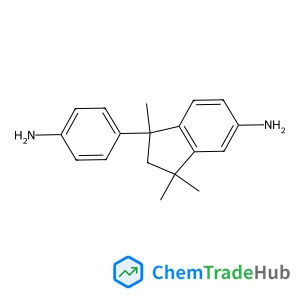
![N-[(1S,2R,4S)-2-Amino-4-(dimethylcarbamoyl)cyclohexyl]-N'-(5-chloro-2-pyridinyl)ethanediamide structure](https://cnstatic.chemtradehub.com/structs/480/480452-37-7-0898.webp "N-[(1S,2R,4S)-2-Amino-4-(dimethylcarbamoyl)cyclohexyl]-N'-(5-chloro-2-pyridinyl)ethanediamide structure")
推荐供应商






免责声明
本页面提供的学术期刊信息仅供参考和研究使用。我们与任何期刊出版商均无关联,也不处理投稿事宜。如有投稿相关咨询,请直接联系相关期刊出版商。
如发现页面信息有误,请发送邮件至 support@chemtradehub.com 联系我们。我们将及时核实并处理您的问题。