


![Benzyl spiro[indole-3,4'-piperidine]-1(2H)-carboxylate hydrochloride (1:1) structure](https://cnstatic.chemtradehub.com/structs/159/159635-46-8-8de0.webp "Benzyl spiro[indole-3,4'-piperidine]-1(2H)-carboxylate hydrochloride (1:1) structure")
Benzyl spiro[indole-3,4'-piperidine]-1(2H)-carboxylate hydrochloride (1:1)
CAS号:
159635-46-8
分子式:
C20H23ClN2O2
Tao Cai, Rong Wang, K. G. Neoh, E. T. Kang
Thermally induced graft copolymerization of allyl methacrylate (AMA) from ozone-preactivated poly(vinylidene fluoride) (PVDF) chains was first carried out in N-methyl-2-pyrrolidone (NMP) solution to produce the PVDF-g-PAMA copolymers. The PVDF-g-PAMA copolymers were cast, by phase inversion in an aqueous medium, into microporous membranes with enriched allyl groups on the membrane and pore surfaces. The pendant allyl groups in the PAMA side chains allowed the thiol–ene click grafting of thiol-functionalized moieties on the membrane surface. Thermally initiated thiol–ene click reaction with 3-mercaptopropionic acid (MPA) produced the PVDF-g-P[AMA-comb-MPA] membrane which exhibited a pH-responsive permeation behavior, with the most drastic change in permeation rate of the aqueous media being observed between pH 2 and 4. The PVDF-g-P[AMA-comb-DMAPS] membrane was synthesized via UV-initiated thiol–ene click reaction of 1,6-hexanedithiol (HDT) with the PVDF-g-PAMA membranes, using 2,2-dimethoxy-2-phenylacetophenone (DMPA) as the photoinitiator, followed by thiol-Michael addition reaction of the zwitterionic molecules, N,N′-dimethyl-(methylmethacryloyl ethyl) ammonium propanesulfonate (DMAPS). A significant reduction in microbial adhesion was observed on the PVDF-g-P[AMA-comb-DMAPS] membrane in a flow chamber, in comparison to the pristine hydrophobic PVDF membrane.
Molecules

Lab on a Chip

CrystEngComm

Environmental Toxicology and Pharmacology

Journal of Enzyme inhibition and Medicinal Chemistry

Advanced Engineering Materials

Physical Chemistry Chemical Physics

Current Pharmaceutical Biotechnology

European Journal of Organic Chemistry

Photochemical & Photobiological Sciences
Jian Jiang, Chris M. Marin, Avinash Kumar Both, Chin Li Cheung, Lei Li, Xiao Cheng Zeng
DOI: 10.1039/D1CP02152D
Jiangtao Lei, Mengqiang Cai, Yun Shen, Dongdong Lin, Xiaohua Deng
DOI: 10.1039/D1CP03094A
Zihui Song, Xudong Liu, Anish Ochani, Suling Shen, Qiqi Li, Yiwen Sun, Michael T. Ruggiero
DOI: 10.1039/D1CP03424C
Davide Fioravanti, Giovanni Barcaro, Alessandro Fortunelli
DOI: 10.1039/D1CP03583E
Jia-Fang Wu, Sha-Sha Ke, Yong Guo, Huai-Wu Zhang
DOI: 10.1039/D1CP02793J
Davide Carraro, Giulia Licini, Petr Bouř, Cristiano Zonta
DOI: 10.1039/D1CP03020E
Chenxu Zhao, Menghui Xi, Jinrong Huo, Chaozheng He
DOI: 10.1039/D1CP03943A
Aleksandr Chernatynskiy, Xiao-Feng Zhao
DOI: 10.1039/D1CP03544D
Yu Hashimoto, Kohei Saito, Toshiyuki Takayanagi, Hiroto Tachikawa
DOI: 10.1039/D1CP02379A
Takafumi Miura, Shun Tsunekawa, Sho Onishi, Toshiaki Ina, Kehsuan Wang, Genta Watanabe, Chechia Hu, Hiroshi Kondoh, Takeshi Kawai
DOI: 10.1039/D1CP03323A
该化合物适用的法规指南包括GHS(全球化学品统一分类和标签制度)分类为特定目标器官毒性-单次接触类别3;根据欧盟REACH法规,该化合物需要进行注册和评估;在美...
在合成中,可以考虑使用一些类似的化合物作为4-(4-氯苯基)-1H-咪唑的替代品,如4-(4-溴苯基)-1H-咪唑或4-(4-甲氧基苯基)-1H-咪唑。这些化合...
N~2~-甲基丙氨酸酰胺是一种有机化合物,其化学名为2-(Methylamino)propanamide。它是一种酰胺类化合物,分子式为C4H10N2O,相对分...
处理含有N-苄基-3-氨基氧杂环丁烷草酸盐(CAS号:1956341-96-0)的废料时,应首先确保遵循相关法规要求,如GHS和REACH等。通常,废液应先进行...
4-溴-2-氯-6-甲基苯甲酸是一种固体化合物,具有较高的熔点和较低的沸点。它的分子量为261.03 g/mol。该化合物在水中几乎不溶,在有机溶剂中溶解度适中...
该化合物通常通过缩合反应合成,典型的方法是将2,5-二氯嘧啶与N-甲基苯甲酰胺在碱性条件下进行偶联反应。常用的碱包括NaH、LDA等强碱。该合成路线具有较高的选...
3,5-二溴-4-甲基苯胺在某些合成路线中可能没有直接替代品。然而,在某些应用场景下,可以考虑使用其他类似结构的化合物如3,5-二溴-4-硝基苯胺或3,5-二碘...
2-氯喹啉-4-羧酸甲酯主要用于有机合成和药物合成领域,作为中间体或原料。它在合成某些药物和染料时具有重要作用。此外,该化合物还可能用于某些特定的化学研究中。
6-溴-8-氯咪唑[1,2-a]吡啶在操作过程中需要谨慎以确保安全。该化合物具有一定的毒性,吸入其蒸气或粉尘可能导致呼吸道刺激。处理时应佩戴适当的防护装备,如手...

Polymer Chemistry welcomes submissions in all areas of polymer science that have a strong focus on macromolecular chemistry. Manuscripts may cover a broad range of fields, yet no direct application focus is required.
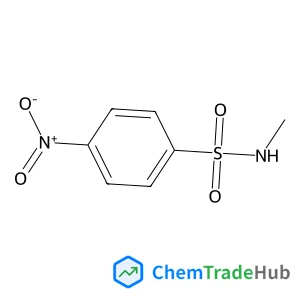
![2-Methyl-2-propanyl [(2S)-1-hydroxy-3-(4-hydroxyphenyl)-2-propanyl]carbamate structure](https://cnstatic.chemtradehub.com/structs/833/83345-46-4-eec2.webp "2-Methyl-2-propanyl [(2S)-1-hydroxy-3-(4-hydroxyphenyl)-2-propanyl]carbamate structure")
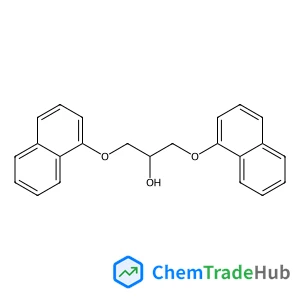
![(2E)-4-[(1R,2S,8R,19S,21R)-14-Hydroxy-11-isopropenyl-8,23,23-trimethyl-5-(3-methyl-2-buten-1-yl)-16,20-dioxo-3,7,22-trioxaheptacyclo[17.4.1.1~8,12~.0~2,17~.0~2,21~.0~4,15~.0~6,13~]pentacosa-4(15),5,13
,17-tetraen-21-yl]-2-methyl-2-butenoic acid structure](https://cnstatic.chemtradehub.com/structs/173/173867-04-4-d2d3.webp "(2E)-4-[(1R,2S,8R,19S,21R)-14-Hydroxy-11-isopropenyl-8,23,23-trimethyl-5-(3-methyl-2-buten-1-yl)-16,20-dioxo-3,7,22-trioxaheptacyclo[17.4.1.1~8,12~.0~2,17~.0~2,21~.0~4,15~.0~6,13~]pentacosa-4(15),5,13
,17-tetraen-21-yl]-2-methyl-2-butenoic acid structure")




