











amine structure](https://cnstatic.chemtradehub.com/structs/629/62924-61-2-0728.webp "[(2-chlorophenyl)methyl](ethyl)amine structure")
A two-step ICT process for solvatochromic betaine pyridinium revealed by ultrafast spectroscopy, multivariate curve resolution, and TDDFT calculations
文献信息
发布日期
2012-01-09
DOI
10.1039/C2CP22254J
影响因子
3.676
作者
Stéphane Aloïse, Zuzanna Pawlowska, Cyril Ruckebusch, Michel Sliwa, Julien Dubois, Olivier Poizat, Guy Buntinx, Aurélie Perrier, François Maurel, Patrice Jacques, Jean-Pierre Malval, Lionel Poisson, Giovanni Piani, Jiro Abe
查看原文
摘要
This work deals with the photophysics of a pyridinium betaine, 2-pyridin-1-yl-1H-benzimidazole (SBPa), based on a combination of steady-state, femtosecond photoionization (gas phase) and femtosecond transient absorption (solution) spectroscopic measurements, supported by (LR)-PCM-(TD)DFT calculations. Preliminary and new electrochemical results have revealed a strongly negative solvatochromic charge transfer (CT) absorption due to a S0 → S2 vertical transition and a weakly-solvatochromic emission due to S1 → S0 transition. Advanced TDDFT optimizations of the Franck–Condon states S2(FC) and S1(FC) led to two additional CT levels with planar geometry, S2(CT) and S1(CT), respectively, allowing prediction of a two-step photoinduced ICT process, i.e., S0 → S2(FC) and S2(CT) → S1(CT), separated by a S2(FC) → S2(CT) back charge transfer relaxation. While the pyridinium ring is the acceptor group in both steps, two different donor groups, the benzene ring and the imidazole bridge, are involved in the excitation and internal conversion processes, respectively. Femtosecond transient absorption experiments supported by MCR-ALS decomposition confirmed indeed the contribution of two distinct CT states in the photophysics of SBPa: following excitation to the S2(CT) state, ultrafast production of the emissive S1 state (the only channel observable in the gas phase) was observed to occur in competition with a further ICT process toward the S1(CT) state, with a time constant ranging from 300 fs to 20 ps depending on the solvent. While in aprotic media this ICT process was found to be purely solvent controlled (double polarity and viscosity dependency), in protic solvents, the influence of the hydrogen bond network has to be taken into account. Comparison with data obtained for a pre-twisted SBPa analogue led us to exclude the presence of any large-amplitude geometrical change during ICT. Analyzing the solvent dependency using the power law approach, we concluded that the S1(CT) state decays essentially through IC in the 3–40 ps time range whereas the emissive S1 state decays within 130–260 ps via IC, ISC and fluorescence.
相关文献
Inhibition of lysozyme's polymerization activity using a polymer structural mimic
D. L. Morris, T. C. Leeper, C. J. Ziegler
2018-05-29
Communication
DOI: 10.1039/C8PY00545A
Diffusion ordered spectroscopy (DOSY) as applied to polymers
2017-10-25
Review Article
DOI: 10.1039/C7PY01577A
Polyethenetetrathiolate or polytetrathiooxalate? Improved synthesis, a comparative analysis of a prominent thermoelectric polymer and implications to the charge transport mechanism
Lukas Stepien, Robert Grafe, Olga Guskova, Anton Kiriy, Frank Simon, Heiko Reith, Kornelius Nielsch, Gabi Schierning, Deepa Kasinathan
2018-08-14
Paper
DOI: 10.1039/C8PY00931G
A novel self-healing electrochromic film based on a triphenylamine cross-linked polymer
Rongzong Zheng, Jiaqiang Zhang, Chunyang Jia, Zhongquan Wan, Yaru Fan, Xiaolong Weng, Jianliang Xie, Longjiang Deng
2017-10-18
Paper
DOI: 10.1039/C7PY01434A
Effective macrophage delivery using RAFT copolymer derived nanoparticles
R. W. M. Davidson, G. W. Simpson, J. Chiefari, M. J. Fuchter
2017-11-28
Paper
DOI: 10.1039/C7PY01363A
Significantly improved energy density of BaTiO3 nanocomposites by accurate interfacial tailoring using a novel rigid-fluoro-polymer
Sheng Chen, Xuguang Lv, Xianghui Han, Hang Luo, Chris R. Bowen, Dou Zhang
2017-12-08
Paper
DOI: 10.1039/C7PY01914A
A new echelon of precision polypentenamers: highly isotactic branching on every five carbons
Stefan Brits, William J. Neary, Goutam Palui, Justin G. Kennemur
2018-01-02
Paper
DOI: 10.1039/C7PY01922J
您可能还喜欢
化合物问答
2-Bromo-4-chloro-1-(difluoromethyl)benzene(CAS号:1261476-50-9)的市场或研究趋势如何?
随着环保要求的提高和安全意识的增强,该化合物的研究和应用趋势正逐渐转向更安全、更环境友好的替代品。市场关注点主要集中在开发新型合成方法和绿色化学路径,以减少有害...
1261476-50-92-Bromo-4-chloro-1-(...
化合物问答
如何处理含有2,9 - 二苯基-1,10 - 菲罗啉(CAS号:25677-69-4)的废料?
处理含有2,9 - 二苯基 - 1,10 - 菲罗啉的废料时,应先将其收集在适当的容器中,避免与其他化学品混合。随后,可以通过水解或氧化等方法进行处理,直至达到...
25677-69-42,9-Diphenyl-1,10-ph...
化合物问答
处理(6-氯-吡嗪-3-基)-(4-乙基-哌嗪-1-基)-甲酮(CAS号:1178836-15-1)时应注意哪些实验室安全事项?
处理(6-氯-吡嗪-3-基)-(4-乙基-哌嗪-1-基)-甲酮时,应穿戴适当的个人防护装备(PPE),包括手套、护目镜和实验室外套。在通风橱中操作以确保良好的通...
1178836-15-1(6-Chloro-3-pyridazi...
化合物问答
处理(R)-2-氯-1-(2,4-二氯苯基)乙醇(CAS号:114446-57-0)时应注意哪些实验室安全事项?
在处理(R)-2-氯-1-(2,4-二氯苯基)乙醇时,应佩戴防护眼镜、实验室外套和手套,确保通风橱开启以减少接触和吸入的风险。避免直接接触皮肤和眼睛。处理过程中...
114446-57-0(1R)-2-Chloro-1-(2,4...
化合物问答
在合成中是否有3-氯-6-(3-氯哌啶-1-基)吡嗪(CAS号:1185310-37-5)的替代品?
可考虑使用类似结构的化合物作为替代品,如3-氯-6-(哌啶-1-基)吡嗪或3-氯-6-(2-氯哌啶-1-基)吡嗪,这些化合物在结构上与目标化合物相似,可能具有相...
1185310-37-53-Chloro-6-(3-chloro...
化合物问答
苯并三氮唑-5-甲酸乙酯(CAS号:73605-91-1)通常如何合成?
该化合物可以通过乙酸乙酯与5-溴-1H-苯并三氮唑的反应合成,通常在无水条件下进行。合成过程中,需要使用适当的溶剂如乙酸乙酯,并在适当的温度下反应。该反应具有较...
73605-91-1Ethyl 1H-benzotriazo...
化合物问答
什么是一水硫酸镁(CAS号:14168-73-1)?
一水硫酸镁是一种无机化合物,化学式为MgSO₄·H₂O,CAS号为14168-73-1。它由镁离子、硫酸根离子和一个结晶水分子组成,通常呈现为白色粉末或颗粒状固...
14168-73-1Magnesium sulfate hy...
化合物问答
氘代-1,3-二氯-2-丙醇(CAS号:1173020-20-6)应用于哪些行业?
氘代-1,3-二氯-2-丙醇主要应用于医药和有机合成领域,作为研究化合物的氘代替代品,用于标记和追踪反应过程。此外,在聚合物和半导体生产中也有一定的应用潜力。
1173020-20-61,3-Dichloro-2-(~2~H...
化合物问答
如何储存氰乙酸环己酯(CAS号:52688-11-6)?
氰乙酸环己酯应储存在阴凉、干燥、通风良好的环境中,远离火源和热源,防止阳光直射。储存容器应密封良好,避免与空气接触,防止发生不必要的反应。
52688-11-6Cyclohexyl cyanoacet...
化合物问答
2-碘-4-硝基苯胺(CAS号:6293-83-0)的市场或研究趋势如何?
目前,2-碘-4-硝基苯胺在医药和农药领域有一定的研究和应用,尤其是在开发新型药物和农药产品方面。然而,由于其潜在的环境和健康风险,行业正趋向于寻找更为安全和环...
6293-83-02-iodo-4-nitroanilin...
来源期刊
Physical Chemistry Chemical Physics

CiteScore:
5.5
自引率:
10.3%
年发文量:
3036
Physical Chemistry Chemical Physics (PCCP) is an international journal co-owned by 19 physical chemistry and physics societies from around the world. This journal publishes original, cutting-edge research in physical chemistry, chemical physics and biophysical chemistry. To be suitable for publication in PCCP, articles must include significant innovation and/or insight into physical chemistry; this is the most important criterion that reviewers and Editors will judge against when evaluating submissions. The journal has a broad scope and welcomes contributions spanning experiment, theory, computation and data science. Topical coverage includes spectroscopy, dynamics, kinetics, statistical mechanics, thermodynamics, electrochemistry, catalysis, surface science, quantum mechanics, quantum computing and machine learning. Interdisciplinary research areas such as polymers and soft matter, materials, nanoscience, energy, surfaces/interfaces, and biophysical chemistry are welcomed if they demonstrate significant innovation and/or insight into physical chemistry. Joined experimental/theoretical studies are particularly appreciated when complementary and based on up-to-date approaches.
推荐化合物
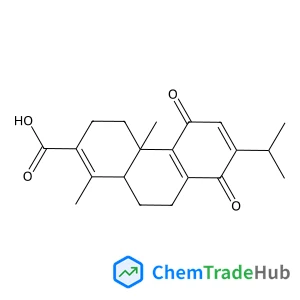
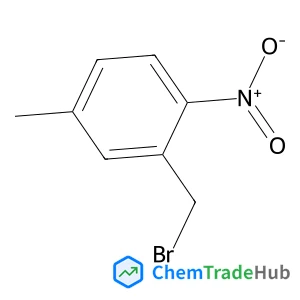
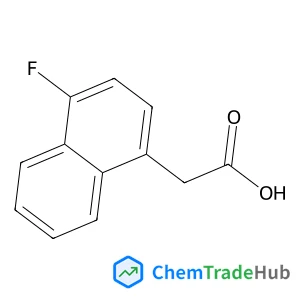
![N-[(6-Bromo-3-pyridinyl)methyl]ethanamine structure](https://cnstatic.chemtradehub.com/structs/120/120740-05-8-ca55.webp "N-[(6-Bromo-3-pyridinyl)methyl]ethanamine structure")
推荐供应商




免责声明
本页面提供的学术期刊信息仅供参考和研究使用。我们与任何期刊出版商均无关联,也不处理投稿事宜。如有投稿相关咨询,请直接联系相关期刊出版商。
如发现页面信息有误,请发送邮件至 support@chemtradehub.com 联系我们。我们将及时核实并处理您的问题。