


![Methyl 2-[5-(3-Phenoxyphenyl)-2H-tetrazol-2-yl]acetate structure](https://cnstatic.chemtradehub.com/structs/130/1305320-60-8-84b4.webp "Methyl 2-[5-(3-Phenoxyphenyl)-2H-tetrazol-2-yl]acetate structure")
Aerobic oxidation of methanol to formic acid on Au20−: a theoretical study on the reaction mechanism
文献信息
发布日期
2012-01-09
DOI
10.1039/C2CP23446G
影响因子
3.676
作者
Karan Bobuatong, Sangita Karanjit, Hidehiro Sakurai
查看原文
摘要
The aerobic oxidation of methanol to formic acid catalyzed by Au20− has been investigated quantum chemically using density functional theory with the M06 functional. Possible reaction pathways are examined taking account of full structure relaxation of the Au20−cluster. The proposed reaction mechanism consists of three elementary steps: (1) formation of formaldehyde from methoxy species activated by a superoxo-like anion on the gold cluster; (2) nucleophilic addition by the hydroxyl group of a hydroperoxyl-like complex to formaldehyde resulting in a hemiacetal intermediate; and (3) formation of formic acid by hydrogen transfer from the hemiacetal intermediate to atomic oxygen attached to the gold cluster. A comparison of the computed energetics of various elementary steps indicates that C–H bond dissociation of the methoxy species leading to formation of formaldehyde is the rate-determining step. A possible reaction pathway involving single-step hydrogen abstraction, a concerted mechanism, is also discussed. The stabilities of reactants, intermediates and transition state structures are governed by the coordination number of the gold atoms, charge distribution, cooperative effect and structural distortion, which are the key parameters for understanding the relationship between the structure of the gold cluster and catalytic activity in the aerobic oxidation of alcohols.
期刊推荐
Medicinal Chemistry Research
Critical Reviews in Solid State and Materials Sciences
Bioorganic & Medicinal Chemistry
Acta Metallurgica Sinica-English Letters
Chinese Journal of Chemistry

Topics in Catalysis
Bioorganic & Medicinal Chemistry Letters

Colloid Journal
Biocatalysis and Biotransformation

Atomization and Sprays
相关文献
A biomimetic phototherapeutic nanoagent based on bacterial double-layered membrane vesicles for comprehensive treatment of oral squamous cell carcinoma
Qian Chen, Tianhe Shan, Yanjie Liang, Yujing Xu, Enyu Shi, Yue Wang, Changyi Li, Mingxin Cao
2023-11-10
Paper
DOI: 10.1039/D3TB02046K
Plasmonic nanoprobes on single AuNTs for evaluating and monitoring the dynamic release of 2D drug carriers
Zejie Yu, Yi Wang, Miaomiao Cai, Jiachang Chen, Qirong Zou, Quli Fan, Lei Zhang
2023-11-20
Paper
DOI: 10.1039/D3TB02255B
Correction: Injectable organo-hydrogels influenced by click chemistry as a paramount stratagem in the conveyor belt of pharmaceutical revolution
Misba Majood, Radhika Chaurasia, Rupesh, Akanksha Singh, Tapan Dey, Omnarayan Agrawal, Yogesh Kumar Verma, Monalisa Mukherjee
2023-10-24
Correction
DOI: 10.1039/D3TB90198J
Injectable organo-hydrogels influenced by click chemistry as a paramount stratagem in the conveyor belt of pharmaceutical revolution
Misba Majood, Radhika Chaurasia, Rupesh, Akanksha Singh, Tapan Dey, Omnarayan Agrawal, Yogesh Kumar Verma, Monalisa Mukherjee
2023-10-09
Perspective
DOI: 10.1039/D3TB01674A
A glutathione-responsive PEGylated nanogel with doxorubicin-conjugation for cancer therapy
Qiang Wang, Zhen Pei, Zhipeng He, Wei Guo, Lingna Han
2023-11-21
Paper
DOI: 10.1039/D3TB01731A
Application of exosomes as nanocarriers in cancer therapy
Jiawei Hu, Junfei Zhu, Jingjing Chai, Yudie Zhao, Jiajie Luan, Yan Wang
2023-10-23
Review Article
DOI: 10.1039/D3TB01991H
On the mechanochemical synthesis of C-scorpionates with an oxime moiety and their application in the copper-catalyzed azide–alkyne cycloaddition (CuAAC) reaction
Carla Gomes, Mariana Costa, Susana M. M. Lopes, Bernardo Albuquerque Nogueira, José A. Paixão, Teresa M. V. D. Pinho e Melo, Luísa M. D. R. S. Martins, Marta Pineiro
2023-12-15
Paper
DOI: 10.1039/D3NJ05017C
A multifunctional hydrogel dressing with high tensile and adhesive strength for infected skin wound healing in joint regions
Chen Zhang, Kaiyue Liu, Yuanmeng He, Rong Chang, Fangxia Guan, Minghao Yao
2023-11-04
Paper
DOI: 10.1039/D3TB01384G
Metal–organic gels: recent advances in their classification, characterization, and application in the pharmaceutical field
Wei Cao, Zezhi Lin, Daoyi Zheng, Jianjun Zhang, Weili Heng, Yuanfeng Wei, Yuan Gao, Shuai Qian
2023-10-20
Review Article
DOI: 10.1039/D3TB01612A
Belinostat loaded lipid–polymer hybrid nanoparticulate delivery system for breast cancer: improved pharmacokinetics and biodistribution in a tumor model
Kommera Sai Pradyuth, Shubham A. Salunkhe, Arihant Kumar Singh, Deepak Chitkara, Anupama Mittal
2023-10-27
Paper
DOI: 10.1039/D3TB01317K
您可能还喜欢
化合物问答
N-2,2-丙烯基-2-丙烯酰胺(CAS号:2555-13-7)通常如何合成?
N-2,2-丙烯基-2-丙烯酰胺通常通过丙烯酰胺与丙烯基卤化物的缩合反应合成。该反应通常在温和的条件下进行,使用适量的碱如吡啶作为催化剂。反应的选择性良好,产率...
2555-13-7N-Allylacrylamide
化合物问答
什么是1,2-二碘四氟代乙烷(CAS号:354-65-4)?
1,2-二碘四氟代乙烷是一种有机化合物,化学式为C2F4I2,CAS号为354-65-4。它是一种无色透明液体,具有特殊的化学性质和物理性质,包括高沸点、低挥发...
354-65-41,1,2,2-Tetrafluoro-...
化合物问答
3-溴-1H-吡咯[3,2-c]吡啶-4-碳腈(CAS号:1000341-71-8)适用哪些法规指南?
根据GHS(全球化学品统一分类和标签制度),3-溴-1H-吡咯[3,2-c]吡啶-4-碳腈被归类为第2类易燃液体。在欧盟,该化合物需要符合REACH法规的要求,...
1000341-71-83-Bromo-1H-pyrrolo[3...
化合物问答
1-氯甲基萘磺酸(CAS号:87491-79-0)安全吗?
1-氯甲基萘磺酸在使用时需要谨慎,因为它具有一定的刺激性和腐蚀性。操作时应佩戴适当的防护装备,如防化服、手套、护目镜等,避免直接接触皮肤和吸入其蒸汽。
87491-79-01-((Chloromethyl)sul...
化合物问答
二氯(二环戊二烯)铂(CAS号:12083-92-0)的主要用途是什么?
该化合物主要用于催化剂领域,特别是在有机合成中的催化氧化反应以及作为某些药物合成的中间体。此外,它还被研究用于纳米材料的制备。
12083-92-0(1S,7R)-Tricyclo[5.2...
化合物问答
3-溴-7-氯噻吩并[3,2-b]吡啶-6-甲腈(CAS号:798574-82-0)安全吗?
3-溴-7-氯噻吩并[3,2-b]吡啶-6-甲腈在处理时需要谨慎,因其含有溴和氯等强卤素,可能具有一定的刺激性和腐蚀性。使用时应佩戴适当的个人防护装备,避免皮肤...
798574-82-03-Bromo-7-chlorothie...
化合物问答
(R)-1-((R)-2-(2’-二环己基膦苯基)三戊铁基]乙基(双-3,5-三氟甲基苯基)膦(CAS号:494227-32-6)的主要用途是什么?
该化合物主要用于有机合成领域,特别是作为催化剂或配体,在有机合成反应中发挥重要作用。此外,它还可能应用于催化加氢反应、偶联反应等。
494227-32-6Walphos SL-W008-1
化合物问答
3-[6-(Diphenylphosphoryl)-2-naphthyl]-1,10-phenanthroline(CAS号:1480371-38-7)安全吗?
3-[6-(Diphenylphosphoryl)-2-naphthyl]-1,10-phenanthroline在正常使用条件下相对安全,但在操作时应穿戴适当...
1480371-38-73-[6-(Diphenylphosph...
化合物问答
在合成中是否有ETHYL 2-(4-(4,4,5,5-TETRAMETHYL-1,3,2-DIOXABOROLAN-2-YL)CYCLOHEX-3-ENYL)ACETATE(CAS号:1166829-70-4)的替代品?
可以考虑使用类似结构的化合物作为替代品,如2-(4-环戊基环己烯基)乙酸酯,这种化合物在结构上相似,可能在某些合成路径中作为替代品。
1166829-70-4Ethyl [4-(4,4,5,5-te...
化合物问答
如何处理含有3-(3-氨基丙基)丙酮缩甘油(CAS号:131606-42-3)的废料?
处理含有3-(3-氨基丙基)丙酮缩甘油的废料时,首先应确保遵守当地的环保法规。对于危险废物,应进行分类收集,然后送至专业的废物处理设施进行焚烧或安全填埋。在处理...
131606-42-33-[(2,2-Dimethyl-1,3...
来源期刊
Physical Chemistry Chemical Physics

CiteScore:
5.5
自引率:
10.3%
年发文量:
3036
Physical Chemistry Chemical Physics (PCCP) is an international journal co-owned by 19 physical chemistry and physics societies from around the world. This journal publishes original, cutting-edge research in physical chemistry, chemical physics and biophysical chemistry. To be suitable for publication in PCCP, articles must include significant innovation and/or insight into physical chemistry; this is the most important criterion that reviewers and Editors will judge against when evaluating submissions. The journal has a broad scope and welcomes contributions spanning experiment, theory, computation and data science. Topical coverage includes spectroscopy, dynamics, kinetics, statistical mechanics, thermodynamics, electrochemistry, catalysis, surface science, quantum mechanics, quantum computing and machine learning. Interdisciplinary research areas such as polymers and soft matter, materials, nanoscience, energy, surfaces/interfaces, and biophysical chemistry are welcomed if they demonstrate significant innovation and/or insight into physical chemistry. Joined experimental/theoretical studies are particularly appreciated when complementary and based on up-to-date approaches.
推荐化合物
![5-Bromo-3-isopropyl-1H-pyrrolo[2,3-b]pyridine structure](https://cnstatic.chemtradehub.com/structs/125/1256819-54-1-8620.webp "5-Bromo-3-isopropyl-1H-pyrrolo[2,3-b]pyridine structure")
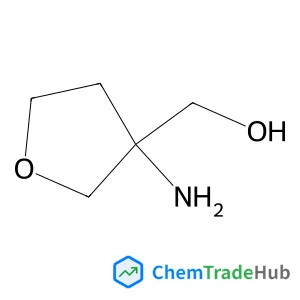
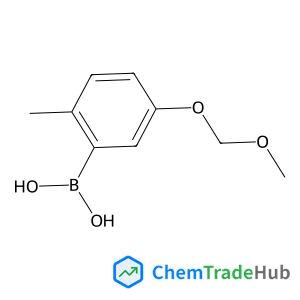
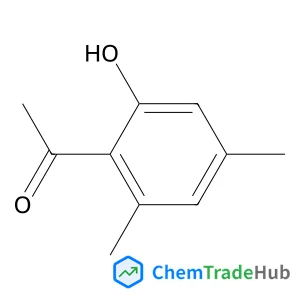
推荐供应商



免责声明
本页面提供的学术期刊信息仅供参考和研究使用。我们与任何期刊出版商均无关联,也不处理投稿事宜。如有投稿相关咨询,请直接联系相关期刊出版商。
如发现页面信息有误,请发送邮件至 support@chemtradehub.com 联系我们。我们将及时核实并处理您的问题。