






4D solid-state NMR for protein structure determination
文献信息
发布日期
2012-02-17
DOI
10.1039/C2CP23872A
影响因子
3.676
作者
Matthias Huber, Anja Böckmann, Sebastian Hiller, Beat H. Meier
查看原文
摘要
Solid-state NMR offers the chance to extend structural studies to proteins that are otherwise difficult to study at atomic resolution, such as protein fibrils, membrane proteins or poorly diffracting crystals. As two-dimensional spatial correlation NMR spectra of proteins suffer from severe resonance overlap, we analyze in this perspective article the potential of higher-dimensional (3D and 4D) proton-detected experiments, which have an increased number of identifiable and assignable distance restraints for solid-state structural studies. We discuss practical considerations for the NMR measurements and the preparation of suitable protein samples and show results of structure calculations from 4D solid-state NMR spectra.
相关文献
Quantum and classical effects in DNA point mutations: Watson–Crick tautomerism in AT and GC base pairs
L. Slocombe, J. S. Al-Khalili, M. Sacchi
2021-01-29
Paper
DOI: 10.1039/D0CP05781A
Theoretical studies on the initial reaction kinetics and mechanisms of p-, m- and o-nitrotoluene
Meng Yang, Caiyue Liao, Chenglong Tang, Peng Zhang, Zuohua Huang, Jianling Li
2021-01-14
Paper
DOI: 10.1039/D0CP05935H
Towards bridging the structure gap in heterogeneous catalysis: the impact of defects in dissociative chemisorption of methane on Ir surfaces
Yaolong Zhang, Hua Guo, Bin Jiang
2021-01-27
Paper
DOI: 10.1039/D0CP06535H
A theoretical study on the role of ammonium ions in the double-layered V2O5 electrode
Zilin Qu, Bo Zhou, Bo Li, Qi Song, Yong Hua Cao, Zhenyi Jiang
2021-01-27
Paper
DOI: 10.1039/D0CP05717G
Delocalized relativistic effects, from the viewpoint of halogen bonding
Serigne Sarr, Jérôme Graton, Seyfeddine Rahali, Gilles Montavon, Nicolas Galland
2020-12-30
Paper
DOI: 10.1039/D0CP05840H
Strain-controlled electronic and magnetic properties of tVS2/hVS2 van der Waals heterostructures
Dan Jin, Meimei Shi, Pan Li, Huiyan Zhao, Man Shen, Fengxian Ma, Zhixue Tian, Ying Liu
2021-01-29
Paper
DOI: 10.1039/D0CP05395C
Primary photodissociation mechanisms of pyruvic acid on S1: observation of methylhydroxycarbene and its chemical reaction in the gas phase
B. R. Samanta, R. Fernando, D. Rösch, H. Reisler, D. L. Osborn
2021-02-03
Paper
DOI: 10.1039/D0CP06424F
Metallic two-dimensional BP2: a high-performance electrode material for Li- and Na-ion batteries
Xiao-Juan Ye, Jie Xu, Yan-Dong Guo, Chun-Sheng Liu
2021-02-01
Paper
DOI: 10.1039/D0CP00187B
Efficient and low-scaling linear-response time-dependent density functional theory implementation for core-level spectroscopy of large and periodic systems
Augustin Bussy, Jürg Hutter
2021-02-08
Paper
DOI: 10.1039/D0CP06164F
Isolated and assembled silver aggregates on the Si(001) surface: the initial stage of film formation
Kai Huang, Xiaohang Huang, Jun Nogami
2021-01-25
Paper
DOI: 10.1039/D0CP06353C
您可能还喜欢
化合物问答
(3-氨苯基)环丙基甲酮(CAS号:162174-75-6)的主要用途是什么?
(3-氨苯基)环丙基甲酮主要用于合成化学中间体,特别是在药物化学领域作为原料。它还可以用于有机合成反应中,作为催化剂或反应物。
162174-75-6(3-Aminophenyl)(cycl...
化合物问答
如何储存亚胺菌(CAS号:136470-79-6)?
亚胺菌应储存在干燥、阴凉处,避免直接暴露于光线下。建议使用密封容器储存,防止吸潮和污染。具体的储存条件应参考产品的安全数据表(MSDS)或药品说明书。
136470-79-6Abacavir EP Impurity...
化合物问答
2-氯-2,2-二氟乙酰胺(CAS号:354-28-9)应用于哪些行业?
2-氯-2,2-二氟乙酰胺在医药、聚合物、传感器、半导体等领域有广泛应用。在医药领域,它作为中间体用于合成其他药物;在聚合物领域,用作聚合引发剂或稳定剂;在传感...
354-28-92-Chloro-2,2-difluor...
化合物问答
处理4-甲基-3-硝基-1,1-联苯(CAS号:53812-68-3)时应注意哪些实验室安全事项?
在处理4-甲基-3-硝基-1,1-联苯时,应佩戴手套、护目镜和实验室外套等个人防护装备(PPE),确保在通风橱中操作以减少吸入风险。若发生泄露,应立即使用沙子或...
53812-68-34'-Methyl-3-nitro-1,...
化合物问答
(2S)-羟基(苯基)乙酸 (2R)-N-苄基-1-(4-甲氧基苯基)丙-2-胺盐(CAS号:188690-84-8)应用于哪些行业?
该化合物广泛应用于医药、聚合物和半导体行业。在医药领域,它是某些药物中间体的重要组成部分;在聚合物领域,可用作增塑剂;在半导体行业,可用于制造光刻胶。
188690-84-8Benzeneacetic acid, ...
化合物问答
在合成中是否有芬苯哒唑砜-D3标准品(CAS号:1228182-49-7)的替代品?
芬苯哒唑砜-D3标准品的替代品可能包括类似的苯并咪唑类化合物,如芬苯哒唑本身或其非同位素标记版本。这些替代品在结构上与芬苯哒唑砜-D3相似,但在具体应用中需进行...
1228182-49-7(~2~H_3_)Methyl [5-(...
化合物问答
2-氟-4-硝基苯乙酸(CAS号:315228-19-4)通常如何合成?
2-氟-4-硝基苯乙酸可以通过一系列化学反应合成,通常是从4-氟苯胺开始,首先进行硝化反应生成4-氟-2-硝基苯胺,然后进行乙酰化反应得到目标产物。具体的合成步...
315228-19-42-(2-fluoro-4-nitrop...
化合物问答
2-氟-4-甲氧基苯乙酸(CAS号:883531-28-0)通常如何合成?
2-氟-4-甲氧基苯乙酸通常通过将4-甲氧基苯乙酸与氟化试剂(如氟化氰)反应来合成。反应通常在无水条件下进行,使用催化剂如六氟磷酸锂或四氟硼酸锂以提高选择性和产...
883531-28-02-Fluoro-4-methoxyph...
化合物问答
什么是4SC 202;4SC202(CAS号:1186222-89-8)?
4SC 202;4SC202是一种化学化合物,其化学名称为(2E)-N-(2-氨基苯基)-3-(1-{[4-(1-甲基-1H-吡唑-4-基)苯基]磺酰基}-1H...
1186222-89-8(2E)-N-(2-Aminopheny...
132980-99-53,5-Difluorobenzamid...
来源期刊
Physical Chemistry Chemical Physics

CiteScore:
5.5
自引率:
10.3%
年发文量:
3036
Physical Chemistry Chemical Physics (PCCP) is an international journal co-owned by 19 physical chemistry and physics societies from around the world. This journal publishes original, cutting-edge research in physical chemistry, chemical physics and biophysical chemistry. To be suitable for publication in PCCP, articles must include significant innovation and/or insight into physical chemistry; this is the most important criterion that reviewers and Editors will judge against when evaluating submissions. The journal has a broad scope and welcomes contributions spanning experiment, theory, computation and data science. Topical coverage includes spectroscopy, dynamics, kinetics, statistical mechanics, thermodynamics, electrochemistry, catalysis, surface science, quantum mechanics, quantum computing and machine learning. Interdisciplinary research areas such as polymers and soft matter, materials, nanoscience, energy, surfaces/interfaces, and biophysical chemistry are welcomed if they demonstrate significant innovation and/or insight into physical chemistry. Joined experimental/theoretical studies are particularly appreciated when complementary and based on up-to-date approaches.
推荐化合物
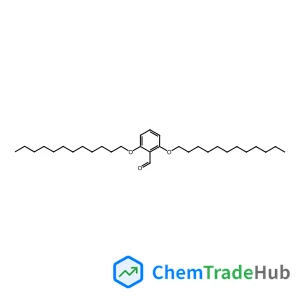
![2-[({[(2-Methyl-2-propanyl)oxy]carbonyl}amino)methyl]isonicotinic acid structure](https://cnstatic.chemtradehub.com/structs/473/473924-63-9-973b.webp "2-[({[(2-Methyl-2-propanyl)oxy]carbonyl}amino)methyl]isonicotinic acid structure")
2-[({[(2-Methyl-2-propanyl)oxy]carbonyl}amino)methyl]isonicotinic acid
CAS号:
473924-63-9
分子式:
C12H16N2O4
推荐供应商





免责声明
本页面提供的学术期刊信息仅供参考和研究使用。我们与任何期刊出版商均无关联,也不处理投稿事宜。如有投稿相关咨询,请直接联系相关期刊出版商。
如发现页面信息有误,请发送邮件至 support@chemtradehub.com 联系我们。我们将及时核实并处理您的问题。