


Nano-graphite functionalized mesocellular carbon foam with enhanced intra-penetrating electrical percolation networks for high performance electrochemical energy storage electrode materials
文献信息
发布日期
2012-03-13
DOI
10.1039/C2CP40657H
影响因子
3.676
作者
Changshin Jo, Sunhyung An, Younghoon Kim, Jongmin Shim, Songhun Yoon, Jinwoo Lee
查看原文
摘要
Mesocellular carbon foam (MSU-F-C) is functionalized with hollow nanographite by a simple solution-phase method to enhance the intrapenetrating electrical percolation network. The electrical conductivity of the resulting material, denoted as MSU-F-C-G, is increased by a factor of 20.5 compared with the pristine MSU-F-C. Hollow graphite nanoparticles are well-dispersed in mesocellular carbon foam, as confirmed by transmission electron microscopy (TEM), and the d spacing of the (002) planes is 0.343 nm, which is only slightly larger than that of pure graphite (0.335 nm), suggesting a random combination of graphitic and turbostratic stacking. After nanographitic functionalization, the BET surface area and total pore volume decreased from 928 m2 g−1 and 1.5 cm3 g−1 to 394 m2 g−1 and 0.7 cm3 g−1, respectively. Thermogravimetric analysis in air shows that the thermal stability of MSU-F-C-G is improved relative to that of MSU-F-C, and the one-step weight loss indicates that the nanographite is homogeneously functionalized on the MSU-F-C particles. When the resulting mesocellular carbon materials are used as electrode materials for an electric double layer capacitor (EDLC), the specific capacitances (Csp) of the MSU-F-C and MSU-F-C-G electrodes at 4 mV s−1 are 109 F g−1 and 93 F g−1, respectively. The MSU-F-C-G electrode exhibited a very high area capacitance (Carea, 23.5 μF cm−2) compared with that of the MSU-F-C electrode (11.7 μF cm−2), which is attributed to the enhanced intraparticle conductivity by the nanographitic functionalization. MSU-F-C-G exhibited high capacity retention (52%) at a very high scan rate of 512 mV s−1, while only a 23% capacity retention at 512 mV s−1 was observed in the case of the MSU-F-C electrode. When applied as an anode in a lithium ion battery, a significant increase in the initial efficiency (44%), high reversible discharge capacity (580 mA h g−1) in the lower voltage region, and a higher rate capability were observed. The high rate capability of the MSU-F-C-G electrode as charge storage was due to the low resistance derived from the nanographitic functionalization.
期刊推荐
European Journal of Organic Chemistry
Mini-Reviews in Medicinal Chemistry
Advanced Engineering Materials
Current Pharmaceutical Biotechnology

Physical Chemistry Chemical Physics
Journal of Medical Biochemistry
Lab on a Chip
Photochemical & Photobiological Sciences
Contact Lens & Anterior Eye
Environmental Toxicology and Pharmacology
相关文献
Proton relaxation and intermolecular structure of liquid formic acid: a nuclear magnetic resonance study
2002-03-14
Paper
DOI: 10.1039/B110358J
Chemically induced oscillations in a pH-responsive hydrogel
Colin J. Crook, Andrew Smith, Richard A. L. Jones, Anthony J. Ryan
2002-03-18
Paper
DOI: 10.1039/B109977A
Thermodynamics of thermal methods for rapid screening of combinatorial libraries
Michael J. Blandamer, Paul M. Cullis, Peter T. Gleeson
2002-02-01
Paper
DOI: 10.1039/B107646A
Predissociation dynamics in the A 3Π state of PH: An experimental and ab initio investigation
James A. J. Fitzpatrick, Oleg V. Chekhlov, David R. Morgan, Robert W. Burrows, Colin M. Western
2002-02-27
Paper
DOI: 10.1039/B111198C
Use of ab initio interaction energies for the prediction of phase equilibria in the system nitrogen–ethane
Gabriele Raabe, Juergen Koehler
2002-01-14
Paper
DOI: 10.1039/B108641N
Inelastic neutron scattering spectra of the transverse acoustic modes of the normal alkanes
John Tomkinson, Stewart F. Parker, Dale A. Braden, Bruce S. Hudson
2002-01-30
Paper
DOI: 10.1039/B110091B
Vibrational spectra of 5,6-dihydrouracil. An experimental matrix isolation, solid state and theoretical study
Leszek Lapinski, Maciej J. Nowak, Dariusz C. Bieńko, Danuta Michalska
2002-02-26
Paper
DOI: 10.1039/B108702A
The Dieterici alternative to the van der Waals approach for equations of state: second virial coefficients
2002-02-13
Paper
DOI: 10.1039/B108822J
From degeneration to damping of electrochemical oscillation induced by temperature controlling of heat-compensation type
Jinglei Lei, Jiuli Luo
2002-02-19
Paper
DOI: 10.1039/B108572G
Mechanism of the magnetic field dependence for the liquid phase photoreaction in the nanotube of MCM-41
Masaharu Okazaki, Kazumi Toriyama, Kiichi Oda, Toshio Kasai
2002-02-22
Paper
DOI: 10.1039/B110851D
您可能还喜欢
化合物问答
2-氨基-2-(5-甲基噻吩-2-基)乙酸(CAS号:89776-66-9)应用于哪些行业?
2-氨基-2-(5-甲基噻吩-2-基)乙酸主要应用于医药、聚合物、传感器和半导体等行业。在医药领域,它作为中间体用于合成各种药物。在聚合物行业,它可以用作稳定剂...
89776-66-9Amino(5-methyl-2-thi...
化合物问答
什么是N-(叔丁氧羰基)-3-碘吲唑(CAS号:290368-00-2)?
N-(叔丁氧羰基)-3-碘吲唑是一种化学化合物,其英文名称为2-Methyl-2-propanyl 3-iodo-1H-indazole-1-carboxyla...
290368-00-22-Methyl-2-propanyl ...
化合物问答
N-芴甲氧羰基-D-谷氨酸(CAS号:104091-09-0)的市场或研究趋势如何?
该化合物作为重要的保护基,广泛应用于生物有机化学合成中,尤其在肽类、蛋白质和寡核苷酸的研究领域。随着合成生物学和药物开发的进展,该化合物的需求持续增长。未来的研...
104091-09-0N-[(9H-Fluoren-9-ylm...
化合物问答
2-乙氧基-1-萘酰氯(CAS号:55150-29-3)的市场或研究趋势如何?
2-乙氧基-1-萘酰氯在研究领域中主要用于合成研究和有机化学反应,随着有机合成技术的发展,其市场应用和研究兴趣可能会有所增长。尤其是在新型药物合成和新材料开发领...
55150-29-32-Ethoxy-1-naphthoyl...
化合物问答
1-甲氧基菜豆素(CAS号:65428-13-9)的主要用途是什么?
1-甲氧基菜豆素主要应用于有机合成、药物化学领域,作为合成其他有机化合物的中间体或前体。此外,由于其特殊的化学性质,也可能用于某些特定的化学研究和实验中。
65428-13-9(6aR,11aR)-1-Methoxy...
化合物问答
small>-2-氨基丁酸(CAS号:106873-99-8)的主要用途是什么?
small>-2-氨基丁酸主要应用于有机合成和化学研究中,作为中间体或试剂使用。此外,它还可能用于某些药物合成过程中。
106873-99-82-Formamidobutanoic ...
化合物问答
什么是5-氨基-2-氯-n-(2-呋喃甲基)苯甲酰胺(CAS号:926216-59-3)?
5-氨基-2-氯-n-(2-呋喃甲基)苯甲酰胺是一种有机化合物,其分子式为C11H9ClN3O。它具有一定的生物活性,在合成化学和药物化学中有一定的应用价值。
926216-59-35-Amino-2-chloro-N-(...
化合物问答
4-(3-溴苯甲酰基)-哌嗪-1-羧酸叔丁酯(CAS号:890153-34-1)适用哪些法规指南?
该化合物根据其化学性质和用途,可能需要符合GHS(全球化学品统一分类和标签制度)的分类标准,包括急性毒性、皮肤腐蚀/刺激、严重眼损伤/眼刺激等类别。此外,根据其...
890153-34-12-Methyl-2-propanyl ...
化合物问答
如何储存(9ci)-2,4-二甲基-1H-吡咯-3-甲腈(CAS号:26187-28-0)?
应将(9ci)-2,4-二甲基-1H-吡咯-3-甲腈存放在阴凉、干燥的地方,避免阳光直射。储存容器应密封良好,防止挥发和污染。建议温度保持在20-25℃之间,湿...
26187-28-02,4-Dimethyl-1H-pyrr...
化合物问答
巨大戟醇-5,20-缩丙酮-3-当归酸酯(CAS号:87980-68-5)通常如何合成?
该化合物通常通过合成当归酸酯的方法制备,具体步骤为将当归酸酯与巨大戟醇-5,20-缩丙酮进行缩合反应,反应条件为温和的酸性环境,通常使用三氟乙酸作为催化剂。该合...
87980-68-5(4S,5S,6R,18R)-5-Hyd...
来源期刊
Physical Chemistry Chemical Physics
CiteScore:
5.5
自引率:
10.3%
年发文量:
3036
Physical Chemistry Chemical Physics (PCCP) is an international journal co-owned by 19 physical chemistry and physics societies from around the world. This journal publishes original, cutting-edge research in physical chemistry, chemical physics and biophysical chemistry. To be suitable for publication in PCCP, articles must include significant innovation and/or insight into physical chemistry; this is the most important criterion that reviewers and Editors will judge against when evaluating submissions. The journal has a broad scope and welcomes contributions spanning experiment, theory, computation and data science. Topical coverage includes spectroscopy, dynamics, kinetics, statistical mechanics, thermodynamics, electrochemistry, catalysis, surface science, quantum mechanics, quantum computing and machine learning. Interdisciplinary research areas such as polymers and soft matter, materials, nanoscience, energy, surfaces/interfaces, and biophysical chemistry are welcomed if they demonstrate significant innovation and/or insight into physical chemistry. Joined experimental/theoretical studies are particularly appreciated when complementary and based on up-to-date approaches.
推荐化合物
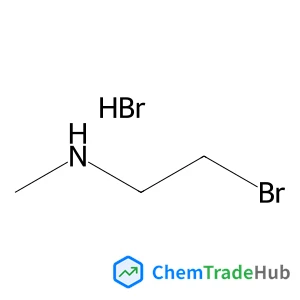
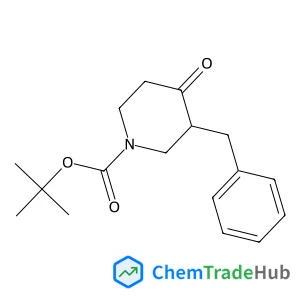
推荐供应商




免责声明
本页面提供的学术期刊信息仅供参考和研究使用。我们与任何期刊出版商均无关联,也不处理投稿事宜。如有投稿相关咨询,请直接联系相关期刊出版商。
如发现页面信息有误,请发送邮件至 support@chemtradehub.com 联系我们。我们将及时核实并处理您的问题。