


![[1-(5-Methyl-2-pyridinyl)-1H-pyrazol-4-yl]methanol structure](https://cnstatic.chemtradehub.com/structs/143/1439822-99-7-6cc9.webp "[1-(5-Methyl-2-pyridinyl)-1H-pyrazol-4-yl]methanol structure")
Computational 17O-NMRspectroscopy of organic acids and peracids: comparison of solvation models
文献信息
发布日期
2012-11-19
DOI
10.1039/C2CP43021E
影响因子
3.676
作者
Alberto Baggioli, Orlando Crescenzi, Martin J. Field, Franca Castiglione, Guido Raos
查看原文
摘要
We examine several computational strategies for the prediction of the 17O-NMR shielding constants for a selection of organic acids and peracids in aqueous solution. In particular, we consider water (the solvent and reference for the chemical shifts), hydrogen peroxide, acetic acid, lactic acid and peracetic acid. First of all, we demonstrate that the PBE0 density functional in combination with the 6-311+G(d,p) basis set provides an excellent compromise between computational cost and accuracy in the calculation of the shielding constants. Next, we move on to the problem of the solvent representation. Our results confirm the shortcomings of the Polarizable Continuum Model (PCM) in the description of systems susceptible to strong hydrogen bonding interactions, while at the same time they demonstrate its usefulness within a molecular-continuum approach, whereby PCM is applied to describe the solvation of the solute surrounded by some explicit solvent molecules. We examine different models of the solvation shells, sampling their configurations using both energy minimizations of finite clusters and molecular dynamics simulations of bulk systems. Hybrid molecular dynamics simulations, in which the solute is described at the PM6 semiempirical level and the solvent by the TIP3P model, prove to be a promising sampling method for medium-to-large sized systems. The roles of solvent shell size and structure are also briefly discussed.
期刊推荐
Polycyclic Aromatic Compounds
Herald of the Russian Academy of Sciences

Topics in Catalysis
Critical Reviews in Solid State and Materials Sciences

Bioorganic & Medicinal Chemistry Letters

Biocatalysis and Biotransformation

Atomization and Sprays

Cellulose

Journal of Asian Natural Products Research

Medicinal Chemistry Research
相关文献
Pt nanoparticles on (Ni0.5Co0.5)2P/S-doped carbon nanofibers as electrocatalysts for an efficient hydrogen evolution reaction
Anqi Ju, Shuxian Zhang, Dong Li, Kunming Li, Xuepeng Ni, Yi Li, Yang Jiang
2023-12-04
Paper
DOI: 10.1039/D3NJ04456D
Optimization of iron oxide nanoparticles for MRI-guided magnetic hyperthermia tumor therapy: reassessing the role of shape in their magnetocaloric effect
Francisco Gámez, Roberto Gallardo, Manuel Pernia Leal
2023-11-03
Paper
DOI: 10.1039/D3TB01821K
Plasmonic nanoprobes on single AuNTs for evaluating and monitoring the dynamic release of 2D drug carriers
Zejie Yu, Yi Wang, Miaomiao Cai, Jiachang Chen, Qirong Zou, Quli Fan, Lei Zhang
2023-11-20
Paper
DOI: 10.1039/D3TB02255B
Three-dimensional N-doped carbon electrodes activate peroxymonosulfate for tetracycline degradation
2023-11-22
Paper
DOI: 10.1039/D3NJ04311H
Exploring the magnetic, electric and magnetodielectric properties of (1 − x)Ba0.9Ni0.1Ti0.9Mn0.1O3–xCo0.9Mn0.1Fe1.9V0.1O4 multiferroic composites
Showket Ahmad Bhat, Mohd Ikram
2023-12-15
Paper
DOI: 10.1039/D3NJ05096C
Self-driven immune checkpoint blockade and spatiotemporal-sensitive immune response monitoring in acute myeloid leukemia using an all-in-one turn-on bionanoprobe
Honglian Wu, Tianci Wang, Yuting Wang, Sixi Liu, Feiqiu Wen, Gerile Oudeng, Mo Yang
2023-10-17
Paper
DOI: 10.1039/D3TB01553J
Calixarene-based cryoprotectants for ice recrystallization inhibition and cell cryopreservation
Bing Hu, Juan-Juan Li, Yan-Bin Ren, Tian-Xing Zhang, Li-Bin Chen, Xiao-Liu Li, Ke-Rang Wang
2023-11-20
Communication
DOI: 10.1039/D3TB02432F
Micelle assisted synthesis of bismuth oxide nanoparticles for improved chemocatalytic degradation of toxic Congo red into non-toxic products
Aleena Pious, Shreya Muthukumar, Dharshini Karnan Singaravelu, Periyappan Nantheeswaran, Mariappan Mariappan, Arvind Sivasubramanian, Fuad Ameen, Anbazhagan Veerappan
2023-11-17
Paper
DOI: 10.1039/D3NJ04494G
Dendronization of chitosan to afford unprecedent thermoresponsiveness and tunable microconfinement
Yi Yao, Xiaoxin Shi, Zihong Zhao, Afang Zhang, Wen Li
2023-11-07
Perspective
DOI: 10.1039/D3TB01803B
您可能还喜欢
化合物问答
(3-氨苯基)环丙基甲酮(CAS号:162174-75-6)的主要用途是什么?
(3-氨苯基)环丙基甲酮主要用于合成化学中间体,特别是在药物化学领域作为原料。它还可以用于有机合成反应中,作为催化剂或反应物。
162174-75-6(3-Aminophenyl)(cycl...
化合物问答
如何储存亚胺菌(CAS号:136470-79-6)?
亚胺菌应储存在干燥、阴凉处,避免直接暴露于光线下。建议使用密封容器储存,防止吸潮和污染。具体的储存条件应参考产品的安全数据表(MSDS)或药品说明书。
136470-79-6Abacavir EP Impurity...
化合物问答
2-氯-2,2-二氟乙酰胺(CAS号:354-28-9)应用于哪些行业?
2-氯-2,2-二氟乙酰胺在医药、聚合物、传感器、半导体等领域有广泛应用。在医药领域,它作为中间体用于合成其他药物;在聚合物领域,用作聚合引发剂或稳定剂;在传感...
354-28-92-Chloro-2,2-difluor...
化合物问答
处理4-甲基-3-硝基-1,1-联苯(CAS号:53812-68-3)时应注意哪些实验室安全事项?
在处理4-甲基-3-硝基-1,1-联苯时,应佩戴手套、护目镜和实验室外套等个人防护装备(PPE),确保在通风橱中操作以减少吸入风险。若发生泄露,应立即使用沙子或...
53812-68-34'-Methyl-3-nitro-1,...
化合物问答
(2S)-羟基(苯基)乙酸 (2R)-N-苄基-1-(4-甲氧基苯基)丙-2-胺盐(CAS号:188690-84-8)应用于哪些行业?
该化合物广泛应用于医药、聚合物和半导体行业。在医药领域,它是某些药物中间体的重要组成部分;在聚合物领域,可用作增塑剂;在半导体行业,可用于制造光刻胶。
188690-84-8Benzeneacetic acid, ...
化合物问答
在合成中是否有芬苯哒唑砜-D3标准品(CAS号:1228182-49-7)的替代品?
芬苯哒唑砜-D3标准品的替代品可能包括类似的苯并咪唑类化合物,如芬苯哒唑本身或其非同位素标记版本。这些替代品在结构上与芬苯哒唑砜-D3相似,但在具体应用中需进行...
1228182-49-7(~2~H_3_)Methyl [5-(...
化合物问答
2-氟-4-硝基苯乙酸(CAS号:315228-19-4)通常如何合成?
2-氟-4-硝基苯乙酸可以通过一系列化学反应合成,通常是从4-氟苯胺开始,首先进行硝化反应生成4-氟-2-硝基苯胺,然后进行乙酰化反应得到目标产物。具体的合成步...
315228-19-42-(2-fluoro-4-nitrop...
化合物问答
2-氟-4-甲氧基苯乙酸(CAS号:883531-28-0)通常如何合成?
2-氟-4-甲氧基苯乙酸通常通过将4-甲氧基苯乙酸与氟化试剂(如氟化氰)反应来合成。反应通常在无水条件下进行,使用催化剂如六氟磷酸锂或四氟硼酸锂以提高选择性和产...
883531-28-02-Fluoro-4-methoxyph...
化合物问答
什么是4SC 202;4SC202(CAS号:1186222-89-8)?
4SC 202;4SC202是一种化学化合物,其化学名称为(2E)-N-(2-氨基苯基)-3-(1-{[4-(1-甲基-1H-吡唑-4-基)苯基]磺酰基}-1H...
1186222-89-8(2E)-N-(2-Aminopheny...
132980-99-53,5-Difluorobenzamid...
来源期刊
Physical Chemistry Chemical Physics

CiteScore:
5.5
自引率:
10.3%
年发文量:
3036
Physical Chemistry Chemical Physics (PCCP) is an international journal co-owned by 19 physical chemistry and physics societies from around the world. This journal publishes original, cutting-edge research in physical chemistry, chemical physics and biophysical chemistry. To be suitable for publication in PCCP, articles must include significant innovation and/or insight into physical chemistry; this is the most important criterion that reviewers and Editors will judge against when evaluating submissions. The journal has a broad scope and welcomes contributions spanning experiment, theory, computation and data science. Topical coverage includes spectroscopy, dynamics, kinetics, statistical mechanics, thermodynamics, electrochemistry, catalysis, surface science, quantum mechanics, quantum computing and machine learning. Interdisciplinary research areas such as polymers and soft matter, materials, nanoscience, energy, surfaces/interfaces, and biophysical chemistry are welcomed if they demonstrate significant innovation and/or insight into physical chemistry. Joined experimental/theoretical studies are particularly appreciated when complementary and based on up-to-date approaches.
推荐化合物
![1-Benzyl-1,7-diazaspiro[4.4]nonane dihydrochloride structure](https://cnstatic.chemtradehub.com/structs/115/1159822-71-5-0320.webp "1-Benzyl-1,7-diazaspiro[4.4]nonane dihydrochloride structure")

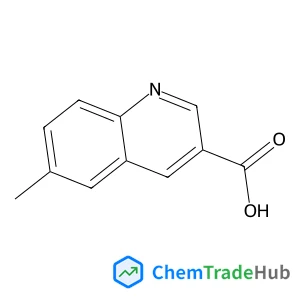
![Methyl 2-[5-(3-Phenoxyphenyl)-2H-tetrazol-2-yl]acetate structure](https://cnstatic.chemtradehub.com/structs/130/1305320-60-8-84b4.webp "Methyl 2-[5-(3-Phenoxyphenyl)-2H-tetrazol-2-yl]acetate structure")
推荐供应商


免责声明
本页面提供的学术期刊信息仅供参考和研究使用。我们与任何期刊出版商均无关联,也不处理投稿事宜。如有投稿相关咨询,请直接联系相关期刊出版商。
如发现页面信息有误,请发送邮件至 support@chemtradehub.com 联系我们。我们将及时核实并处理您的问题。