


Effects of structure-manipulated molecular stacking on solid-state optical properties and device performances
文献信息
发布日期
2012-07-10
DOI
10.1039/C2PY20406A
影响因子
5.582
作者
Jianhua Huang, Yan Zhao, Weiwei He, Hui Jia, Zhenhuan Lu, Bo Jiang, Chuanlang Zhan, Qibing Pei, Yunqi Liu, Jiannian Yao
查看原文
摘要
Four conjugated copolymers with phthalimide (PhI) or thieno[3,4-c]pyrrole-4,6-dione (TPD) as the acceptor, thiophene (T) or selenophene (Se) as the spacer and 3,3′-didodecyl-2,2′-bithiophene (BT) as the common donor, namely, PPhI-T, PPhI-Se, PTPD-T and PTPD-Se, have been synthesized and the effects of intra- and intermolecular interactions on the optical properties, molecular stacking, and organic electronic device performances were investigated. The intramolecular S(Se)⋯O (carbonyl) interactions between the spacer and the PhI's or TPD's carbonyl and the intermolecular reciprocity between the polymeric backbones differ from each other as the spacer and the acceptor were varied. Among the four polymers, PPhI-T with the weakest intramolecular S⋯O interaction and intermolecular backbone reciprocity exhibited the poorest photovoltaic performance with a PCE of 0.31%. When the T spacer was replaced by the more polarized Se spacer, the resultant copolymer PPhI-Se exhibited stronger intra- and intermolecular interactions, resulting in better optical properties with a PCE of 0.94% when blended with PC71BM. When PhI is replaced with the more polarized TPD unit, the TPD-based polymers, PTPD-T and PTPD-Se, showed even better coplanarity compared to that of the PhI-based polymers, with a PCE of 2.04% for PTPD-T and 1.52% for PTPD-Se blended with PC71BM. To the best of our knowledge, this is the first systematic study on the influences of structure-manipulated molecular stacking on solid-state optical properties and electronic device performance through modulations of the intramolecular and intermolecular interactions.
期刊推荐
Crystallography Reports
Russian Journal of Applied Chemistry
Current Opinion in Colloid & Interface Science
Chemical Communications
Drug Discovery Today
Russian Chemical Bulletin
Russian Journal of Organic Chemistry
Russian Journal of Coordination Chemistry

Chemistry Education Research and Practice
Journal of Peptide Science
相关文献
Albumin protein encapsulation into a ZIF-8 framework with Co-LDH-based hierarchical architectures for robust catalytic reduction
Maryam Chafiq, Abdelkarim Chaouiki, Tri Suhartono, Young Gun Ko
2023-10-30
Paper
DOI: 10.1039/D3TA03623E
A selenoureido-iminoglycolipid transported by zeolitic-imidazolate framework nanoparticles: a novel antioxidant therapeutic approach
Fátima Guerrero, Andrés Carmona, Victoria Vidal, Ana Franco, Alejandro Martín-Malo, Elena M. Sánchez-Fernández, Carolina Carrillo-Carrión
2023-10-06
Communication
DOI: 10.1039/D3NH00363A
Frame-by-frame observations of structure fluctuations in single mass-selected Au clusters using aberration-corrected electron microscopy
Cesare Roncaglia, Diana Nelli, El Yakout El Koraychy, Riccardo Ferrando, Thomas J. A. Slater, Richard E. Palmer
2023-10-19
Communication
DOI: 10.1039/D3NH00291H
Nitrogen-rich porous organic polymer as a promising adsorbent for iodine capture from organic solvents
Fatemeh Khosravi Esmaeiltarkhani, Mohammad Dinari, Nazanin Mokhtari
2023-12-26
Paper
DOI: 10.1039/D3NJ04674E
Stability and synthesis across barium tin sulfide material space
Andriy Zakutayev
2023-11-10
Paper
DOI: 10.1039/D3TA04431A
Active sites of NO selective catalytic reduction over V2O5–WO3/TiO2
Dongrun Xu, Weiye Qu, Junhong Liu, Junxiao Chen, Xue Fang, Liwei Chen, Xi Liu, Yaxin Chen
2023-10-26
Paper
DOI: 10.1039/D3TA05525F
Gold nanoparticle-based immunochromatographic assay for rapid detection of imazalil
2023-10-06
Communication
DOI: 10.1039/D3NH00371J
Porous Ga0.25Li6.25La3Zr2O12 frameworks by gelcasting–reaction sintering for high-performance hybrid quasi-solid lithium metal batteries
Ying Zhou, Ying Tian, Wen Wang, Yu Zhou
2023-09-29
Paper
DOI: 10.1039/D3TA04638A
Microelectromechanical system for in situ quantitative testing of tension–compression asymmetry in nanostructures
Yuheng Huang, Kuibo Yin, Binghui Li, Anqi Zheng, Bozhi Wu, Litao Sun, Meng Nie
2023-11-21
Communication
DOI: 10.1039/D3NH00407D
Amorphous C/SbSx composites from natural stibnite as low cost and high performance lithium/sodium-ion battery anodes
Shuonan Wang, Kai Zhang, Hao Liu, Libing Liao
2023-10-26
Paper
DOI: 10.1039/D3TA05355E
您可能还喜欢
化合物问答
2-氨基-2-(5-甲基噻吩-2-基)乙酸(CAS号:89776-66-9)应用于哪些行业?
2-氨基-2-(5-甲基噻吩-2-基)乙酸主要应用于医药、聚合物、传感器和半导体等行业。在医药领域,它作为中间体用于合成各种药物。在聚合物行业,它可以用作稳定剂...
89776-66-9Amino(5-methyl-2-thi...
化合物问答
什么是N-(叔丁氧羰基)-3-碘吲唑(CAS号:290368-00-2)?
N-(叔丁氧羰基)-3-碘吲唑是一种化学化合物,其英文名称为2-Methyl-2-propanyl 3-iodo-1H-indazole-1-carboxyla...
290368-00-22-Methyl-2-propanyl ...
化合物问答
N-芴甲氧羰基-D-谷氨酸(CAS号:104091-09-0)的市场或研究趋势如何?
该化合物作为重要的保护基,广泛应用于生物有机化学合成中,尤其在肽类、蛋白质和寡核苷酸的研究领域。随着合成生物学和药物开发的进展,该化合物的需求持续增长。未来的研...
104091-09-0N-[(9H-Fluoren-9-ylm...
化合物问答
2-乙氧基-1-萘酰氯(CAS号:55150-29-3)的市场或研究趋势如何?
2-乙氧基-1-萘酰氯在研究领域中主要用于合成研究和有机化学反应,随着有机合成技术的发展,其市场应用和研究兴趣可能会有所增长。尤其是在新型药物合成和新材料开发领...
55150-29-32-Ethoxy-1-naphthoyl...
化合物问答
1-甲氧基菜豆素(CAS号:65428-13-9)的主要用途是什么?
1-甲氧基菜豆素主要应用于有机合成、药物化学领域,作为合成其他有机化合物的中间体或前体。此外,由于其特殊的化学性质,也可能用于某些特定的化学研究和实验中。
65428-13-9(6aR,11aR)-1-Methoxy...
化合物问答
small>-2-氨基丁酸(CAS号:106873-99-8)的主要用途是什么?
small>-2-氨基丁酸主要应用于有机合成和化学研究中,作为中间体或试剂使用。此外,它还可能用于某些药物合成过程中。
106873-99-82-Formamidobutanoic ...
化合物问答
什么是5-氨基-2-氯-n-(2-呋喃甲基)苯甲酰胺(CAS号:926216-59-3)?
5-氨基-2-氯-n-(2-呋喃甲基)苯甲酰胺是一种有机化合物,其分子式为C11H9ClN3O。它具有一定的生物活性,在合成化学和药物化学中有一定的应用价值。
926216-59-35-Amino-2-chloro-N-(...
化合物问答
4-(3-溴苯甲酰基)-哌嗪-1-羧酸叔丁酯(CAS号:890153-34-1)适用哪些法规指南?
该化合物根据其化学性质和用途,可能需要符合GHS(全球化学品统一分类和标签制度)的分类标准,包括急性毒性、皮肤腐蚀/刺激、严重眼损伤/眼刺激等类别。此外,根据其...
890153-34-12-Methyl-2-propanyl ...
化合物问答
如何储存(9ci)-2,4-二甲基-1H-吡咯-3-甲腈(CAS号:26187-28-0)?
应将(9ci)-2,4-二甲基-1H-吡咯-3-甲腈存放在阴凉、干燥的地方,避免阳光直射。储存容器应密封良好,防止挥发和污染。建议温度保持在20-25℃之间,湿...
26187-28-02,4-Dimethyl-1H-pyrr...
化合物问答
巨大戟醇-5,20-缩丙酮-3-当归酸酯(CAS号:87980-68-5)通常如何合成?
该化合物通常通过合成当归酸酯的方法制备,具体步骤为将当归酸酯与巨大戟醇-5,20-缩丙酮进行缩合反应,反应条件为温和的酸性环境,通常使用三氟乙酸作为催化剂。该合...
87980-68-5(4S,5S,6R,18R)-5-Hyd...
来源期刊
Polymer Chemistry

CiteScore:
8.6
自引率:
7.3%
年发文量:
457
Polymer Chemistry welcomes submissions in all areas of polymer science that have a strong focus on macromolecular chemistry. Manuscripts may cover a broad range of fields, yet no direct application focus is required.
推荐化合物
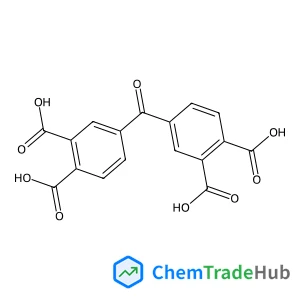
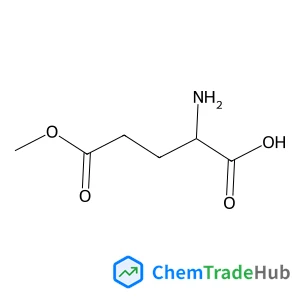
推荐供应商





免责声明
本页面提供的学术期刊信息仅供参考和研究使用。我们与任何期刊出版商均无关联,也不处理投稿事宜。如有投稿相关咨询,请直接联系相关期刊出版商。
如发现页面信息有误,请发送邮件至 support@chemtradehub.com 联系我们。我们将及时核实并处理您的问题。